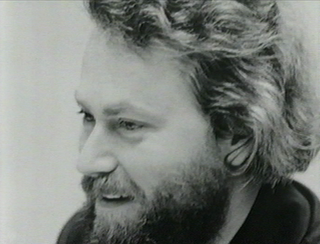
Why Donald Judd matters
Donald Judd is the artist who gave Minimalism its theory and its objects. His 1965 essay Specific Objects argued for a new kind of work that was neither painting nor sculpture, and his stacks, progressions, and floor boxes made that argument physical. For a collector, Judd is a study in a deep, blue-chip postwar market: a full catalogue raisonne in progress, decades of repeat-sale history, and a body of work whose value depends as much on fabrication and provenance as on the artist's hand.
- Born
- 1928-06-03, Excelsior Springs, Missouri, USA
- Nationality
- American
- Media
- Sculpture, Installation, Painting
- Movement
- Minimalism
- Education
- Columbia University, BS philosophy and MA art history; studied painting at the Art Students League, New York
- Signature motifs
- Specific objects, Stacks, Progressions, Industrial fabrication in metal and plywood
- Representation
- Judd Foundation (estate stewardship), David Zwirner, Gagosian
- In the Masterworks collection
- 1 works
By the numbers
- USD 14.2MAuction highUntitled (DSS 42), 1963, Christie's New York, 2013
- MinimalismMovementauthor of the 1965 essay Specific Objects
- Chinati, MarfaPermanent installationsfoundation he created in 1986
- Judd FoundationEstate stewardship
Selected works
Click any work to view it full screen.
Biography
Donald Judd was born on 3 June 1928 in Excelsior Springs, Missouri. He served in the U.S. Army in Korea, then studied philosophy and art history at Columbia University while taking painting classes at the Art Students League in New York. He worked as a painter and an influential art critic into the mid-1960s.
In 1964 he wrote Specific Objects, the essay that defined a generation of three-dimensional work, and turned to commercial materials: galvanized iron, aluminum, stainless steel, brass, copper, and plywood. He hired sheet-metal fabricators to build the work, removing his own hand from production, a decision that became a founding principle for Conceptual art. The first of his signature series, the Stacks and Progressions, date from the 1960s. His first solo exhibition opened at the Leo Castelli Gallery in 1966, and the Whitney Museum of American Art gave him a retrospective in 1968.
In 1968 Judd bought a five-story cast-iron building at 101 Spring Street in New York as a live-in studio, and in 1973 he began acquiring property in Marfa, Texas, where he permanently installed his own work and that of peers including Dan Flavin and John Chamberlain. He created the Judd Foundation in 1977 to preserve his spaces, libraries, and archives, and in 1986 founded the Chinati Foundation to care for the large-scale permanent installations at Marfa. He died of lymphoma on 12 February 1994 in New York. His estate is represented by David Zwirner.
Critical reception
Half or more of the best new work in the last few years has been neither painting nor sculpture.
Donald Judd, Specific Objects, 1965
Critics treat Judd as the central theorist of Minimalism, even though he rejected the label and preferred the term specific objects. The recurring critical theme is wholeness: Judd wanted a single, undivided form, free of the illusion and internal composition he associated with European painting, and his progressions and stacks are read as demonstrations of that argument. Donald Judd: Specific Objects, published in Arts Yearbook 8 in 1965, remains one of the most cited texts in postwar art history, and the writer David Raskin and others have built the scholarship around it. The 2020 retrospective at the Museum of Modern Art, organized by curator Ann Temkin, was widely received as a confirmation of his canonical standing, and the permanent installations at Chinati are often described as the fullest realization of his idea that art, architecture, and space should be experienced as one. Debate centers less on his importance than on how much authorship survives when the work is industrially fabricated.
Watch
Market
Judd's market is broad and well-documented for a postwar artist. His auction high is Untitled (DSS 42), an early 1963 work, which sold for USD 14,165,000 at Christie's New York in 2013. Major works regularly clear eight figures: a 1969 untitled work made USD 12.8 million at Christie's New York in 2026, then a record for one of his stacks. The supply spans floor boxes, wall stacks, and progressions across several decades and materials, which gives the market more comparables than most artists of his rank.
Top auction results
| Work | Price | Sale |
|---|---|---|
| Untitled (DSS 42) (1963) | USD 14,165,000 (USD 14,165,000) | Christie's, New York, 2013-11-12 |
Selected exhibitions
| Years | Exhibition | Venues |
|---|---|---|
| 2020 | Judd | Museum of Modern Art, New York |
| 2004 | Donald Judd | Tate Modern, London |
| 1968 | Donald Judd | Whitney Museum of American Art, New York |
| 1966 | First solo exhibition | Leo Castelli Gallery, New York |
Museum collections
- Museum of Modern Art, New York
- Whitney Museum of American Art, New York
- Tate, London
- Solomon R. Guggenheim Museum, New York
- The Metropolitan Museum of Art, New York
- National Gallery of Art, Washington, D.C.
- Kunstmuseum Basel
- Chinati Foundation, Marfa, Texas (permanent installations)
Awards and honors
- Guggenheim Fellowship (1968)
- Skowhegan Medal for Sculpture (1987)
- Brandeis University Creative Arts Award (sculpture) (1987)
Authentication and provenance
Catalogue raisonne published.
No certificate-of-authenticity program. The Judd Foundation does not authenticate works; it handles research requests only ([email protected]). A catalogue raisonne of paintings, objects, and woodblocks (1960 to 1974) was published in 1975 and a drawings and prints volume in 1993, with an expanded catalogue raisonne in progress ([email protected]).
Primary reference: https://juddfoundation.org/
What collectors should know
Judd's work was made to be fabricated, not hand-built, so condition, fabrication history, and authorized refabrication matter more than for a typical painter. The Judd Foundation stewards the artist's spaces and archives but does not authenticate works; it accepts research requests only, and an expanded catalogue raisonne is in progress through the foundation. That places real weight on provenance and on the existing catalogue raisonne volumes from 1975 and 1993. For a collector, the depth of the market and the institutional infrastructure around the estate are the strongest signals of durability, while the fabrication question is the main reason to insist on documented provenance and condition.
Further reading and resources
Data current as of 2026-06-20.

