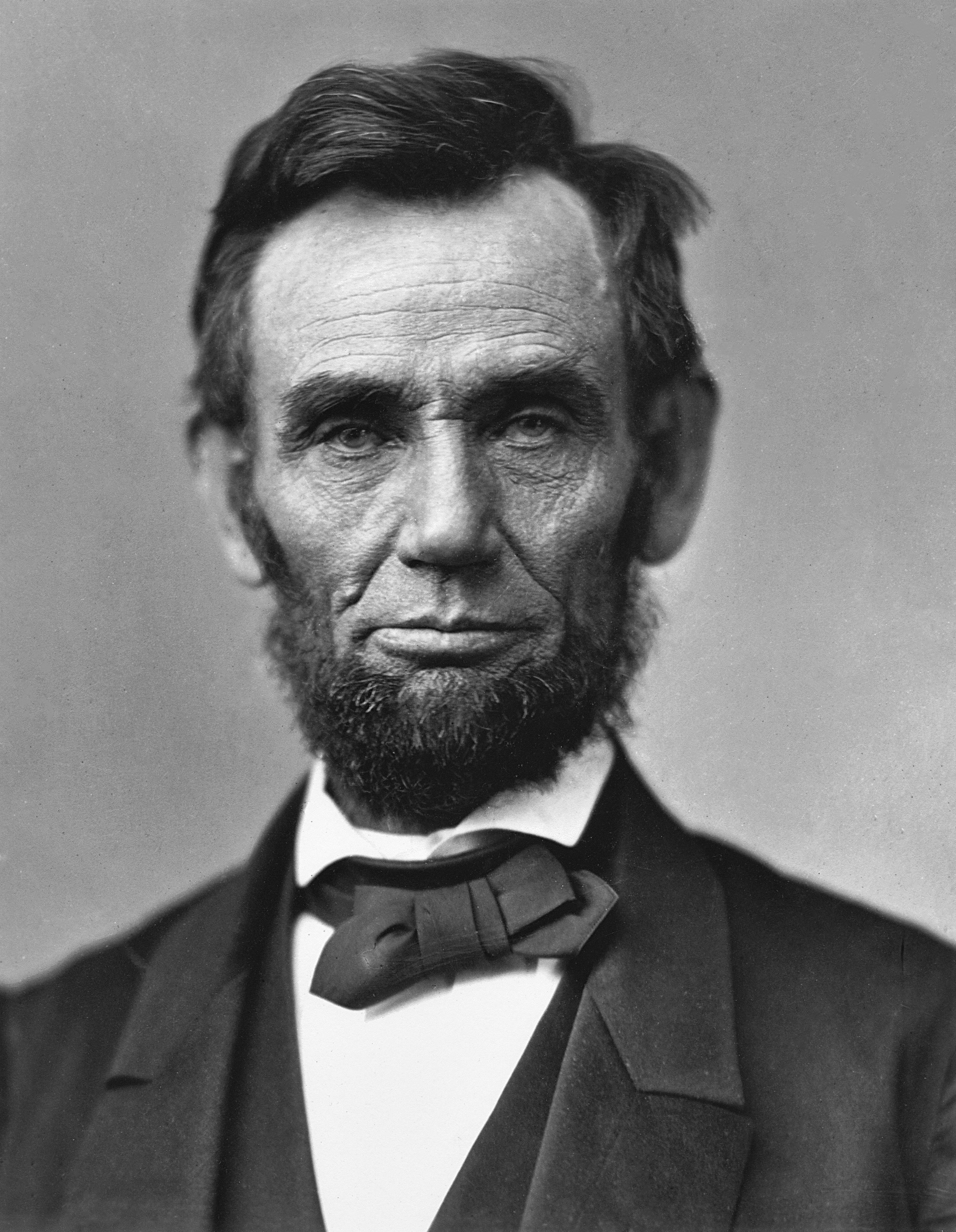
Why Abraham Lincoln matters
This record documents Abraham Lincoln, the sixteenth president of the United States, whose name also appears as an "artist" entry in some auction and market databases because of the volume of manuscripts, documents, and Lincoln memorabilia that circulate at auction. Lincoln was not a professional visual artist. This profile exists to give collectors and researchers a clear, sourced account of who he was, what carries his name at auction, and why the usual art-market framework (gallery representation, catalogue raisonne, exhibition history) largely does not apply to him.
- Born
- 1809-02-12, Hodgenville, Kentucky, USA
- Nationality
- American
- Media
- "Historical manuscripts and documents"
- Education
- No academy or college attendance; about one year of frontier schooling total in Kentucky and Indiana; self-taught in law, admitted to the Illinois bar in 1836; honorary Doctor of Laws degrees from Knox College (1860), Columbia University (1861), Princeton University (1864), and, posthumously, Illinois College (2009).
By the numbers
- USD 13.7MTop documented saleLincoln-signed copy of the Thirteenth Amendment, Sotheby's, 2025, a signed historical document rather than a visual artwork; exact sale date not confirmed
- NoneCatalogue raisonneLincoln was not a practicing visual artist
- None identifiedGallery or estate representationNo dealer or estate representation found for an artist of this name
- April 15, 1865DiedAssassinated at Ford's Theatre, Washington, D.C.; died the next morning at the Petersen House
Selected works
Click any work to view it full screen.
Biography
Abraham Lincoln was born on February 12, 1809, in Hodgenville, Kentucky, and grew up on frontier farms in Kentucky and Indiana. His formal schooling totaled roughly one year across several small "ABC schools," and he later described his early education as "defective." He taught himself the rest, working through grammar, mathematics, surveying, and eventually law on his own; he said of his legal training that he "studied with nobody." He was admitted to the Illinois bar in 1836 and built a career as a lawyer and politician in Illinois before his election as president in 1860.
As president, Lincoln led the United States through the Civil War, issued the Emancipation Proclamation, and pushed for the abolition of slavery, work that later brought him honorary Doctor of Laws degrees from Knox College (1860), Columbia University (1861), Princeton University (1864), and, posthumously, Illinois College (2009). On the evening of April 14, 1865, he was shot by John Wilkes Booth while attending a performance at Ford's Theatre in Washington, D.C. He was carried across the street to the Petersen House, where he died the following morning, April 15, 1865, at approximately 7:22 a.m. This account is corroborated by the Library of Congress, the National Park Service, and Ford's Theatre's own historical materials.
Critical reception
There is no body of art criticism treating Abraham Lincoln as a visual artist, because none exists. What does exist is sustained institutional and scholarly interest in depictions of Lincoln by other artists and in his own writings as historical documents. The Smithsonian's National Portrait Gallery displays a life-size 1865 portrait of Lincoln by W.F.K. Travers, one of a small number of portraits of Lincoln painted from life. The National Gallery of Art holds George P.A. Healy's 1860 portrait of Lincoln, which passed through the Corcoran Gallery of Art and the White House before its 2014 acquisition. The Art Institute of Chicago holds a bronze cast related to Daniel Chester French's monumental Lincoln sculpture. Institutions including the Burchfield Penney Art Center have separately exhibited Lincoln's own handwritten Emancipation Proclamation materials as historical artifacts rather than artworks.
Market
The highest documented price connected to Lincoln's name at auction is approximately USD 13.7 million, reported for a Lincoln-signed copy of the Thirteenth Amendment, co-signed by 151 senators and congressmen, sold at Sotheby's in 2025; the exact sale date has not been independently confirmed and this figure rests on a single published source, so it is treated here with caution. A more fully documented sale is the pair of stained leather gloves Lincoln carried the night of his assassination, which sold for USD 1,512,500 at Freeman's | Hindman's "Lincoln's Legacy" auction in Chicago on May 21, 2025. Other databases that list "Abraham Lincoln" as an artist, including MutualArt and Invaluable, show realized prices in the tens of thousands of dollars, well below these figures; this gap most likely reflects that these listings mix smaller pieces of ephemera and memorabilia rather than describing a coherent studio practice. Separately, a large body of Lincoln memorabilia, including clothing and personal effects, is also regularly sold as historical Americana by houses such as Freeman's | Hindman.
Top auction results
| Work | Price | Sale |
|---|---|---|
| Thirteenth Amendment, signed copy co-signed by 151 senators and congressmen (2025) | USD 13,700,000 (USD 13,700,000) | Sotheby's |
| Pair of stained leather gloves carried by Lincoln at Ford's Theatre (2025) | USD 1,512,500 (USD 1,512,500) | Freeman's | Hindman, Chicago, Illinois, 2025-05-21 |
Awards and honors
- Honorary Doctor of Laws, Knox College (1860)
- Honorary Doctor of Laws, Columbia University (1861)
- Honorary Doctor of Laws, Princeton University (1864)
- Honorary Doctor of Laws, Illinois College (posthumous) (2009)
Authentication and provenance
No catalogue raisonne.
No catalogue raisonne exists for this record because Abraham Lincoln was not a practicing visual artist. Autograph letters, manuscripts, and documents attributed to him are authenticated through provenance research and manuscript specialists, including the Library of Congress and major historical auction houses, rather than through an artist's studio or estate.
Primary reference: https://en.wikipedia.org/wiki/Abraham_Lincoln
What collectors should know
There is no catalogue raisonne for Abraham Lincoln and no gallery or estate that represents him, because he was a historical and political figure, not a practicing visual artist. Material sold under his name spans autograph letters and manuscripts, personal effects, and portraits made of him by other artists, categories with very different authentication standards; provenance and manuscript-specialist review, through institutions such as the Library of Congress, matter far more here than anything resembling artist-studio verification. Collectors should also be careful not to conflate this historical figure with Abraham Lincoln Walker (1921 to 1993), an unrelated self-taught painter from East St. Louis whose work has shown at galleries including Andrew Edlin Gallery in New York; the two share only a name.
Further reading and resources
Data current as of 2026-07-11.

