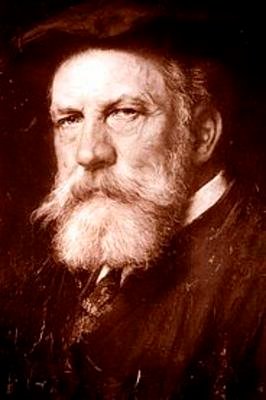
Why Adolf Schreyer matters
Adolf Schreyer was one of the most commercially successful German painters of the nineteenth century, a specialist in Orientalist horsemen, battle scenes, and Wallachian caravan subjects whose work was collected on both sides of the Atlantic during his lifetime. For today's collector, he represents a category of blue-chip nineteenth-century academic painting: museum-held, historically well documented, but traded today in a thin market with a single, decades-old high-water mark rather than a continuously rising price curve.
- Born
- 1828-07-09, Frankfurt am Main, Free City of Frankfurt (now Germany)
- Nationality
- German
- Media
- Painting
- Movement
- Orientalism, Dusseldorf School, German Romanticism
- Education
- Stadelsches Kunstinstitut (Stadelschule), Frankfurt, from c. 1843, under Jakob Becker; further study at the Kunstakademie Dusseldorf and the Munich Academy of Fine Arts, 1847 to 1848; additional training in Stuttgart, exact dates undocumented.
- Signature motifs
- Orientalist horsemen and battle scenes, Wallachian post-coach and caravan scenes
- Representation
- No estate or living gallery representation, Secondary market handled by specialist dealers in 19th-century painting, including Mark Murray Fine Paintings
By the numbers
- USD 464,000Auction highThe Chase, Christie's, New York, 2005
- 1864, 1865, 1867Paris Salon gold medals
- 1843 to 1899Active period
- None publishedCatalogue raisonne
Selected works
Click any work to view it full screen.
Biography
Adolf Schreyer, sometimes recorded as Christian Adolph Schreyer or indexed as Schreyer, Adolf in German-language catalogues, was born on 9 July 1828 in Frankfurt am Main, then the Free City of Frankfurt. He began formal art training around 1843 at the Stadelsches Kunstinstitut (Stadelschule) in Frankfurt under Jakob Becker, followed by short periods of study at the Kunstakademie Dusseldorf and the Munich Academy of Fine Arts between 1847 and 1848, with additional training in Stuttgart. His academy years reportedly included instruction in riding and equine anatomy, a grounding that shaped his lifelong specialty in horse and battle painting.
Schreyer traveled through the Danube region and Wallachia in the 1850s and later to North Africa, journeys that supplied the raw material for his best-known subjects: mounted Arab warriors, desert caravans, and mail coaches struggling through snow or rain. He also painted scenes drawn from the Crimean War, drawing on his own service as a war artist. He settled in Paris in 1862 and began exhibiting at the Paris Salon in 1864, winning gold medals there in 1864, 1865, and 1867, following an earlier gold medal for art in Brussels in 1863. He also became a member of the art academies of Antwerp and Rotterdam.
Schreyer later returned to Germany and settled in Kronberg im Taunus, an artists' colony near Frankfurt, where he continued to paint until the end of his life. He died on 29 July 1899 in Kronberg im Taunus.
Critical reception
Schreyer's contemporaries in Paris praised the technical fidelity and harmonious tonality of his Salon paintings, and his gold medals there in 1864, 1865, and 1867 confirmed his standing within the official French exhibition system. His Wallachian genre scenes drew pointed praise from German critics for their unsentimental realism, and nineteenth-century sources note that his paintings were widely held in private collections in Germany, England, and the United States during his lifetime. That combination of Salon recognition and broad private collecting is the throughline of his critical reputation.
Market
Schreyer's confirmed all-time auction record is The Chase, sold for USD 464,000 at Christie's in New York in 2005; the exact day and month of that sale are not publicly documented in available auction-market summaries, and no higher price has been recorded since, as of 2026. Below that ceiling, results vary widely by subject and quality: Bonhams has carried major Orientalist horsemen scenes with estimates in the USD 120,000 to 180,000 range, while broader secondary-market listings on platforms such as 1stDibs show realized prices spanning roughly USD 2,000 to just over USD 100,000, with an average closer to USD 20,000. This spread reflects a market built on a large body of studio and workshop-level production alongside a smaller number of major exhibition-quality canvases.
Top auction results
| Work | Price | Sale |
|---|---|---|
| The Chase (2005) | USD 464,000 (USD 464,000) | Christie's, New York |
Selected exhibitions
| Years | Exhibition | Venues |
|---|---|---|
| 1864 | Paris Salon | Paris Salon, Paris |
| 1865 | Paris Salon | Paris Salon, Paris |
| 1867 | Paris Salon | Paris Salon, Paris |
Museum collections
- Metropolitan Museum of Art, New York
- Musee du Luxembourg, Paris
- Stadel Museum, Frankfurt am Main
- Kunsthalle Hamburg
Awards and honors
- Gold Medal for Art, Brussels (1863)
- Gold Medal, Paris Salon (1864)
- Gold Medal, Paris Salon (1865)
- Gold Medal, Paris Salon (1867)
- Medal, Munich (1876)
Authentication and provenance
No catalogue raisonne.
No published catalogue raisonne exists for Schreyer. Authentication for works attributed to him relies on connoisseurship by specialist dealers in nineteenth-century painting, signature analysis (he typically signed as Ad. Schreyer), and sale or exhibition provenance.
Primary reference: https://www.artnet.com/artists/adolf-schreyer/
What collectors should know
There is no published catalogue raisonne for Schreyer, so attribution and dating rest on connoisseurship, signature analysis, and documented sale or exhibition history rather than a single authenticating body. His market has one clearly documented ceiling, the USD 464,000 result for The Chase in 2005, and collectors should treat that figure as a historical high point rather than a floor: the bulk of his output, including smaller studies and studio-period repetitions of popular Orientalist subjects, trades far below it. Because supply is large relative to top-tier demand, provenance, exhibition history, and the specific subject and scale of a given canvas matter more for value than they would for an artist with a tighter, catalogued body of work.
Further reading and resources
Data current as of 2026-07-13.

