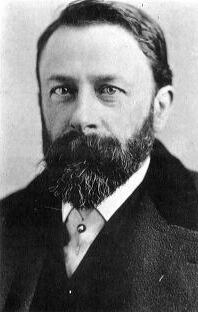
Why Albert Bierstadt matters
Albert Bierstadt is one of the artists most responsible for how nineteenth-century Americans, and later generations, pictured the West. His large, dramatically lit canvases of the Rocky Mountains and the Sierra Nevada, painted from sketches gathered on survey and travel expeditions, helped shape a national image of wilderness at the very moment the frontier was closing. He died in 1902, so his market is a fixed, closed body of work rather than a growing one, which makes provenance, scale, and exhibition history the primary drivers of value for any individual painting.
- Born
- 1830-01-07, Solingen, Prussia (present-day Germany)
- Nationality
- German-American
- Media
- Painting
- Movement
- Hudson River School, Rocky Mountain School
- Education
- Largely self-taught early on; informal training in Dusseldorf, Germany, circa 1853 to 1857, alongside Emanuel Leutze and Worthington Whittredge. No degree or diploma is documented.
- Signature motifs
- Grand Rocky Mountain and Yosemite landscapes, Luminous atmospheric light effects
- Representation
- "No current gallery representation; artist is deceased", "Secondary market handled through major auction houses (Christie's, Sotheby's, Heritage Auctions) and specialist American-art dealers"
By the numbers
- USD 7.32MAuction highIndians Spear Fishing, Christie's New York, 2008
- 1853 to 1902Career spanFrom formal training in Dusseldorf to his death in New York
- Hudson River School, Rocky Mountain SchoolMovement
- DeceasedStatusSecondary-market artist; no living gallery representation
Selected works
Click any work to view it full screen.
Biography
Bierstadt was born on January 7, 1830, in Solingen, Prussia, in what is now Germany, and his family emigrated to New Bedford, Massachusetts, while he was a young child. He was largely self-taught as a painter and was already advertising himself as a drawing instructor in the Boston area by 1850, around the time he began working in oils. In 1853 he traveled to Germany seeking more formal training, settling for several years in Dusseldorf, where he studied informally alongside the American painters Emanuel Leutze and Worthington Whittredge and absorbed the meticulous, dramatic style associated with the Dusseldorf School. He toured Switzerland and Italy on sketching trips before returning to New Bedford in 1857 as a technically accomplished painter.
His New York debut came in 1858, when he showed a large view of Lake Lucerne and the Swiss Alps at the National Academy of Design's annual exhibition; the reception was strong enough to earn him honorary membership in the Academy that same year. He joined Frederick W. Lander's government survey expedition west in 1859, the first of several trips that supplied material for his signature paintings of the Rocky Mountains and, later, Yosemite. The Rocky Mountains, Lander's Peak, shown at New York's Metropolitan Sanitary Fair in 1864, was a career-defining success that established him alongside Frederic Church as a leading American landscape painter.
Between 1867 and 1869 Bierstadt toured Europe, exhibiting in Paris, London, Rome, and Berlin; one source credits him with medals awarded in Austria, Bavaria, Belgium, and Germany during this period, though the specific occasions are not fully documented. He continued to paint and exhibit into the 1880s, including repeated showings at the Paris Salon, even as critical taste began shifting toward Impressionism and away from his large exhibition-style canvases. He died suddenly on February 18, 1902, at his home in New York City, at the age of 72.
Critical reception
Bierstadt was one of the most celebrated American painters of his own lifetime, honored by an academy on both sides of the Atlantic and, for a period in the 1860s, a rival to Frederic Church for the position of the nation's leading landscape painter. That standing declined by the century's end as taste moved toward Impressionism and away from his large, theatrical exhibition pictures, and his reputation went through decades of relative critical neglect before a mid-twentieth-century revival tied to renewed scholarly interest in the Hudson River School. Contemporary museums and scholars increasingly read his Western paintings through a more critical lens as well, examining how his romanticized, heroic vistas shaped, and in some cases distorted, the era's understanding of Native peoples and the Western landscape; museum presentations built around individual works, such as Mount Holyoke College Art Museum's holding of Hetch Hetchy Canyon, have used the paintings to open this conversation for modern audiences.
Market
Bierstadt's auction record is Indians Spear Fishing, which sold at Christie's New York in 2008 for USD 7,321,000, a price the house has described as a world auction record for the artist. That figure has stood for close to two decades and remains the benchmark against which his other major exhibition-scale canvases are measured. Beneath that record, two other results anchor his upper market: Mount Rainier (1898) sold for about USD 2.1 million at the Coeur d'Alene Art Auction in Reno on July 23, 2006, in a sale where two Bierstadt paintings together totaled roughly USD 4 million, and Yosemite Valley, Looking Toward Cathedral Rocks separately sold for USD 2,153,000 at a later Coeur d'Alene sale. Because he was a prolific painter, working across a wide range of scale and finish, price is closely tied to the specific subject, size, and exhibition pedigree of a given canvas rather than to the artist's name alone.
Top auction results
| Work | Price | Sale |
|---|---|---|
| Indians Spear Fishing | USD 7,321,000 | Christie's, New York, 2008-05-21 |
Selected exhibitions
| Years | Exhibition | Venues |
|---|---|---|
| 1858 | Annual exhibition (Lake Lucerne and the Swiss Alps) | National Academy of Design, New York |
| 1858 | New Bedford Art Exhibition | New Bedford, Massachusetts |
| 1859 to 1867 | Annual exhibitions | Pennsylvania Academy of the Fine Arts, Philadelphia |
| 1861 to 1881 | Annual exhibitions | Brooklyn Art Association |
| 1864 | Metropolitan Sanitary Fair (The Rocky Mountains, Lander's Peak) | New York |
| 1867 to 1869 | European tour exhibitions | Paris, London, Rome, Berlin, including the Royal Academy, London |
| 1869 to 1889 | Paris Salon | Paris, France |
| 2011 to 2012 | The Great American Hall of Wonders | Smithsonian American Art Museum, Washington, D.C. |
Museum collections
- Smithsonian American Art Museum, Washington, D.C.
- National Gallery of Art, Washington, D.C.
- Harvard Art Museums (Fogg Museum), Cambridge, Massachusetts
- Mount Holyoke College Art Museum, South Hadley, Massachusetts
Awards and honors
- Honorary member, National Academy of Design (1858)
Authentication and provenance
No catalogue raisonne.
No published catalogue raisonne has been located for Bierstadt. Works are typically authenticated through provenance research, period exhibition records, and specialist review by major auction houses.
Primary reference: https://www.christies.com/en/artists/albert-bierstadt
What collectors should know
Because Bierstadt is deceased and there is no published catalogue raisonne, buyers rely heavily on provenance, period exhibition records, and the judgment of auction house specialists to authenticate and value individual works. His market rewards scale and subject: the large, dramatically lit Western vistas that made his reputation trade far above the smaller studio sketches and studies he produced in great volume. The 2008 auction record has held for roughly eighteen years, a reminder that truly museum-quality, exhibition-scale Bierstadt canvases come to market rarely, and that any comparison across sales should account for the significant range in size and ambition within his output.
Further reading and resources
Data current as of 2026-07-09.

