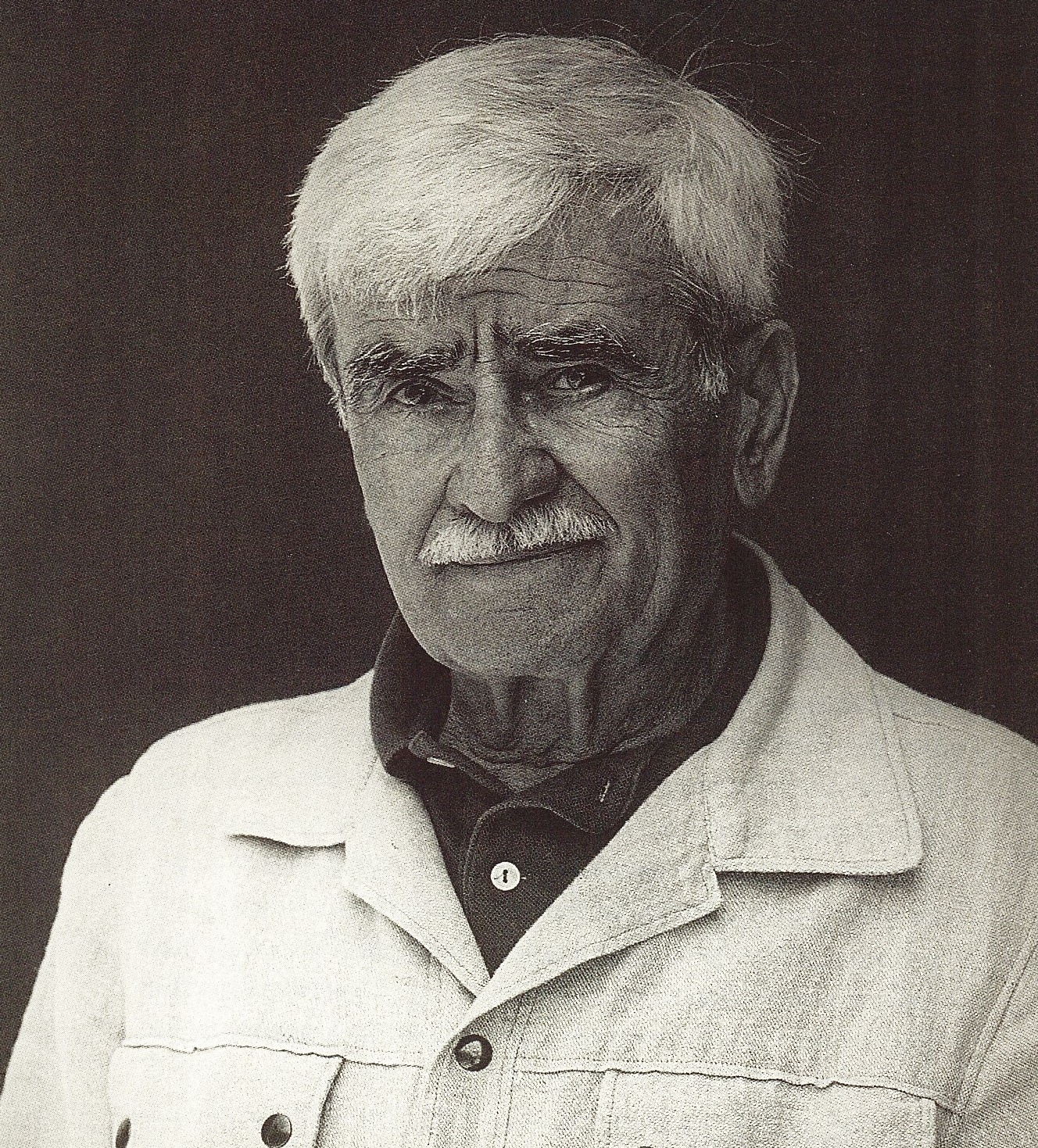
Why Alberto Burri matters
Alberto Burri stands as one of the most consequential figures in post-war art, a doctor turned pioneer who moved abstraction beyond paint into the physical world itself. For collectors, Burri's work marks a crossroads between European Informalism and the material experimentation that would define contemporary practice. His auction high of 13 million dollars places him firmly in the conversation about old masters of the twentieth century, yet his influence on younger artists remains underestimated outside scholarly circles.
- Born
- 1915-03-12, Città di Castello, Italy
- Nationality
- Italian
- Media
- Painting, Mixed-media assemblage
- Movement
- Art Informel, Matterism
- Education
- University of Perugia, MD 1940; began painting while imprisoned in a POW camp in Hereford, Texas (1944)
- Signature motifs
- Burlap sacks, Combustion, Plastic and tar, Found materials
By the numbers
- GBP 9.1MAuction highSacco e Rosso (c. 1959), Sotheby's London, February 2016
- Art Informel; MatterismArt movementPost-war Italian pioneer of material-based abstraction
- Solomon R. Guggenheim (1978, 2015); Musee National d'Art Moderne (1972)Major retrospectivesLast major survey: Guggenheim, 2015-16
- Sao Paulo Biennial, 1959UNESCO PrizeAlso Critics Prize, Venice Biennale, 1960
Selected works
Click any work to view it full screen.
Biography
Burri was born in 1915 in Città di Castello, a small town in Umbria, and trained as a physician at the University of Perugia, graduating in 1940. In October 1940, shortly after Italy entered World War II, he was called up for military service and sent to North Africa. On May 8, 1943, his unit was captured by Allied forces in Tunisia and he was transferred to a prisoner-of-war camp near Hereford, Texas. It was there, in captivity and homesick, that he began to paint.
After the war ended in 1945, Burri remained in Texas briefly before returning to Italy around 1946. He settled in Rome and committed to art full-time, abandoning his medical practice. His early work drew on landscape and still-life traditions, but by the late 1940s he began experimenting with unconventional materials: burlap sacks, tar, tar-like resins, plastic, and combustion. The series known as the Sacchi (sacks), begun in the late 1940s and developed throughout the 1950s, became his signature. These works stitched, layered, and burned burlap fabric to canvas, creating textured surfaces that evoked both abstraction and history. The work Sacco e Rosso, executed around 1959, would become his most celebrated piece.
From the late 1950s onward, Burri continued to explore material innovation. He worked with combustion on plastic and cellotex boards, creating works that appeared partially burned or charred. He participated in every major Biennial and Biennale of his era, and his work entered major museums across Europe and North America. He lived and worked in Rome for much of his career, later splitting time between Rome and his hometown of Città di Castello, where he eventually established a foundation. He died in Nice, France, in 1995 at the age of 79.
Critical reception
Critics and museums have long positioned Burri as a central figure bridging European Informalism and American Abstract Expressionism. His work is often paired with Lucio Fontana's spatialism on one side and Robert Rauschenberg's material investigations on the other. The recurring critical theme is that Burri's use of humble, found materials transformed abstraction from a purely visual language into a material and historical one. His Sacchi are read as both pure abstraction and implicit commentary on war, labor, and everyday life.
The trajectory of his recognition was swift: he showed internationally by the early 1950s, earned the UNESCO Prize at the 1959 Sao Paulo Biennial, and received the Critics Prize at the 1960 Venice Biennale. A major retrospective at the Guggenheim in 1978 confirmed his canonical status. When the Guggenheim mounted a second major retrospective in 2015-16, it underscored that his influence persists across contemporary practice, particularly in artists working with non-traditional substrates and processes.
Market
Burri's market centers on the Sacchi series and his most audacious material experiments. His auction high is Sacco e Rosso, a monumental canvas from circa 1959 featuring stitched burlap and red pigment, which sold for GBP 9,109,000 (approximately USD 13.1 million) at Sotheby's London on February 10, 2016. The sale marked a new record for the artist and reflected strong institutional demand. His second-highest result is Nero Plastica L.A., a work combining plastic, synthetic polymer paint, and Vinavil on fabric, which brought USD 10,953,500 at Sotheby's New York in November 2017.
Burri's market is characterized by supply scarcity. The artist's estate is carefully managed by the Fondazione Burri in Città di Castello, and new works appear at auction infrequently. This scarcity, combined with his profound influence on post-war European and American abstraction, sustains high valuations for authenticated works in good condition.
Top auction results
| Work | Price | Sale |
|---|---|---|
| Sacco e Rosso (c. 1959) | USD 13,100,000 (GBP 9,109,000) | Sotheby's, London, 2016-02-10 |
| Nero Plastica L.A. (1974) | USD 10,953,500 (USD 10,953,500) | Sotheby's, New York, 2017-11-16 |
Selected exhibitions
| Years | Exhibition | Venues |
|---|---|---|
| 2015 to 2016 | Alberto Burri | Solomon R. Guggenheim Museum, New York |
| 1978 | Alberto Burri | Solomon R. Guggenheim Museum, New York |
| 1972 | Alberto Burri | Musee National d'Art Moderne, Paris |
| 1963 | Alberto Burri | Museum of Fine Arts, Houston |
| 1977 | Alberto Burri | University of California, Los Angeles |
Museum collections
- Solomon R. Guggenheim Museum, New York
- Tate, London
- Centre Pompidou, Paris
- Galleria Nazionale d'Arte Moderna e Contemporanea, Rome
Awards and honors
- UNESCO Prize, Sao Paulo Biennial (1959)
- Critics Prize, Venice Biennale (1960)
- Italian Order of Merit (1994)
Authentication and provenance
No catalogue raisonne.
Works verified through the Fondazione Burri in Città di Castello (the artist's birthplace museum) and historical auction records.
Primary reference: https://fondazioneburri.org/la-fondazione/storia/
What collectors should know
Burri's scarcity is both an asset and a constraint. Authenticated works command premium prices, but few come to market each year. The Fondazione Burri in Città di Castello, while not formally publishing a catalogue raisonne in the traditional sense, maintains comprehensive archives and participates in authentication work alongside auction houses. For collectors, provenance and condition are paramount.
The Sacchi series remains most sought-after, particularly works from the late 1940s and 1950s executed in stitched burlap. Later works employing combustion and plastic are valued but may sell at a discount to the iconic sacks. Works on canvas tend to command higher prices than those on cellotex, though exceptional cellotex works have established strong precedent.
Burri's place in museum collections across Europe and North America, combined with his documented influence on artists from Rauschenberg to contemporary practitioners, suggests durability. His low auction frequency means individual sales can move the market significantly. For a collector, his position as a foundational figure in post-war material abstraction is the primary signal of long-term value.
Data current as of 2026-07-06.

