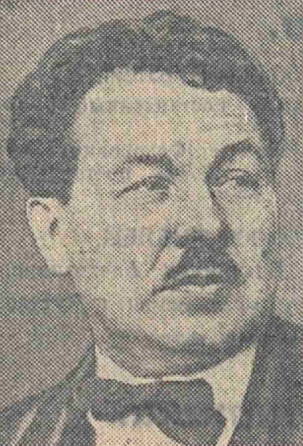
Why Aleksandr Gerasimov matters
Aleksandr Gerasimov was the most institutionally powerful painter of the Stalin era, the artist most closely identified with official Soviet portraiture and, for a decade, the man who ran Soviet art policy as the first president of the USSR Academy of Arts. For collectors, he matters as a benchmark name in the market for Soviet socialist realism, a historically documented painter whose best works (state portraits and still lifes alike) sit in major museum and archival collections even though his auction market remains thin and its top prices modest by comparison with Western contemporaries of similar historical stature.
- Born
- 1881-08-12, Kozlov (now Michurinsk), Tambov Governorate, Russian Empire
- Nationality
- Russian
- Media
- Painting
- Movement
- Socialist Realism
- Education
- Moscow School of Painting, Sculpture and Architecture (MUZhVZ), 1903 to 1915; graduated as artist of the 1st degree (painting) and architect
- Signature motifs
- Official Soviet portraiture, Still-life flower painting
By the numbers
- GBP 302,400Auction highWildflowers, Sotheby's London, 16 June 2021
- 4Stalin Prizes1941, 1943, 1946, 1949
- 1943People's Artist of the USSR
- 1947 to 1957President, USSR Academy of Arts
Selected works
Click any work to view it full screen.
Biography
Aleksandr Mikhailovich Gerasimov was born on 12 August 1881 (31 July, Old Style) in Kozlov, in the Tambov Governorate of the Russian Empire, a town now renamed Michurinsk. He studied at the Moscow School of Painting, Sculpture and Architecture from 1903 to 1915, entering the painting department and later adding architecture, under instructors including Abram Arkhipov, Nikolai Kasatkin, Konstantin Korovin, and Valentin Serov. He graduated in 1915 with the title of artist of the 1st degree and architect.
In the 1920s he exhibited with the Association of Artists of Revolutionary Russia and its successor group, participating in major commemorative shows including the 1928 exhibition marking the tenth anniversary of the October Revolution and the 1929 First Traveling Exhibition of Painting and Drawing. Through the 1930s he became the Soviet Union's leading painter of official subjects, producing large-scale portraits of Stalin and other Soviet leaders. His still life Peonies (1931) was chosen to represent the USSR at the Carnegie Institute's 1935 International Exhibition of Paintings in Pittsburgh, and his painting The 1st Cavalry Army won the Grand Prix at the 1937 Paris World Exhibition.
He was awarded the Stalin Prize four times, three of first degree (1941, 1943, 1946) and one of second degree (1949), and became, in 1943, the first Soviet artist to receive the title People's Artist of the USSR. In 1947 he was made an academician and became the first president of the newly formed USSR Academy of Arts, a post he held until 1957, chairing the organizing committee of the Union of Soviet Artists for roughly the same span. In 1951 he received the degree of Doctor of Arts (Doctor of Art Studies). He continued to exhibit internationally, taking a bronze medal at the 1958 Brussels World Exhibition, and received the Order of the Red Banner of Labour. He died on 23 July 1963 in Moscow, at 81; contemporary Western press, including a New York Times obituary, described him as "Stalin's favorite painter."
Critical reception
Contemporary Soviet critics framed Gerasimov as a painter of confident, optimistic color and technical bravura, with writers such as A. Zamoshkin in 1936 and Victor Lobanov in 1943 praising his color handling and his treatment of flower still lifes in monographs on the artist. Later assessments, including his 1963 Western obituaries, treat him less as a formal innovator than as the artist most associated with state-directed Soviet portraiture under Stalin, and his career is widely read today through that political lens as much as through style.
Market
Gerasimov's confirmed auction record is Wildflowers, a still-life painting sold at Sotheby's in London for GBP 302,400 on 16 June 2021 as part of a Russian Pictures sale. A second major result, the still life Peonies (1931), sold at Christie's London for GBP 230,500 on 26 November 2013. Published price surveys place the general range for his paintings roughly between four figures and the low six figures in euros, with drawings trading well below that. Some market databases cite higher lifetime auction totals for the artist without specifying the underlying work, house, or sale date; those figures cannot presently be tied to a single verifiable transaction and are not treated here as the record.
Top auction results
| Work | Price | Sale |
|---|---|---|
| Wildflowers | GBP 302,400 | Sotheby's, London, 2021-06-16 |
Selected exhibitions
| Years | Exhibition | Venues |
|---|---|---|
| 1926 to 1930 | Association of Artists of Revolutionary Russia (AKhRR / AKhR) exhibitions | Moscow |
| 1928 | Exhibition of Works of Art for the 10th Anniversary of the October Revolution | Moscow |
| 1929 | First Traveling Exhibition of Painting and Drawing | USSR, touring |
| 1935 | International Exhibition of Paintings | Carnegie Institute, Pittsburgh |
| 1936 | Personal exhibition | Moscow |
| 1937 | Exposition Internationale des Arts et Techniques (World Exhibition) | Paris |
| 1939 | The Industry of Socialism | Moscow |
| 1958 | World Exhibition (Expo 58) | Brussels |
Museum collections
- Tate, London
- A.M. Gerasimov Museum-Estate, Michurinsk, Russia
Awards and honors
- Grand Prix, Exposition Internationale des Arts et Techniques, Paris, for The 1st Cavalry Army (1937)
- Stalin Prize, First Degree (1941)
- Stalin Prize, First Degree (1943)
- People's Artist of the USSR (1943)
- Stalin Prize, First Degree (1946)
- First President, USSR Academy of Arts (1947 to 1957) (1947)
- Stalin Prize, Second Degree (1949)
- Order of the Red Banner of Labour
Authentication and provenance
No catalogue raisonne.
No catalogue raisonne has been identified for the artist. Attribution and provenance work rely on Soviet-era museum and archival records, the A.M. Gerasimov Museum-Estate in Michurinsk, and auction-house scholarship such as Christie's provenance notes on individual lots.
Primary reference: https://en.wikipedia.org/wiki/Aleksandr_Gerasimov_(painter)
What collectors should know
Gerasimov has no catalogue raisonne, so provenance research depends on Soviet-era museum and archival records, the A.M. Gerasimov Museum-Estate in Michurinsk, and the documentation compiled by auction houses handling individual lots. No current commercial gallery or estate representative could be confirmed, which is typical for an artist deceased more than sixty years whose reputation now rests on museum holdings, most notably at Tate in London, rather than an active primary market. Because his auction history is limited and reported figures vary meaningfully between market databases, collectors should treat any single quoted "record" price with some caution and verify sale specifics directly against the originating auction house before relying on it.
Further reading and resources
Data current as of 2026-07-11.

