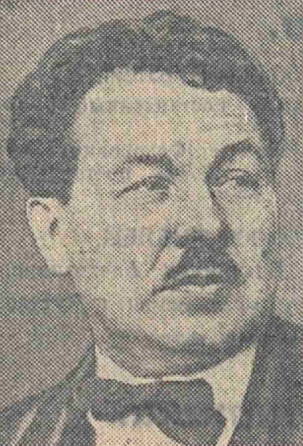
Why Aleksandr Mikhailovich Gerasimov matters
Aleksandr Mikhailovich Gerasimov was the most institutionally powerful painter of the Soviet Union's Stalin era, serving as the first president of the Academy of Arts of the USSR and as the state's preferred portraitist of Stalin, Lenin, and Voroshilov. He is the paradigmatic example of Socialist Realism as an official style, decorated four times with the Stalin Prize and named People's Artist of the USSR, which makes his work a primary historical document of Soviet state art rather than a conventional market darling. For collectors, his significance is chiefly historical and institutional, anchored in Russian state museums, with a market that trades on political and art historical interest more than on the scale or liquidity seen in Western modern and contemporary art.
- Born
- 1881-08-12, Kozlov, Tambov Governorate, Russian Empire (now Michurinsk, Russia)
- Nationality
- Russian, Soviet era
- Media
- Painting, Drawing
- Movement
- Socialist Realism
- Education
- Moscow School of Painting, Sculpture and Architecture, Painting and Architecture departments, 1903 to 1915, under Konstantin Korovin, Abram Arkhipov, Nikolai Kasatkin, and Valentin Serov; graduated 1915 as artist of the 1st degree and architect; Doctor of Arts, 1951
- Signature motifs
- Portraits of Soviet leaders, Flower still lifes
- Representation
- A.M. Gerasimov Museum-Estate, Michurinsk
By the numbers
- USD 566,598Auction highStill Life with Roses, Sotheby's London, 2012 (exact sale day unconfirmed)
- 1943People's Artist of the USSR
- 4Stalin Prizes1941, 1943, 1946, 1949
- First President, 1947 to 1957Academy of Arts of the USSR
Biography
Aleksandr Mikhailovich Gerasimov was born on 12 August 1881 (31 July 1881, Old Style) in Kozlov, Tambov Governorate, a provincial town in the Russian Empire's black earth region now called Michurinsk. He attended parish and district schools in his hometown and helped his father's livestock trade before leaving for Moscow in 1903 to pursue formal art training.
From 1903 to 1915 he studied at the Moscow School of Painting, Sculpture and Architecture, first in the Painting Department under Konstantin Korovin, Abram Arkhipov, Nikolai Kasatkin, and Valentin Serov, and then in the Architecture Department, graduating in 1915 with the diploma of artist of the 1st degree and architect. Before the Revolution he showed with independent and itinerant artist groups, including the Fellowship of Independents (1909 to 1911) and the Society of Travelling Art Exhibitions, or Peredvizhniki (1913 to 1915).
After 1917, Gerasimov turned to the subjects that would define his career: monumental depictions of Soviet leaders and state occasions. His Lenin on the Tribune (1929 to 1930, State Historical Museum, Moscow, with a 1947 repetition in the State Tretyakov Gallery) and Stalin and Voroshilov in the Kremlin (1938, State Tretyakov Gallery) became touchstones of the style. He also painted flower still lifes throughout his career, a personal counterpoint to his official commissions. He rose through Soviet cultural administration, chairing the Organizing Committee of the Union of Soviet Artists from 1939 to 1954 and becoming an academician and the first president of the Academy of Arts of the USSR from 1947 to 1957. He received the People's Artist of the USSR title in 1943, was named Doctor of Arts in 1951, and was awarded the Stalin Prize four times, in 1941, 1943, 1946, and 1949, along with the Order of the Red Banner of Labour in 1961.
Gerasimov died on 23 July 1963 in Moscow and was buried at Novodevichy Cemetery. His legacy is preserved today primarily through the A.M. Gerasimov Museum-Estate in his native Michurinsk, which holds a large body of his work alongside the major state museum collections in Moscow and St. Petersburg.
Critical reception
Soviet-era criticism treated Gerasimov as the exemplary painter of Socialist Realism, praised in his own time for both his state subjects and his flower still lifes. A 1943 monograph by the critic B. Lobanov, later cited in a Christie's catalogue note, described his floral still lifes as treated like living beings, framing them as an attempt to capture nature's life giving beauty. That same official esteem, expressed through his Academy presidency and four Stalin Prizes, is what later criticism has had to reckon with. Post-Soviet exhibitions have reframed him more as a subject of study than a simple hero: the 2012 London exhibition Velasquez Stalin: Alexander Gerasimov and the Alchemy of Power, at the Leonid Shishkin Gallery, and a 2016 retrospective at the State Historical Museum in Moscow marking his 135th anniversary, both situate his work within the machinery of Stalin-era image making rather than treating it as neutral portraiture.
Market
Gerasimov's market is thin, specialized, and shaped by the split between his politically charged Soviet-leader paintings and his flower still lifes, which tend to attract different buyers. The best-documented result is Still Life with Roses, reported sold at Sotheby's, London, in 2012 for about USD 566,598, a figure corroborated by more than one market source, though the exact day of that sale could not be confirmed. Broader market tracking shows results for the artist ranging from roughly USD 131 to that 2012 high, reflecting a wide spread between minor drawings and his strongest paintings. His work is handled almost entirely through Russian and Soviet art specialists at major auction houses, including Christie's, Sotheby's, and MacDougall's, along with Moscow-based houses such as Sovcom, rather than through a contemporary commercial gallery.
Top auction results
| Work | Price | Sale |
|---|---|---|
| Still Life with Roses (2012) | USD 566,598 | Sotheby's, London, 2012 |
Selected exhibitions
| Years | Exhibition | Venues |
|---|---|---|
| 1909 to 1911 | Tovarishchestvo Nezavisimykh (Fellowship of Independents) | Moscow |
| 1913 to 1915 | Society of Travelling Art Exhibitions (Peredvizhniki) | Russian Empire |
| 1937 | World Exhibition (Exposition Internationale) | Paris; Grand Prix awarded to Gerasimov |
| 1939 to 1940 | New York World's Fair | New York |
| 1947 to 1957 | Academy of Arts of the USSR exhibition program | Moscow, under Gerasimov's presidency of the Academy |
| 1958 | Expo '58 | Brussels |
| 2012 | Velasquez Stalin: Alexander Gerasimov and the Alchemy of Power | Leonid Shishkin Gallery, London |
| 2016 | Aleksandr Gerasimov, for the 135th Anniversary of the Artist | State Historical Museum, Moscow |
Museum collections
- State Tretyakov Gallery, Moscow
- State Russian Museum, St. Petersburg
- State Historical Museum, Moscow
- State Museum of Contemporary History of Russia, Moscow
- National Art Museum of the Republic of Belarus, Minsk
- A.M. Gerasimov Museum-Estate, Michurinsk
Awards and honors
- Grand Prix, World Exhibition, Paris (1937)
- Stalin Prize, First Degree (1941)
- People's Artist of the USSR (1943)
- Stalin Prize, First Degree (1943)
- Stalin Prize, First Degree (1946)
- Academician, Academy of Arts of the USSR; First President, 1947 to 1957 (1947)
- Stalin Prize, Second Degree (1949)
- Doctor of Arts (1951)
- Order of the Red Banner of Labour (1961)
Authentication and provenance
No catalogue raisonne.
No published catalogue raisonne or certificate-of-authenticity program has been identified for the artist. Attribution relies on documentation held by state museums, the A.M. Gerasimov Museum-Estate archive in Michurinsk, and provenance research conducted by auction houses that handle Russian and Soviet art.
Primary reference: https://en.wikipedia.org/wiki/Aleksandr_Gerasimov_(painter)
What collectors should know
Gerasimov's paintings of Stalin, Lenin, and Soviet state occasions are inseparable from the propaganda apparatus they served, and any responsible presentation of the work should describe that context plainly rather than treat it as incidental. There is no catalogue raisonne, so attribution depends on documentation from state museums, the Michurinsk museum-estate, and auction-house provenance research, which places a premium on paper trail over connoisseurship alone. The auction record is comparatively small and dominated by a single well-documented high point from 2012, so collectors should treat any individual sale, and especially any claimed record, with the understanding that the underlying dataset is thin and that the political subject of a given work materially affects both interest and price.
Further reading and resources
Data current as of 2026-07-16.

