Alexandre Benois
Russian, later French, 1870 to 1960
Painting · Stage and costume design · Book illustration · Art criticism and history
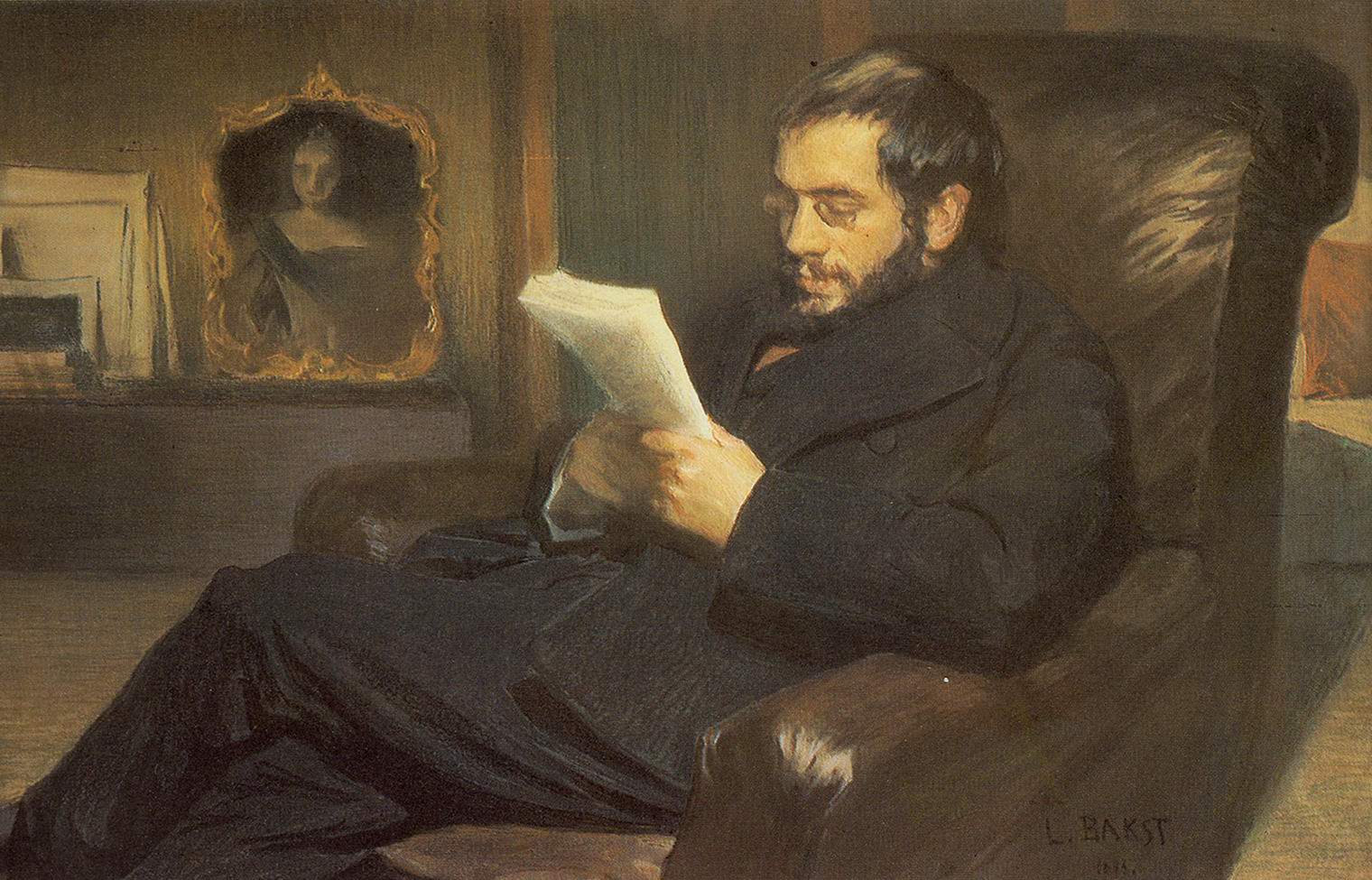
Why Alexandre Benois matters
Alexandre Benois stands at the center of Russia's Silver Age as a painter, illustrator, historian, and above all a stage designer whose collaborations with Sergei Diaghilev helped define the visual language of modern ballet. For a collector, he matters less as a single-medium market and more as a documented cultural figure whose work sits inside major museum theatre and design collections, with a secondary market that is active but comparatively thin and dispersed across paintings, drawings, and stage designs.
- Born
- 1870-05-03, Saint Petersburg, Russian Empire
- Nationality
- Russian, later French
- Media
- Painting, Stage and costume design, Book illustration, Art criticism and history
- Movement
- "Mir iskusstva (World of Art)", "Russian Silver Age", "Ballets Russes design"
- Education
- Saint Petersburg Imperial University, Faculty of Law, graduated 1894. Also studied art at the Imperial Academy of Arts, Saint Petersburg, though no completed art degree is documented.
- Signature motifs
- "Ballet and opera stage and costume design", "Historical Saint Petersburg cityscapes", "Illustrated editions of Russian literature, including The Bronze Horseman"
- Representation
- No confirmed exclusive gallery or estate representation as of 2026; works trade through major auction houses and secondary-market dealers
By the numbers
- Mir iskusstva, 1898FoundedWith Sergei Diaghilev and Leon Bakst
- Actively traded, no single confirmed record priceAuction marketReported results vary across sources; see Market section
- No exclusive galleryRepresented byEstate works trade via major auction houses
Selected works
Click any work to view it full screen.
Biography
Alexandre Nikolayevich Benois was born on 3 May 1870 (21 April, Old Style) in Saint Petersburg, into an artistically prominent family of French and Italian descent that had been established in Russia for generations. Rather than train exclusively as an artist, he pursued a formal law degree at Saint Petersburg Imperial University, graduating in 1894, while also studying painting at the Imperial Academy of Arts in Saint Petersburg, largely alongside his older brother and through independent study.
In 1898 Benois co-founded, with Sergei Diaghilev and Leon Bakst, the magazine and artistic circle Mir iskusstva (World of Art), which became the organizing force behind a generation of Russian painters, designers, and critics and which later gave rise to Diaghilev's Ballets Russes. Benois worked as a painter and illustrator, most notably producing the illustrations for Alexander Pushkin's The Bronze Horseman, and built a parallel career as an art critic, historian, and preservationist advocating for the protection of Russia's historic buildings and art collections.
His greatest influence came through stage design. As a leading designer for the Ballets Russes, he created sets and costumes for landmark productions including Petrushka (1911) and Giselle, helping to establish an integrated model in which painter, choreographer, and composer worked as close collaborators. From 1926 he and his family lived in Paris, where he continued to design for theatre and opera. Alexandre Benois died in Paris on 9 February 1960, at the age of 89, and is buried at the Batignolles Cemetery.
He should not be confused with Alexander Benois di Stetto (1896 to 1979), a later member of the same Benois family known chiefly as a portraitist, whose auction records are tracked separately.
Critical reception
Benois is treated by major institutions as one of the architects of Russian modern culture rather than as a painter judged primarily on formal innovation. His standing rests on three intertwined roles: co-founder of Mir iskusstva, the circle and magazine that reoriented Russian art around European modernism and craft; a leading designer for Diaghilev's Ballets Russes, where his sets and costumes for Petrushka and other productions helped model close collaboration between designer, choreographer, and composer; and art historian and preservationist, whose writing shaped how Russian art of earlier centuries was understood and protected. That combination of roles is why his work appears today in museum holdings built around theatre and design history, including the Museum of Modern Art, the National Gallery of Art, and specialist archives such as the Harry Ransom Center and the Theatre Research Institute at Ohio State, alongside more conventional painting and drawing collections.
Market
Benois's market runs primarily through the auction houses and dealers that specialize in Ballets Russes and Russian Silver Age material, rather than through a single representing gallery; no exclusive gallery or estate representation could be confirmed as of 2026. His market spans paintings, watercolors, drawings, and theatrical designs, and shows meaningful but dispersed auction volume, though an exact lifetime lot count could not be confirmed from current sources. No single top-lot result could be confirmed with complete sale details, that is work, price, house, and date, as of this writing. A reported result of GBP 482,500 for La Revue de la Garde Passee par l'Empereur, described in one source as a world record for the artist, appears in only one lower-reliability source and could not be corroborated, so it is not presented here as a confirmed record. General appraisal guides place signed paintings roughly between EUR 1,000 and 40,000, and drawings or watercolors between EUR 300 and 8,000, though these are estimate ranges rather than confirmed sale prices and should be treated as indicative only.
Selected exhibitions
| Years | Exhibition | Venues |
|---|---|---|
| 1898 to 1904 | Mir iskusstva group exhibitions | Saint Petersburg and Moscow |
| 1908 to 1929 | Design contributions to the Ballets Russes, including Petrushka and Giselle | Diaghilev's Ballets Russes seasons, Paris |
| 1942 | Painters for the Theater | Museum of Modern Art, New York |
| 1943 | The New Spirit in Paris | Museum of Modern Art, New York |
| 1949 | Art of the Twenties | Museum of Modern Art, New York |
| 1953 | Stage Pictures: Drawing for Performance | Museum of Modern Art, New York |
| 1974 | Seurat to Matisse: Drawing | Museum of Modern Art, New York (posthumous) |
Museum collections
- Museum of Modern Art, New York
- National Gallery of Art, Washington, D.C.
- Tate, London
- The Metropolitan Museum of Art, New York
- Jerome Lawrence and Robert E. Lee Theatre Research Institute, Ohio State University
- Harry Ransom Center, University of Texas at Austin
Authentication and provenance
No catalogue raisonne.
No published catalogue raisonne has been identified for Benois. Attribution and provenance are handled case by case through the auction houses that specialize in Ballets Russes and Mir iskusstva material, and through institutional archives such as the Harry Ransom Center and the Theatre Research Institute at Ohio State.
Primary reference: https://en.wikipedia.org/wiki/Alexandre_Benois
What collectors should know
There is no published catalogue raisonne for Benois, so provenance and attribution depend on the specialist knowledge of the auction houses and institutional archives that handle Ballets Russes and Mir iskusstva material. His market is real but thin and uneven: it spans finished paintings, book illustrations, and working theatrical designs, categories that trade at very different price levels and appear at auction irregularly rather than on a predictable schedule. No single confirmed record price is available as of 2026, and any figure quoted above the general appraisal ranges should be treated with caution until corroborated by a primary auction-house record. Collectors should also take care with attribution to the correct Benois; works by the later family member Alexander Benois di Stetto are cataloged separately and should not be conflated with Alexandre Nikolayevich Benois's own market.
Further reading and resources
Data current as of 2026-07-10.

