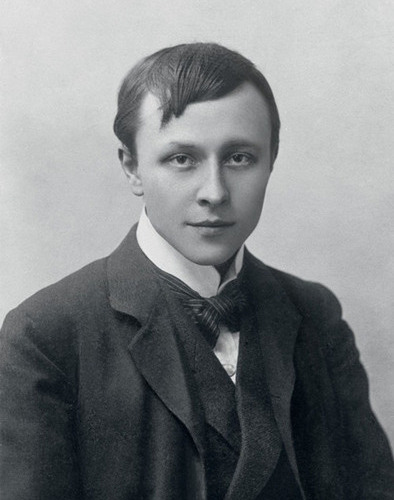
Why Alfred Kubin matters
Alfred Kubin is one of the pivotal draftsmen of early twentieth-century Central Europe, a figure whose visionary, often nightmarish ink drawings link late Symbolism to Expressionism and anticipate Surrealism decades before the movement had a name. He was also a working writer, publishing the novel "Die andere Seite" (The Other Side) as a companion to his visual output. For collectors, Kubin is a case study in a market where institutional respect runs deep, holdings sit in major museums across Europe and the United States, but liquidity at auction is thin and dominated by a small number of significant works.
- Born
- 1877-04-10, Leitmeritz, Bohemia, Austria-Hungary (now Litomerice, Czech Republic)
- Nationality
- Austrian
- Media
- Drawing, Printmaking, Illustration
- Movement
- Symbolism, Expressionism
- Education
- Apprenticeship in photography under Alois Beer, Klagenfurt, 1892 to 1896; private academy of Ludwig Schmitt-Reutte and the Munich Academy of Fine Arts, 1898 to 1901, studies not completed.
- Signature motifs
- Grotesque and macabre imagery, Dreamlike visionary ink drawings
- Representation
- No centralized estate representation is confirmed. Secondary-market works are handled through specialist dealers, including Richard Nagy Ltd, London, and major auction houses.
By the numbers
- GBP 963,000Auction highEpidemie (Epidemic), Sotheby's London, 19 June 2019; approx. USD 1.22M; reported as triple the previous artist record
- 2008 to 2009First US museum surveyNeue Galerie, New York, Alfred Kubin: Drawings, 1897 to 1909
- Grand Austrian State Prize, 1951Major honorAlso received the Austrian Cross of Merit for Science and Art, 1957
- MoMA, Albertina, National Gallery of ArtMuseum collectionsWorks held in Vienna, Prague, New York, and Washington, D.C.
Selected works
Click any work to view it full screen.
Biography
Alfred Leopold Isidor Kubin was born on 10 April 1877 in Leitmeritz, Bohemia, then part of Austria-Hungary and now Litomerice in the Czech Republic. His family later moved to Zell am See and then to Salzburg, where Kubin attended secondary school but left before completing it. From 1892 to 1896 he apprenticed as a photographer under landscape photographer Alois Beer in Klagenfurt, an experience he later said taught him little. In 1896 he attempted suicide at his mother's grave, and the following year a brief stint in the Austrian army ended in a nervous breakdown, episodes that are consistently documented in his standard biographies.
In 1898 Kubin moved to Munich to pursue art, studying first at the private academy of painter Ludwig Schmitt-Reutte and then, from 1899, at the Munich Academy of Fine Arts in the class of Nikolaos Gysis. He did not complete his studies at either institution. His first solo exhibition took place in 1902 at the gallery of Paul Cassirer in Berlin, establishing him within the German art scene despite mixed reviews. In 1906 he settled at the Zwickledt estate near Wernstein am Inn, Austria, where he would live and work for the rest of his life. He died there on 20 August 1959; most major reference sources, including Wikipedia, Artnet, and Sotheby's, converge on this date, though one source gives 24 August 1959 as a minority reading. He was buried in the Wernstein cemetery.
In his later years Kubin received a series of Austrian state honors, including the Prize of the City of Vienna for Visual Arts (1950), the Grand Austrian State Prize for Visual Art (1951), and, two years before his death, the Austrian Cross of Merit, First Class, for Science and Art (1957).
Critical reception
Kubin is treated in standard art-historical accounts as a key transitional figure between Symbolism and Expressionism, and his macabre, dreamlike drawings are frequently cited as forerunners of Surrealist imagery. His reputation in the United States rested for decades on a single 1941 gallery show at Galerie St. Etienne in New York, later reinforced by a 1983 exhibition there of 52 drawings and watercolors reviewed in The New York Times. The Neue Galerie's 2008 to 2009 exhibition "Alfred Kubin: Drawings, 1897 to 1909," organized with the curator of the Stadtische Galerie im Lenbachhaus in Munich, was described by the museum as the first major museum exhibition of his work held in the United States, a marker of his slow but steady institutional rediscovery outside German-speaking Europe.
Market
Kubin's auction market centers on drawings and works on paper, with results concentrated in Germany and Austria and occasional standout results abroad. The current auction record is "Epidemie" (Epidemic), a pen-and-ink drawing restituted from the Lenbachhaus, Munich, to the heirs of Max and Hertha Morgenstern, which sold for GBP 963,000 including premium (approximately USD 1.22 million) at Sotheby's, London, on 19 June 2019, a result reported by The Art Newspaper as triple the previous artist record.
Top auction results
| Work | Price | Sale |
|---|---|---|
| Epidemie (Epidemic) | USD 1,220,000 (GBP 963,000) | Sotheby's, London, 2019-06-19 |
Selected exhibitions
| Years | Exhibition | Venues |
|---|---|---|
| 1902 | First solo exhibition | Galerie Paul Cassirer, Berlin |
| 1941 | First solo exhibition in the United States | Galerie St. Etienne, New York |
| 1983 | Alfred Kubin, drawings and watercolors | Galerie St. Etienne, New York |
| 2008 to 2009 | Alfred Kubin: Drawings, 1897 to 1909 | Neue Galerie, New York |
Museum collections
- Museum of Modern Art, New York
- Albertina Museum, Vienna
- National Gallery, Prague
- National Gallery of Art, Washington, D.C.
Awards and honors
- Prize of the City of Vienna for Visual Arts (1950)
- Grand Austrian State Prize for Visual Art (1951)
- Austrian Cross of Merit, First Class, for Science and Art (1957)
Authentication and provenance
No catalogue raisonne.
No published catalogue raisonne is confirmed for Kubin. Provenance research and the expertise of recognized Austrian Expressionism specialists, including those associated with Kallir Research, are the primary means of authentication.
Primary reference: https://www.sothebys.com/en/artists/alfred-kubin
What collectors should know
There is no single gallery or estate entity that formally represents Kubin today. His work moves through specialist drawings dealers, art fairs, and the major auction houses, and no published catalogue raisonne currently exists to anchor attribution, which places extra weight on provenance and on the judgment of recognized Austrian Expressionism specialists. Auction volume is modest relative to his institutional standing, so a single strong or weak result can move the picture of his market considerably.
Further reading and resources
Data current as of 2026-07-11.

