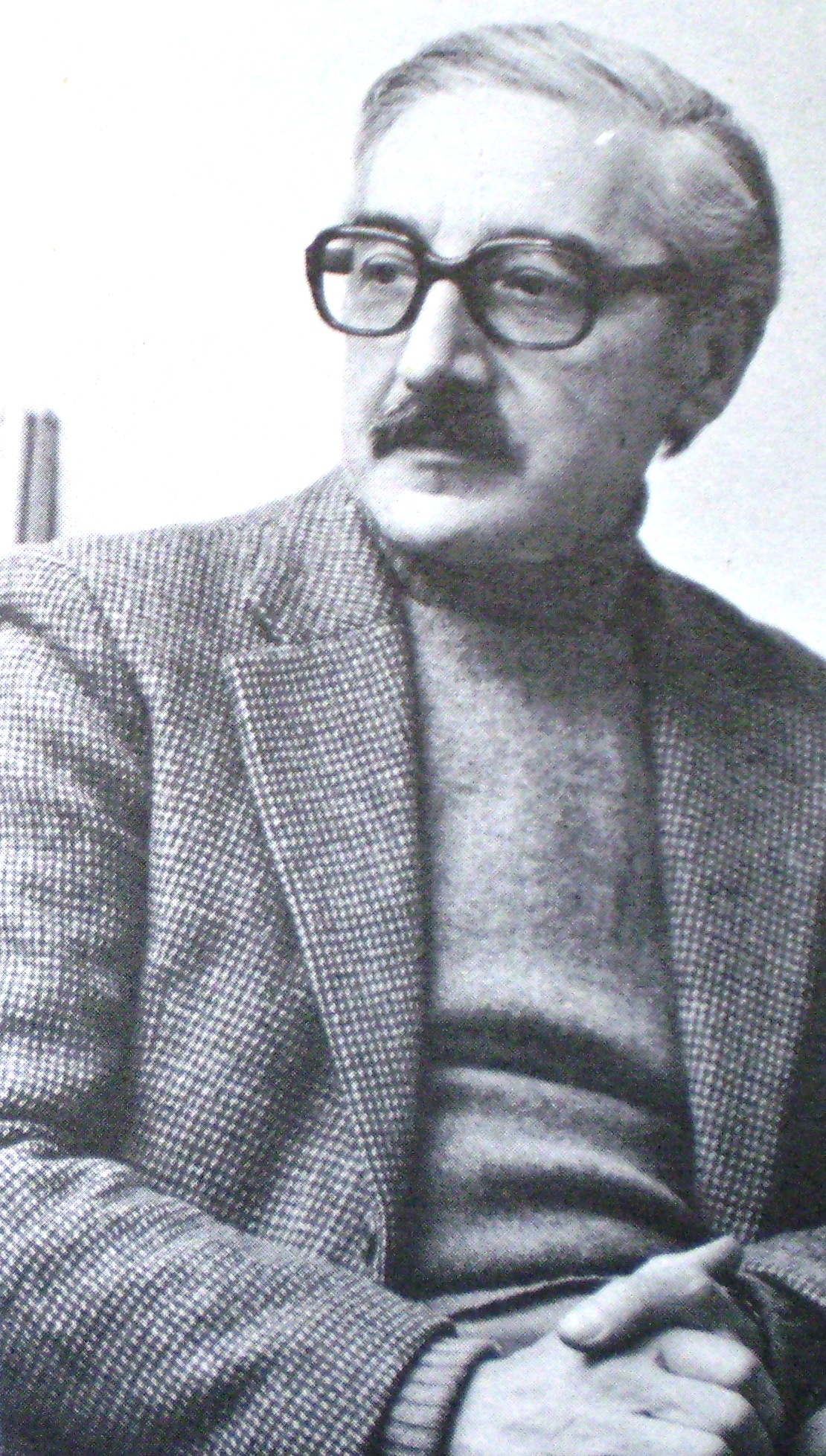
Why Alfredo Hlito matters
Alfredo Hlito was one of the founding figures of Argentine Concrete Art, a movement that translated the European language of geometric abstraction into a distinctly Latin American project of theory and practice. As a co-founder of the Asociacion Arte Concreto-Invencion in Buenos Aires in the 1940s, he helped define a rigorous, non-representational vocabulary that later curators and museums, including the Museum of Modern Art, have used to frame the history of postwar abstraction outside Europe and the United States. For collectors, he matters as a historically significant, museum-validated artist whose public market remains comparatively thin and under-documented.
- Born
- 1923-05-04, Buenos Aires, Argentina
- Nationality
- Argentine
- Media
- Painting
- Movement
- Concrete art, Geometric abstraction
- Education
- Escuela Nacional de Bellas Artes (Prilidiano Pueyrredon), Buenos Aires, from 1938; left formal study in 1942 to continue independently. No completed degree is documented.
- Signature motifs
- Geometric abstraction, Concrete-art composition, Effigy-like forms from the 1960s onward
By the numbers
- 1954II Sao Paulo BiennialAcquisition Prize
- 1955Venice Biennale28th Venice Biennale, participant
- 1982, 1992Konex AwardVisual arts, non-figurative painting
- MoMA; National Gallery of Art; Museo Nacional de Bellas ArtesMuseum collectionsInstitutional holdings
Biography
Alfredo Hlito was born on 4 May 1923 in Buenos Aires to Syrian immigrant parents. He began formal art training in 1938 at the Escuela Nacional de Bellas Artes (Prilidiano Pueyrredon) in Buenos Aires, leaving in 1942 to continue his artistic education independently; no completed degree from that school is documented. In the early 1940s he became associated with the young avant-garde in Buenos Aires and, according to Wikipedia, was a signatory of the 1942 "Manifiesto de Cuatro Jovenes."
Hlito was a founding member of the Asociacion Arte Concreto-Invencion, the group that anchored Argentine Concrete Art, and he participated in the movement's key early exhibitions, including Nuevas Realidades at Galeria Van Riel in Buenos Aires and the Salon des Realites Nouvelles in Paris, both in 1948. His international profile grew through the 1950s: he won the Acquisition Prize at the II Sao Paulo Biennial in 1954 and exhibited at the 28th Venice Biennale in 1955. Gallery sources indicate he lived in Mexico for roughly a decade, from about 1963 to 1973, a period that reportedly left visible traces in his later work, which moved from strict geometry toward forms drawing on nature and pre-Columbian and Mesoamerican imagery.
In 1987 the Museo Nacional de Bellas Artes in Buenos Aires mounted a retrospective, Alfredo Hlito: Obra pictorica 1945 to 1985, confirming his standing within Argentine art history. Wikipedia states that he became a professor at the National University of the Arts in 1984. Hlito died on 28 March 1993. His work was included in the posthumous traveling survey Art from Argentina 1920 to 1994, which opened at the Museum of Modern Art, Oxford, and closed at the Centro Cultural Borges in Buenos Aires in 1995, and later in the Museum of Modern Art's 2019 to 2020 exhibition Sur moderno: Journeys of Abstraction, drawn from the Patricia Phelps de Cisneros gift.
Critical reception
Hlito is treated by major institutions as a central figure of Argentine Concrete Art and postwar Latin American abstraction. The Institute for Studies on Latin American Art has described him as an artist and writer whose paintings put his own theories of aesthetics and perception into practice, and the Museum of Modern Art's inclusion of his work in Sur moderno situates him alongside the broader generation of Latin American geometric abstractionists that the museum has worked to bring into its historical narrative. No exact, attributable critical quotation about Hlito in a named major outlet could be confirmed with verbatim wording from the sources available, so none is reproduced here.
Market
Hlito's public auction record is comparatively sparse and fragmented across databases, and no single sale could be confirmed, from the sources reviewed, as a definitive all-time high. MutualArt's market summary indicates realized prices for paintings have reportedly reached as high as USD 365,000, though the specific work and sale date behind that figure could not be confirmed. A recent Invaluable listing for an oil on canvas carried an estimate of EUR 8,000 to 10,000, illustrating the more typical trading range for smaller works rather than any exceptional result. Given the inconsistency of publicly visible price data, collectors should treat any individual quoted "record" for Hlito with caution until it can be verified against a primary auction-house source.
Selected exhibitions
| Years | Exhibition | Venues |
|---|---|---|
| 1948 | Nuevas Realidades | Galeria Van Riel, Buenos Aires |
| 1948 | Salon des Realites Nouvelles | Paris |
| 1954 | II Sao Paulo Biennial | Sao Paulo, Brazil |
| 1955 | XXVIII Venice Biennale | Venice, Italy |
| 1980 | Vanguardias de los anos '40: Arte Concreto-Invencion, Arte Madi, Perceptismo | Museo de Artes Plasticas Eduardo Sivori, Buenos Aires |
| 1987 | Alfredo Hlito: Obra pictorica 1945 to 1985 | Museo Nacional de Bellas Artes, Buenos Aires |
| 1994 to 1995 | Art from Argentina 1920 to 1994 | Museum of Modern Art, Oxford; European tour; Centro Cultural Borges, Buenos Aires |
| 2019 to 2020 | Sur moderno: Journeys of Abstraction, The Patricia Phelps de Cisneros Gift | Museum of Modern Art, New York |
Museum collections
- Museum of Modern Art, New York
- National Gallery of Art, Washington, D.C.
- Museo Nacional de Bellas Artes, Buenos Aires
Awards and honors
- Acquisition Prize, II Sao Paulo Biennial (1954)
- Konex Award, Visual Arts (non-figurative painting) (1982)
- Konex Award, Visual Arts (non-figurative painting) (1992)
Authentication and provenance
No catalogue raisonne.
No published catalogue raisonne has been identified for Hlito. No formal authentication board, foundation, or estate representative is publicly documented; attribution generally rests on exhibition history, institutional records, and known provenance.
Primary reference: https://www.moma.org/collection/artists/50003
What collectors should know
No catalogue raisonne for Hlito has been identified, and no gallery or estate is publicly documented as currently representing his work; his paintings circulate primarily through auction houses and occasional gallery-hosted exhibitions of private collections. His institutional standing, anchored by holdings at the Museum of Modern Art, the National Gallery of Art, and the Museo Nacional de Bellas Artes in Buenos Aires, is stronger and better documented than his public market data, which is thin, inconsistently reported across databases, and should be checked against primary auction-house records before relying on any quoted price as definitive.
Further reading and resources
Data current as of 2026-07-11.

