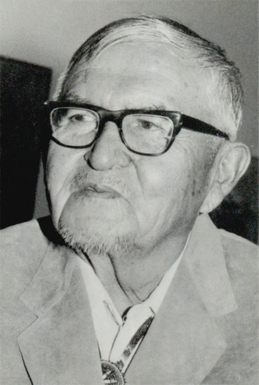
Why Allan Houser matters
Allan Houser stands as one of the most consequential Native American artists of the twentieth century, a Chiricahua Apache sculptor and painter whose Modernist bronzes reshaped how Indigenous subject matter could be presented in fine art. In 1992 he became the first Native American to receive the National Medal of Arts, and his work sits today in the Smithsonian, the National Portrait Gallery, and the Centre Pompidou. For a collector, he represents institutional validation built over five decades, paired with a market whose top auction results, so far, remain modest relative to his museum standing.
- Born
- 1914-06-30, Near Apache, Oklahoma, USA
- Nationality
- American
- Media
- Sculpture, Painting
- Movement
- Modernist sculpture, Studio Style painting
- Education
- Santa Fe Indian School, Dorothy Dunn's Studio School, 1934 to 1938. No further academic degree documented.
- Signature motifs
- Apache family and warrior figures, Abstracted bronze and stone forms
- Representation
- "Allan Houser, Inc. (estate)", "Glenn Green Galleries", "Blue Rain Gallery"
By the numbers
- USD 32,500Auction highHunting Song II, steatite sculpture, sold July 2020; auction house and exact date not confirmed in public sources. A separately reported figure of about USD 70,200 could not be independently verified and is not treated as the record.
- 1992National Medal of ArtsFirst Native American recipient
- Allan Houser, Inc. (estate)Represented by
- Smithsonian, National Portrait Gallery, Centre Pompidou, and othersMuseum collections
Biography
Born Allan Capron Haozous on June 30, 1914, on a farm near Apache, Oklahoma, he was among the first children born after his family, Chiricahua Apache prisoners of war held since the surrender associated with Geronimo, was released from Fort Sill. He trained formally as a painter at the Santa Fe Indian School, studying in Dorothy Dunn's Studio School from 1934 to 1938; no record indicates he earned a further academic degree. His early career was as a muralist, including a Department of the Interior commission and mural work for the 1939 to 1940 Golden Gate International Exposition in San Francisco. A period of study with the Swedish muralist Olle Nordmark at Fort Sill turned his attention toward sculpture, and a 1948 commission for Haskell Institute, Comrade in Mourning, launched that second career; a Guggenheim Foundation fellowship followed in 1949.
He taught art at the Inter-Mountain Indian School in Brigham City, Utah, from the early 1950s to 1962, then joined the founding faculty of the Institute of American Indian Arts in Santa Fe in 1962, building its sculpture department and teaching there into the mid-1970s. Contact with faculty and students at the Pasadena ArtCenter exposed him to the work of Brancusi, Henry Moore, Isamu Noguchi, and Barbara Hepworth, an influence visible in the increasingly abstracted, monumental bronzes of his later career. Honors accumulated steadily: the Palmes d'Academiques from the French government in 1954, and in 1992 the National Medal of Arts, awarded by President George H. W. Bush, making Houser the first Native American to receive it. Five months before his death he presented the sculpture May We Have Peace to the United States in Washington, accepted by First Lady Hillary Clinton and Tipper Gore. He died of colon cancer at his home in Santa Fe, New Mexico, on August 22, 1994, at the age of eighty.
Critical reception
Houser's reputation rests less on daily art criticism than on sustained institutional recognition. The citation accompanying his 1992 National Medal of Arts, presented by President George H. W. Bush, framed his sculpture as translating specific Apache history and heritage into a broader American visual language. That framing has held over time. His 2004 retrospective at the Smithsonian's National Museum of the American Indian and his 2014 to 2015 centennial exhibition at the Hood Museum of Art reinforced his museum standing, and he was posthumously named featured artist of the 2002 Winter Olympics in Salt Lake City, all signaling an institutional consensus that placed him at the center of twentieth-century Native American art and, increasingly, of American Modernist sculpture more broadly.
Market
Houser's auction market runs almost entirely through Western and American Indian art specialty sales rather than the major evening sales that anchor most artists in this database. The best-documented result identified in available sources is Hunting Song II, a steatite sculpture that sold for USD 32,500 in July 2020; the auction house and exact sale date are not confirmed in public records. A separate source lists a higher realized price of about USD 70,200 for an unidentified Houser work, but without a title, venue, or date this cannot be verified and is not treated here as the record. Taken together, the confirmed evidence points to real but concentrated demand from specialist collectors of Western and Native American art, rather than the broad secondary-market liquidity seen in contemporary blue-chip names.
Top auction results
| Work | Price | Sale |
|---|---|---|
| Hunting Song II | USD 32,500 (USD 32,500) | 2020-07 |
Selected exhibitions
| Years | Exhibition | Venues |
|---|---|---|
| 2004 | Allan Houser retrospective | National Museum of the American Indian, Smithsonian Institution, Washington, D.C. |
| 2002 | Featured Artist | 2002 Olympic Winter Games, Salt Lake City (posthumous) |
| 1994 | May We Have Peace, presented to the United States | Washington, D.C.; accepted by First Lady Hillary Clinton and Tipper Gore |
| 1993 | Prix de West Purchase Award, for Smoke Signal | National Cowboy & Western Heritage Museum, Oklahoma City |
| 1983 | Salon d'Automne | Grand Palais, Paris |
| 1981 | Paintings exhibition | Kennedy Center, Washington, D.C. |
| 2014 to 2015 | Allan Houser Centennial Exhibition | Hood Museum of Art, Dartmouth College, Hanover, New Hampshire |
| 1939 to 1940 | Golden Gate International Exposition, mural commission | San Francisco |
Museum collections
- Smithsonian American Art Museum, Washington, D.C.
- National Museum of the American Indian, Smithsonian Institution, Washington, D.C.
- National Portrait Gallery, Washington, D.C.
- Centre Georges Pompidou, Paris
- Denver Art Museum
- Heard Museum, Phoenix
- New Mexico Museum of Art, Santa Fe
- National Cowboy & Western Heritage Museum, Oklahoma City
Awards and honors
- National Medal of Arts (first Native American recipient) (1992)
- Prix de West Purchase Award, National Academy of Western Art, for Smoke Signal (1993)
- Oklahoma Hall of Fame (1985)
- Palmes d'Academiques, French government (1954)
- Guggenheim Foundation Fellowship (1949)
Authentication and provenance
No catalogue raisonne.
No published catalogue raisonne has been identified. Works are primarily authenticated and sold through the artist's estate, Allan Houser, Inc., and its Santa Fe galleries.
Primary reference: https://allanhouser.com/biography
What collectors should know
There is no published catalogue raisonne for Houser; his estate, Allan Houser, Inc., and its Santa Fe galleries are the primary points of authentication and continuing sale of his work. Because many of his bronzes were cast in edition, provenance and edition documentation carry more weight than they would for a unique painting. His auction history is thin by the standards of a blue-chip market, and the exact scale of his all-time high is not fully settled in public sources, so any single result should be read in that context rather than as a broad market signal.
Further reading and resources
Data current as of 2026-07-15.

