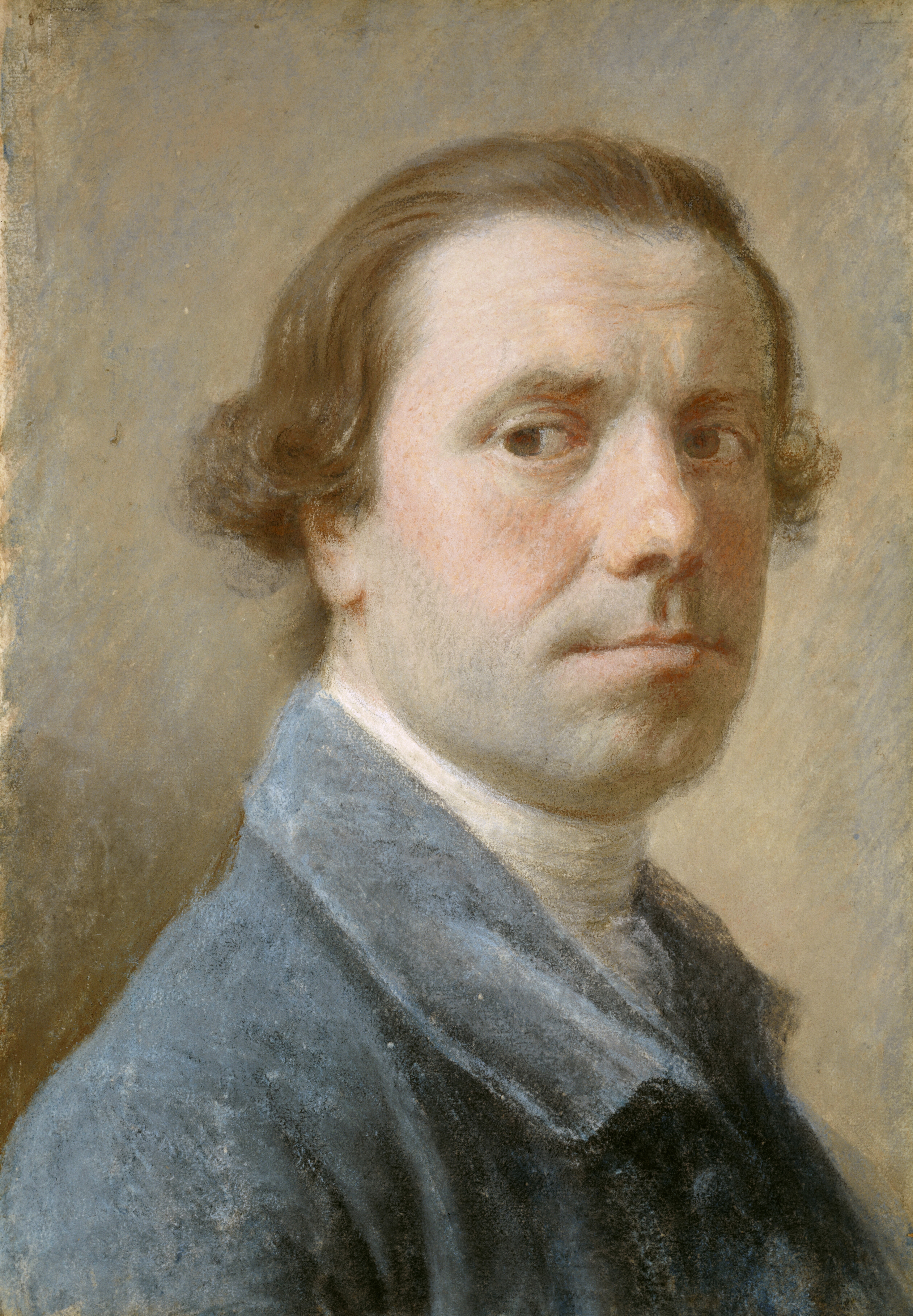
Why Allan Ramsay matters
Allan Ramsay was one of the most accomplished portrait painters working in Britain in the mid-eighteenth century, a Scot who trained in Rome and Naples and brought a continental naturalism to a London and Edinburgh market otherwise dominated by the "grand manner." He painted many of the leading figures of the Scottish Enlightenment, including his close friend David Hume, and became Painter to King George III in 1761, a senior royal portrait-painting appointment. For collectors, he represents a rare category: an artist whose reputation is settled and whose best works sit permanently in national and royal collections, with only occasional, high-variance appearances at auction.
- Born
- 1713-10-13, Edinburgh, Scotland
- Nationality
- Scottish
- Media
- Painting, Drawing
- Movement
- 18th-century British portraiture, Scottish Enlightenment circle
- Education
- Academy of St Luke, Edinburgh, c. 1729 to 1731; studio of Hans Hysing and St Martin's Lane Academy, London, c. 1733 to 1736; French Academy, Rome, and study under Francesco Imperiali and Francesco Solimena in Naples, c. 1736 to 1739
- Signature motifs
- Naturalistic portraiture, Enlightenment-era sitters
- Representation
- No commercial gallery or estate representation; historical artist, works held in public and royal collections
By the numbers
- GBP 289,250 (reported)Auction highSelf-portrait, Christie's, per October 2008 press coverage; exact lot, date, and buyer's premium not confirmed in a primary auction record
- 1761Royal appointmentPainter to King George III
- No commercial galleryRepresented byHistorical artist; works held in national and royal collections
- c. 1730s to 1780sActive periodEdinburgh, London, and Rome
Selected works
Click any work to view it full screen.
Biography
Allan Ramsay was born in Edinburgh in 1713, the son of the poet Allan Ramsay. Sources differ slightly on the exact day of his birth, with some giving 13 October and others 2 October 1713, though all agree on the year. He is a distinct figure from the contemporary Scottish portrait painter of the same name, born in 1959, with whom he is sometimes confused in casual reference.
He trained first at the Academy of St Luke in Edinburgh around 1729 to 1731, then moved to London around 1733, where he studied under the Swedish portraitist Hans Hysing and at the St Martin's Lane Academy. From roughly 1736 to 1739 he studied in Rome and Naples, working under Francesco Imperiali and the Baroque painter Francesco Solimena, an experience that shaped the more naturalistic, intimate style that distinguished his mature portraits from the theatrical grand manner favored by some contemporaries.
On his return to Britain he built a leading portrait practice, first in Edinburgh and then in London, painting philosophers, aristocrats, and members of the royal family. He was a close friend of the philosopher David Hume and painted several members of the Scottish Enlightenment circle. In 1761 he became Painter to King George III. He continued to paint and also wrote political essays in his later years. Allan Ramsay died on 10 August 1784 in Dover, Kent, while traveling back to England from Italy.
Critical reception
Ramsay is regarded by art historians and the institutions that hold his work, including the National Galleries of Scotland and Tate, as one of the outstanding British portrait painters of his generation. His reputation rests on a naturalistic, closely observed approach to likeness, developed through his study in Rome and Naples, which set him apart from the more overtly theatrical "grand manner" style associated with Sir Joshua Reynolds and some other contemporaries. His standing was cemented by his 1761 appointment as Painter to King George III and by his enduring presence in the collections and displays of national institutions across Scotland and England.
Market
The highest price for an Allan Ramsay work found in available research is approximately GBP 289,250, reported in press coverage for a self-portrait sold at Christie's around October 2008; the precise lot title, sale date, and buyer's premium are not confirmed by a primary auction-house record, so this figure should be treated as reported rather than verified. A more fully documented, though far smaller, result is GBP 8,000 for a portrait sold at Lyon & Turnbull in Edinburgh on 14 October 2020, with a second work from the same sale making GBP 3,000. Because open sources do not provide a complete, ranked price history for Ramsay, neither figure should be treated as a definitive all-time record. As an eighteenth-century artist with most major paintings already absorbed into national and royal collections, his auction supply is thin and irregular, so any result should be read in the context of the specific sitter, condition, and provenance.
Top auction results
| Work | Price | Sale |
|---|---|---|
| Self-portrait (reported sale) (2008) | GBP 289,250 | Christie's |
| Portrait (Scottish, 1713 to 1784) (2020) | GBP 8,000 | Lyon & Turnbull, Edinburgh, 2020-10-14 |
Selected exhibitions
| Years | Exhibition | Venues |
|---|---|---|
| 2024 | Ramsay and Edinburgh Fashion | Georgian House, Edinburgh (National Trust for Scotland) |
Museum collections
- National Galleries of Scotland, Edinburgh
- National Portrait Gallery, London
- National Gallery, London
- Victoria and Albert Museum, London
- Yale Center for British Art, New Haven
- Royal Collection Trust, Windsor Castle
Awards and honors
- Painter to King George III (1761)
Authentication and provenance
No catalogue raisonne.
No published catalogue raisonne is confirmed in current sources. Attribution rests on institutional provenance, exhibition history, and scholarship held chiefly by the National Galleries of Scotland and other public collections named above.
Primary reference: https://www.nationalgalleries.org/art-and-artists/artists/allan-ramsay
What collectors should know
No catalogue raisonne is confirmed for Allan Ramsay in current sources, so attribution depends on documented provenance, exhibition history, and the scholarship maintained chiefly by the National Galleries of Scotland and other holding institutions. Because so much of his major work already resides permanently in museums and royal collections, the number of significant paintings that reach the open market in any given year is small, and reported high prices such as the 2008 Christie's figure should be treated as exceptional and imperfectly documented rather than typical or definitive. Collectors considering a Ramsay purchase should weight documented provenance and institutional exhibition history heavily, given the absence of a definitive raisonne to settle attribution disputes.
Further reading and resources
Data current as of 2026-07-16.

