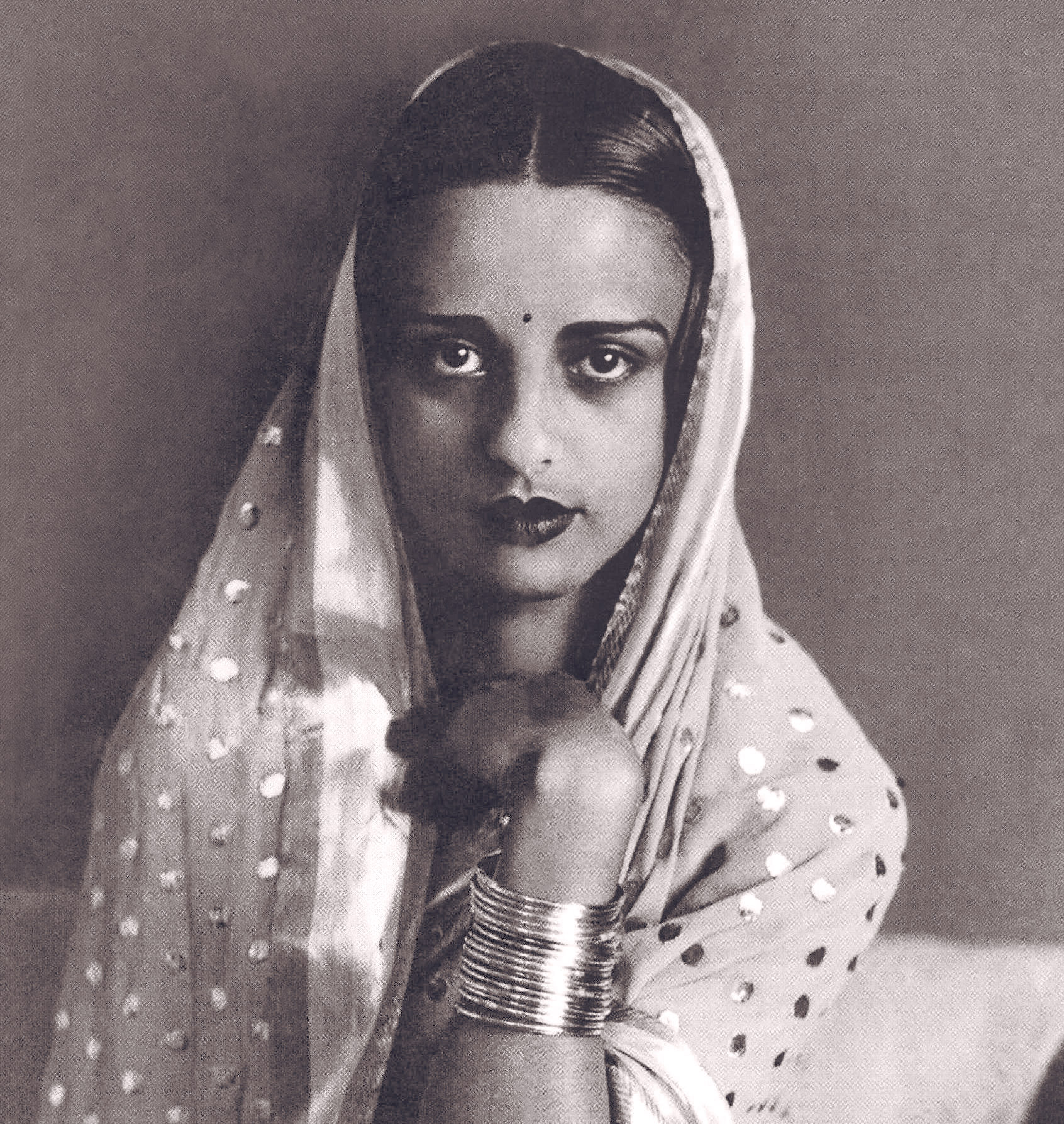
Why Amrita Sher-Gil matters
Amrita Sher-Gil is widely regarded as a foundational figure in modern Indian art, an artist who brought a European academic training in Paris to bear on Indian subjects and is credited with helping originate a modern Indian painting tradition. Her biography sits at the meeting point of two cultures, her career was cut short at 28, and the Indian government has designated her paintings National Treasures, permanently barring their export. For a collector, she represents an unusual combination: a market defined by extreme scarcity, since most of her surviving output sits in a single national museum, paired with auction results that have made her one of the most expensive women artists ever sold at auction.
- Born
- 1913-01-30, Budapest, Hungary (then Austria-Hungary)
- Nationality
- Hungarian, Indian
- Media
- Painting
- Movement
- Modernism, Indian modern art
- Education
- Académie de la Grande Chaumière and École des Beaux-Arts, Paris, c. 1929 to 1934 (no degree or diploma documented)
- Signature motifs
- Portraiture, Scenes of rural Indian life
By the numbers
- USD 7.4MAuction highThe Story Teller, Saffronart, New Delhi, 2023
- 1976National Treasure designationAntiquities and Art Treasures Act (1972), works barred from export
- National Gallery of Modern Art, New DelhiPrimary collectionLargest documented holding of her paintings
- Gold Medal, 1933Grand Salon honorYoungest member elected to the Grand Salon, Paris
Selected works
Click any work to view it full screen.
Biography
Amrita Sher-Gil was born on 30 January 1913 in Budapest, Hungary, to a Hungarian-Jewish opera singer mother and an Indian Sikh scholar and aristocrat father. The family moved to India in the early 1920s, and she was briefly enrolled at the Santa Annunziata School in Florence in 1924 and later attended the Convent of Jesus and Mary in Shimla. In 1929, at age sixteen, she moved to Paris to study art, training at the Académie de la Grande Chaumière and then at the École des Beaux-Arts through about 1934. No source documents her earning a formal degree from either institution, but she won student prizes in still life and portraiture in her first years there.
Her 1932 painting Young Girls was shown at the Grand Salon in Paris to favorable reviews, and in 1933 it won a Gold Medal; the same year she was elected an Associate of the Grand Salon, becoming its youngest member and, by contemporaneous accounts, the only Asian artist so honored at the time. She returned to India in 1934 and shifted her focus decisively to Indian subjects, painting village life and the women around her in works such as Bride's Toilet and Group of Three Girls, the latter winning a Gold Medal at the Bombay Art Society's 46th annual exhibition in January 1937. In 1938 she married her Hungarian first cousin, Victor Egan, and the couple eventually settled in Lahore.
Amrita Sher-Gil died in Lahore on 5 December 1941, at age 28, days before a planned solo exhibition. The exact cause of her death has never been conclusively established. The New York Times has reported that it was believed to be complications from a failed abortion and subsequent peritonitis, an account echoed in other biographical sources, while some family accounts raised unresolved suspicions of foul play. No definitive medical record has been published, and credible sources continue to describe the cause as unsettled. In 1976, under the Antiquities and Art Treasures Act, the Government of India declared her a National Treasure artist, meaning her paintings cannot legally be exported from the country.
Critical reception
Sher-Gil is consistently described in reference and museum sources as a pioneer of modern Indian art and among the most significant avant-garde women artists of the early twentieth century, a status reinforced by her early Grand Salon recognition in Paris and by her later National Treasure designation in India. Contemporary reviewers responded to her while she was still training in Paris; Smarthistory notes that a friend and critic, Denise Proutaux, described her at the time in exoticizing terms. Museums have continued to build her critical standing posthumously, including a National Gallery of Modern Art digital retrospective inaugurated at UNESCO in Paris in 2013. The through-line in her critical reception is the reading of her work as a deliberate synthesis, a European academic hand turned toward Indian rural and domestic life.
Market
Sher-Gil's auction market is thin in volume but exceptionally high in per-work value, a reflection of how few of her paintings ever reach the open market. Her all-time auction record is The Story Teller (1937), which sold for INR 61.8 crore, reported at approximately USD 7.4 million, at Saffronart in New Delhi on 16 September 2023, then the highest price ever paid for an Indian artwork at auction. The next-highest confirmed result is In the Ladies' Enclosure (1938), which sold for INR 37.8 crore, about USD 5 million, at Saffronart's Summer Live Auction on 17 July 2021, followed by an untitled self-portrait that brought about USD 2.9 million at Sotheby's New York on 25 March 2015. An earlier national benchmark, Village Scene, sold for about INR 6.9 crore, roughly USD 1.5 million, at a New Delhi auction in 2006, its auction house not confirmed in available sources, and has since been superseded. No commercial gallery or estate representation for Sher-Gil could be confirmed; the great majority of her documented paintings sit permanently in the National Gallery of Modern Art, New Delhi, which limits the pool of works that can ever come to market.
Top auction results
| Work | Price | Sale |
|---|---|---|
| The Story Teller (1937) (2023) | USD 7,400,000 (INR 61.8 crore) | Saffronart, New Delhi, 2023-09-16 |
Selected exhibitions
| Years | Exhibition | Venues |
|---|---|---|
| 1932 to 1933 | Grand Salon (Salon de Paris) | Grand Salon, Paris |
| 1937 | 46th Annual Exhibition, Bombay Art Society | Bombay Art Society, Bombay |
| 2013 | Remembering Amrita Sher-Gil | National Gallery of Modern Art digital panel exhibition, inaugurated at UNESCO Hall IV, Paris |
Museum collections
- National Gallery of Modern Art, New Delhi
Awards and honors
- Gold Medal and Associate membership, Grand Salon, Paris, for Young Girls (1933)
- Gold Medal, 46th Annual Exhibition, Bombay Art Society, for Group of Three Girls (1937)
- National Treasure artist, Government of India, under the Antiquities and Art Treasures Act (1972) (1976)
Authentication and provenance
No catalogue raisonne.
No published catalogue raisonne has been confirmed. Her paintings are legally classified as National Art Treasures of India and cannot be exported. The National Gallery of Modern Art, New Delhi, holds the largest documented body of her work and functions as the primary institutional reference point for authentication and scholarship.
Primary reference: https://www.sothebys.com/en/artists/amrita-sher-gil
What collectors should know
Because most of Sher-Gil's documented paintings are held permanently by the National Gallery of Modern Art and her works are legally barred from export as National Treasures, the population of paintings that can circulate at auction, especially outside India, is extremely small. That scarcity is the main driver of both the record prices her rare available works have achieved and the wide swings possible between individual sales. There is no confirmed catalogue raisonne and no gallery or estate representation to standardize provenance research, so collectors should weight exhibition history, museum loan records, and NGMA scholarship heavily when evaluating any work offered as hers.
Further reading and resources
Data current as of 2026-07-09.

