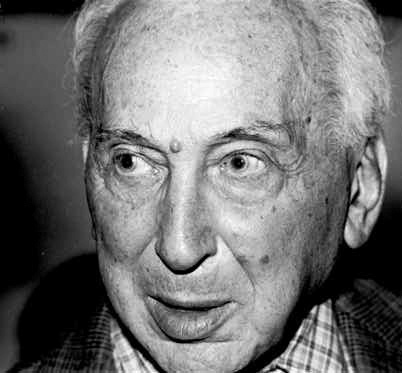
Why Andre Kertesz matters
Andre Kertesz is one of the foundational figures of twentieth-century photography, a Hungarian-born artist whose work bridges the European avant-garde of the 1920s and the postwar American photography scene. He is credited with shaping the visual language of the modern photo essay and street photography well before either had a name, and his work anchors the permanent collections of nearly every major photography-holding museum in the world. For a collector, he represents a case of towering institutional and historical stature paired with a comparatively thin and modestly priced auction market.
- Born
- 1894-07-02, Budapest, Austria-Hungary (now Hungary)
- Nationality
- Hungarian-American
- Media
- Photography
- Movement
- Modernist photography, Documentary photography
- Education
- Hungarian Academy of Commerce, Budapest, bachelor's degree in commerce, 1912. No formal art or photography training; self-taught as a photographer.
- Signature motifs
- Distortion nudes, Everyday street scenes and still life
- Representation
- Bruce Silverstein Gallery, Huxley-Parlour, Edwynn Houk Gallery
By the numbers
- USD 567,000Auction highSatiric Dancer, 1926, Christie's New York, 16 May 2024
- 1974French honorCommander, Ordre des Arts et des Lettres; described in some sources as the Legion of Honor
- 1974Guggenheim Fellowship
- Bruce Silverstein Gallery; Huxley-Parlour; Edwynn Houk GalleryRepresented by
Selected works
Click any work to view it full screen.
Biography
Andre Kertesz was born Andor Kertesz on 2 July 1894 in Budapest, then part of Austria-Hungary, into a family of booksellers and landowners. He trained not as an artist but as a businessman, earning a bachelor's degree from the Hungarian Academy of Commerce in Budapest in 1912 before going to work as a clerk at the Budapest Stock Exchange. He bought his first camera around the same year and taught himself photography, with no formal art or photography schooling on record.
After serving in the Austro-Hungarian army during the First World War, Kertesz returned to Budapest and, in 1925, emigrated to Paris, where he became part of the city's avant-garde photographic and artistic circles alongside figures such as Brassai and Mondrian. His Paris period produced some of his best-known images, including the 1926 photograph Satiric Dancer and the Distortions series of nudes made with a distorting mirror, work that pushed his documentary eye toward a more experimental, surreal register. In 1936 he moved to New York, initially on what was meant to be a short contract with the Keystone photo agency, but he remained in the United States for the rest of his life and did not find comparable critical recognition there for decades.
That recognition arrived in force starting in the 1960s. The Bibliotheque Nationale in Paris gave him a solo exhibition in 1963, and the Museum of Modern Art in New York followed in 1964, cementing his reputation as a major figure rather than a commercial photographer who had once made his living shooting for magazines. He continued to receive honors into his final years, including a Guggenheim Fellowship in 1974 and, the same year, a high French honor described variously as the Ordre des Arts et des Lettres and the Legion of Honor. Andre Kertesz died in New York City on 28 September 1985, at the age of 91.
Critical reception
Institutions and historians consistently place Kertesz among the most important photographers of the twentieth century, crediting him with helping to invent the visual grammar of the modern photo essay and with an eye for composition, geometry, and everyday incident that influenced generations of street and documentary photographers who came after him. His path from stock exchange clerk to self-taught photographer to a subject of major retrospectives at the Bibliotheque Nationale and the Museum of Modern Art is frequently cited as evidence of how slowly American institutions recognized work he had already produced decades earlier in Budapest and Paris.
Market
Kertesz's current auction record is Satiric Dancer, a print of the 1926 Paris image, which sold for USD 567,000 at Christie's in New York on 16 May 2024, a result that market trackers including HENI and MutualArt describe as a new high for the artist. That sale surpassed the previous record of USD 445,300, set by the same image at Christie's in 2008. Compared with painters or with contemporaries whose photographic markets have grown sharply, Kertesz's top prices remain modest, reflecting a market built on vintage and later exhibition prints rather than unique objects, and one where individual print condition, date, and provenance matter enormously to price.
Top auction results
| Work | Price | Sale |
|---|---|---|
| Satiric Dancer (1926) | USD 567,000 (USD 567,000) | Christie's, New York, 2024-05-16 |
Selected exhibitions
| Years | Exhibition | Venues |
|---|---|---|
| 1946 | Solo exhibition | Art Institute of Chicago |
| 1963 | Solo exhibition | Bibliotheque Nationale, Paris |
| 1964 | Solo exhibition | Museum of Modern Art, New York |
| 2025 to 2026 | Breaking the Mold: Brooklyn Museum at 200 | Brooklyn Museum, New York |
| 2026 | Between Order and Chaos: Andre Kertesz and M. C. Escher | Bruce Silverstein Gallery, New York |
| 2026 | Andre Kertesz: Hungary, 1914 to 1921 | 3 Thirty One Collection, Ithaca |
Museum collections
- Museum of Modern Art, New York
- Metropolitan Museum of Art, New York
- Art Institute of Chicago
- J. Paul Getty Museum, Los Angeles
- Los Angeles County Museum of Art
- San Francisco Museum of Modern Art
- International Center of Photography, New York
- National Gallery of Canada, Ottawa
Awards and honors
- Guggenheim Fellowship (1974)
- Commander, Ordre des Arts et des Lettres (French honor, described in some sources as the Legion of Honor) (1974)
- Medal of the City of Paris (1980)
- First Annual Award, Association of International Photography Art Dealers (AIPAD) (1980)
- First Annual Master of Photography Award, International Center of Photography (1985)
- Inducted, International Photography Hall of Fame and Museum (posthumous) (1986)
Authentication and provenance
No catalogue raisonne.
No published catalogue raisonne has been confirmed for Kertesz. Works are verified primarily through the galleries that currently exhibit and handle his work (Bruce Silverstein, Huxley-Parlour, Edwynn Houk) and through documented holdings at the major museums listed above.
Primary reference: https://www.icp.org/browse/archive/constituents/andr%C3%A9-kert%C3%A9sz
What collectors should know
There is no confirmed catalogue raisonne for Andre Kertesz, so verification runs primarily through the galleries currently exhibiting and handling his work, Bruce Silverstein, Huxley-Parlour, and Edwynn Houk, together with the documented holdings of major museums. His auction market is thin relative to his historical stature, with results driven heavily by which prints, vintage or later, come to sale, so collectors should weight print date and provenance carefully rather than relying on a single headline price. His work's deep presence in institutions such as MoMA, the Met, the Art Institute of Chicago, and the International Center of Photography is the strongest signal of his lasting importance, even where market pricing has not fully caught up.
Further reading and resources
Data current as of 2026-07-11.

