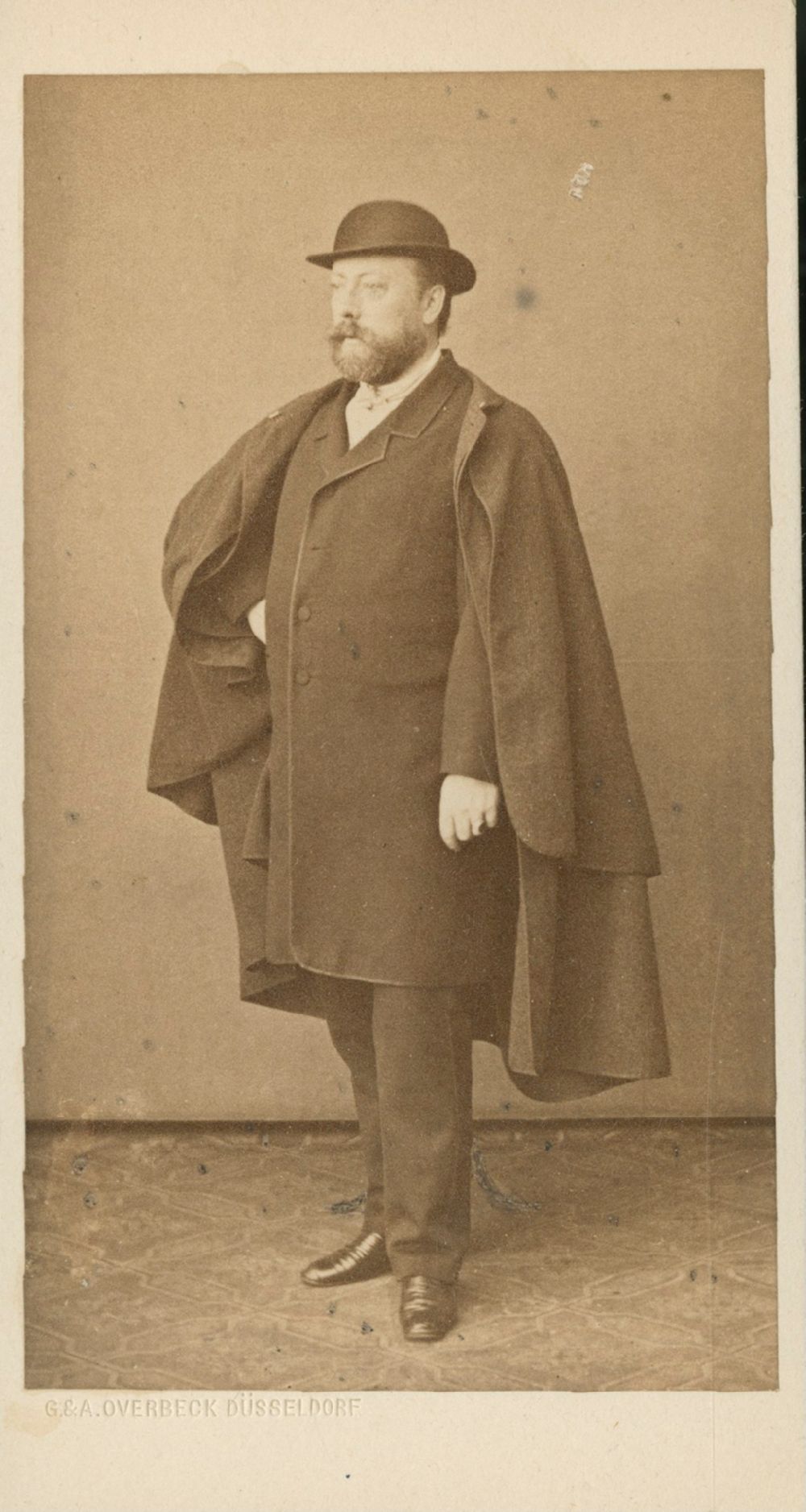
Why Andreas Achenbach matters
Andreas Achenbach was one of the founders of the Dusseldorf School of landscape and marine painting, the circle of nineteenth-century German artists whose dramatic, closely observed views of coasts, harbors, and northern light shaped landscape painting across Europe and found early collectors in the United States. For today's collectors, he represents an entry point into that school with a long, well-documented institutional record: his work is held in institutions including the Stadel Museum in Frankfurt, the Neue Pinakothek in Munich, and the St. Petersburg Academy of Arts Museum, even though his auction market remains modest in scale rather than headline-driven.
- Born
- 1815-09-29, Kassel, Germany
- Nationality
- German
- Media
- Landscape painting, Marine painting
- Movement
- Düsseldorf School, Romanticism
- Education
- Kunstakademie Dusseldorf, from 1827, under Wilhelm Schadow and Heinrich Christoph Kolbe, with additional landscape instruction under Johann Wilhelm Schirmer
- Signature motifs
- Marine and harbor scenes, Dramatic Nordic and Dutch coastal light
By the numbers
- EUR 97,500 (approx. USD 126,574)Auction highFarewell to the Fleet, Christie's Amsterdam, 2013
- 1815 to 1910LifespanBorn Kassel, died Dusseldorf
- 1881Pour le MeritePrussian order for Sciences and Arts
- Dusseldorf, 1885Honorary citizenAlso received an honorary grave at Nordfriedhof
Selected works
Click any work to view it full screen.
Biography
Andreas Achenbach was born on 29 September 1815 in Kassel, Germany. He began formal study in 1827, at about age twelve, at the Kunstakademie Dusseldorf under Wilhelm Schadow and Heinrich Christoph Kolbe, with additional landscape instruction under Johann Wilhelm Schirmer.
Over the following decades he built an international reputation. He was inducted as a Knight of the Legion of Honour in France in 1864 and won a gold medal at the Munich Salon in 1883. He was elected to honorary membership at Milan's Accademia di Belle Arti di Brera in 1862 and the Pennsylvania Academy of the Fine Arts in 1853, received the Order of Leopold of Belgium in 1848, the Order of Saint Stanislaus of the Russian Empire in 1861, and the Commander's Cross, 2nd Class of the Royal Norwegian Order of St. Olav in 1878, and received the Prussian order Pour le Merite for Sciences and Arts on 24 January 1881. In 1885 the University of Bonn awarded him an honorary doctorate and the city of Dusseldorf made him an honorary citizen.
Achenbach died on 1 April 1910 in Dusseldorf; a minority of sources, including Hungarian Wikipedia, give 10 April 1910, but the consensus of Britannica, English and German Wikipedia, Wikidata, and Artnet supports 1 April. His body lay in state at the Malkasten-Haus, where mourners could pay their respects for several days, before he was given an honorary grave at the Nordfriedhof, designed by the sculptor Karl Janssen.
Critical reception
During his lifetime, Achenbach was consistently ranked among the leading landscape and marine painters in Europe. His gold medal at the 1883 Munich Salon, his 1864 induction into the Legion of Honour, and honorary academy memberships in Milan and Philadelphia, together with state honors from Belgium, Russia, Norway, and Prussia, point to a reputation that extended well beyond Germany. No exact, sourceable verbatim quotation from a named contemporary critic has been located for this profile; the consensus described here is drawn from biographical and museum sources rather than a single quoted review. Today he is discussed primarily alongside his brother, the painter Oswald Achenbach, as one of the two central figures of the Dusseldorf School's landscape tradition.
Market
Achenbach's auction record is Farewell to the Fleet, which sold for EUR 97,500 (approximately USD 126,574 to 127,570, depending on the conversion date used) at Christie's Amsterdam on 7 May 2013. Market databases place his realized prices across a wide range, from roughly USD 10 for minor works to that 2013 high, reflecting a market with steady but modest demand rather than the concentrated, headline-price activity seen for some of his contemporaries. Subsequent sales tracked at major German and Austrian houses, including Dorotheum and Van Ham, have realized prices well below the 2013 record, and no later sale has been found to exceed it.
Top auction results
| Work | Price | Sale |
|---|---|---|
| Farewell to the Fleet (2013) | USD 126,574 (EUR 97,500) | Christie's, Amsterdam, 2013-05-07 |
Selected exhibitions
| Years | Exhibition | Venues |
|---|---|---|
| 1883 | Munich Salon | Munich (Gold Medal) |
Museum collections
- Stadel Museum, Frankfurt
- Neue Pinakothek, Bavarian State Painting Collections, Munich
- St. Petersburg Academy of Arts Museum (Kushelevskaya Gallery)
Awards and honors
- Order of Leopold, Belgium (1848)
- Honorary member, Pennsylvania Academy of the Fine Arts (1853)
- Order of Saint Stanislaus, Russian Empire (1861)
- Member, Accademia di Belle Arti di Brera, Milan (1862)
- Knight of the Legion of Honour, France (1864)
- Commander's Cross, 2nd Class, Royal Norwegian Order of St. Olav (1878)
- Pour le Merite for Sciences and Arts, Prussia (1881)
- Honorary doctorate, University of Bonn (1885)
- Honorary citizen of Dusseldorf (1885)
Authentication and provenance
No catalogue raisonne.
No published catalogue raisonne has been confirmed for this artist. Works are typically authenticated through auction house specialists and dealers focused on the Dusseldorf School, and through signature and provenance research (the artist commonly signed as 'A. Achenbach').
Primary reference: https://www.britannica.com/biography/Andreas-Achenbach
What collectors should know
There is no confirmed catalogue raisonne for Andreas Achenbach, so provenance research and specialist authentication through auction house departments and dealers focused on the Dusseldorf School carry extra weight when evaluating a work. Signed works commonly appear as "A. Achenbach," and cataloguing conventions sometimes invert his name to "Achenbach, Andreas," which collectors should treat as the same artist rather than a different one. A minority of sources, including Hungarian Wikipedia, give his death date as 10 April 1910 rather than 1 April 1910; the consensus of Britannica, English and German Wikipedia, Wikidata, and Artnet supports 1 April, and that date should be treated as correct.
Further reading and resources
Data current as of 2026-07-16.

