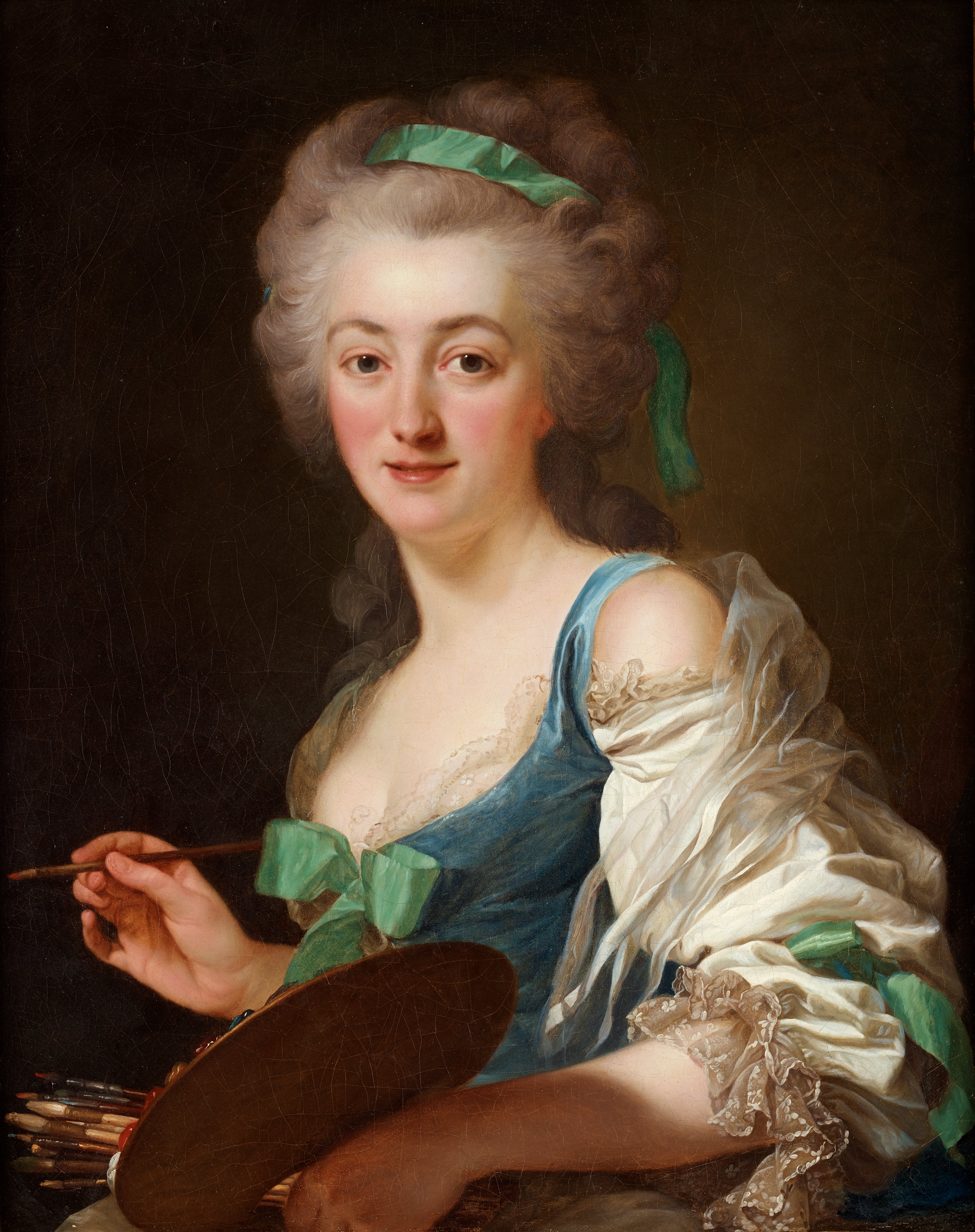
Why Anne Vallayer-Coster matters
Anne Vallayer-Coster is one of the most celebrated women painters of eighteenth-century France, one of a small number of women ever admitted to the Academie Royale de Peinture et de Sculpture, and a still-life painter whose reputation, after two centuries of relative neglect, has been sharply revived by museum rediscoveries and a new auction record set in June 2026. For a collector, she is a case study in how scholarly rehabilitation and a single rediscovered masterwork can move a market where supply is extremely thin to begin with.
- Born
- 1744-12-21, Paris, Kingdom of France
- Nationality
- French
- Media
- Painting, Still-life
- Movement
- French Rococo era, Old Master still-life painting
- Education
- No documented formal art school or degree. Privately trained by her father Joseph Vallayer, goldsmith and tapestry designer, then by watercolorist Madeleine Francoise Basseporte and marine painter Claude Joseph Vernet. Elected to the Academie Royale de Peinture et de Sculpture in 1770, a membership, not a course of study; as a woman she was barred from attending Academy classes and life-drawing sessions.
- Signature motifs
- "Floral and fruit still life", "Trompe l'oeil marine and game still life", "Attributes of the arts and music"
By the numbers
- EUR 2.58M (about USD 2.8M)Auction highStill Life with Flowers in an Alabaster Vase and Fruit, Christie's Paris, June 2026
- Elected 1770Academie RoyaleOne of four women admitted before the French Revolution
- 1780Royal appointmentNamed Painter to Queen Marie Antoinette
- 1771 to 1817Salon recordContinuous exhibitor at the Paris Salon
Selected works
Click any work to view it full screen.
Biography
Anne Vallayer-Coster was born on 21 December 1744 in Paris, the daughter of Joseph Vallayer, a goldsmith and tapestry designer at the Gobelins manufactory, and a mother who painted miniatures. She grew up amid the artistic milieu surrounding the Gobelins works. She had no formal art-school education. Instead she trained privately, first with her father, then with the botanical watercolorist Madeleine Francoise Basseporte, who taught her to observe and paint flowers from life, and later with the marine and landscape painter Claude Joseph Vernet, who is credited with introducing her to oil technique.
In 1770, at age 26, she was elected to the Academie Royale de Peinture et de Sculpture by unanimous vote, presenting reception pieces on the attributes of painting, sculpture, and architecture, and on the attributes of music. She was one of only four women admitted to the Academie before the French Revolution, and as a woman she was still barred from attending the Academy's own classes and life-drawing sessions. She exhibited at the Paris Salon almost continuously from 1771 to 1817. In 1780 she was named Painter to Queen Marie Antoinette, placing her within the royal court's circle of artists. A harsh critical reception for her portraits at the Salon of 1785 led her to abandon portraiture and return fully to the still-life subjects, floral arrangements, dead game, shells, and marine still lifes, for which she became known. She died in Paris on 28 February 1818, at age 73.
Critical reception
Contemporary and modern critics have consistently placed Vallayer-Coster among the finest still-life painters of her century. Her Still Life with Flowers in an Alabaster Vase and Fruit drew attention when it appeared at the Salon of 1783, and the National Gallery of Art has described her as one of the greatest still-life painters of eighteenth-century France who achieved remarkable success in a male-dominated art world. The 1785 Salon backlash against her portraits, by contrast, shows that contemporary critics drew a sharp line between her still-life work and her portraiture, a line she herself accepted by giving up portraits afterward. Modern scholarship, including the National Gallery of Art's 2002 retrospective and continued museum attention through 2026, has worked to restore her standing as a major, not marginal, figure of French eighteenth-century painting.
Market
Vallayer-Coster's market is that of a rare Old Master rediscovery story rather than a steady trading name. Her current auction record is Still Life with Flowers in an Alabaster Vase and Fruit, which sold for EUR 2,580,000 (about USD 2.8 million) at Christie's Paris in June 2026, a work that had been unseen since its debut at the Salon of 1783. The previous auction high was about USD 1.84 million, set on 27 January 2022 at Sotheby's New York for a still life of flowers in a vase beside a bust of Flora. With no catalogue raisonne and only a handful of major public sales on record, price movement for this artist tends to track individual rediscoveries rather than a broad, liquid market.
Top auction results
| Work | Price | Sale |
|---|---|---|
| Still Life with Flowers in an Alabaster Vase and Fruit (2026) | USD 2,800,000 (EUR 2,580,000) | Christie's, Paris, 2026-06-12 |
Selected exhibitions
| Years | Exhibition | Venues |
|---|---|---|
| 1771 to 1817 | Paris Salon | Academie Royale de Peinture et de Sculpture, Paris |
| 1783 | Salon of 1783, debut of Still Life with Flowers in an Alabaster Vase and Fruit | Paris Salon |
| 1785 | Salon of 1785 | Paris Salon |
| 2002 | Anne Vallayer-Coster: Painter to the Court of Marie-Antoinette | National Gallery of Art, Washington, D.C., first retrospective of her work |
Museum collections
- Musee du Louvre, Paris
- Palace of Versailles
- National Gallery of Art, Washington, D.C.
- The Metropolitan Museum of Art, New York
- Kimbell Art Museum, Fort Worth
- Nationalmuseum, Stockholm
- Cleveland Museum of Art
- Dallas Museum of Art
Awards and honors
- Elected to the Academie Royale de Peinture et de Sculpture (1770)
- Appointed Painter to Queen Marie Antoinette (1780)
Authentication and provenance
No catalogue raisonne.
No published catalogue raisonne has been located. The closest scholarly reference is the catalogue accompanying the 2002 National Gallery of Art retrospective, Anne Vallayer-Coster: Painter to the Court of Marie-Antoinette. Attribution and authentication rely on Salon records, provenance, and specialist Old Master scholarship rather than a certificate-of-authenticity program.
Primary reference: https://www.nga.gov/exhibitions/anne-vallayer-coster
What collectors should know
Vallayer-Coster's market is defined by scarcity and by the absence of a catalogue raisonne, so provenance, Salon exhibition history, and specialist scholarship carry unusual weight in authentication. Works surface infrequently, and when a picture with a strong exhibition history or royal provenance appears, as with the 2022 and 2026 sales, it can set a new benchmark price well above prior results. Collectors should treat any single sale as a data point about that specific painting's history and condition rather than as evidence of a broad, continuously priced market.
Further reading and resources
Data current as of 2026-07-09.

