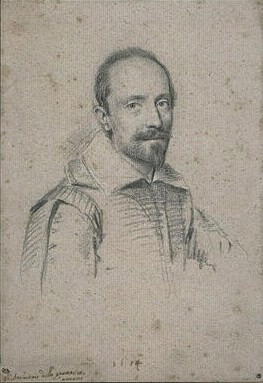
Why Antiveduto Grammatica matters
Antiveduto Grammatica was one of the leading painters working in Rome at the turn of the seventeenth century, a period that produced Caravaggio and reshaped Italian painting. He led a large and busy workshop, held elected office at Rome's painters' academy, and left work that is now held by major museums across Europe and the United States. For a collector, he is a case study in how an Old Master reputation is built and maintained entirely through scholarship, museum stewardship, and archival research rather than through a living market apparatus.
- Nationality
- Italian
- Media
- Painting
- Movement
- Italian Baroque, Caravaggesque circle of Rome
- Education
- Trained under Giovanni Domenico Angelini in Perugia; independent master by 1591; Accademia di San Luca, Rome, member from 1593, Principe in 1624
- Signature motifs
- "Devotional character heads (teste)", "Old Testament and hagiographic narrative scenes"
By the numbers
- USD 291,247Auction highDavid Returning Triumphant with the Head of Goliath, Hampel Fine Art Auctions, 2024. Exact sale date and location not independently verified.
- Principe, 1624Accademia di San LucaRome's painters' academy, member from 1593
- Active in Rome, 1591 to 1626Career span
- 8+ institutionsMuseum collectionsIncluding the Hermitage, the Prado, and the Louvre
Selected works
Click any work to view it full screen.
Biography
Antiveduto Grammatica (also recorded as Antiveduto Gramatica or Antiveduto della Grammatica) was an Italian painter active in Rome from the 1590s until his death in 1626. His birth year and birthplace are not settled in the record: some biographical sources, including the English and Italian Wikipedia entries, place his birth in December 1569 in Rome, while numerous Old Master auction catalogues (Sotheby's, Christie's, Dorotheum, Hampel) give a birth around 1571, sometimes in Siena and sometimes in Rome. No source in the dossier resolves this discrepancy definitively, so it should be treated as an open question rather than a fixed fact.
He trained under the Perugian painter Giovanni Domenico Angelini and was working independently by 1591. He was elected a member of Rome's Accademia di San Luca in 1593 and rose to become its Principe, or head, in 1624, a position that reflects his standing among Roman painters of the period. He specialized in devotional character heads, known as teste, as well as religious and Old Testament narrative scenes, and he ran a workshop that trained other painters in Rome.
Grammatica made his will on 8 April 1626 and died five days later, on 13 April 1626, at his house on via de' Condotti in Rome. He was buried at Santa Caterina da Siena a via Giulia. Modern archival research, summarized in the Dizionario Biografico degli Italiani, corrects the early biographer Giovanni Baglione, who had recorded a January death; the will and burial records establish April 1626 as the accurate date.
Critical reception
Early biographical accounts of Grammatica come from his contemporary Giovanni Baglione, whose seventeenth century Lives contains some factual errors, including the date of the artist's death, that later archival research has corrected. The modern rehabilitation of his catalogue is largely the work of the art historian Gianni Papi, whose 1995 monograph, cited by major auction houses in their cataloguing notes, remains the standard reference for attributing and dating his paintings. No verbatim critical quotations from named critics in major outlets were located in the available research; assessments of his work in the dossier are drawn from museum and auction-house catalogue notes rather than press criticism.
Market
Grammatica's market is that of a documented but thinly traded Old Master. The highest price recorded in the dossier is USD 291,247, paid at Hampel Fine Art Auctions in 2024 for David Returning Triumphant with the Head of Goliath; the exact sale date and location were not independently confirmed and should be treated as provisional pending direct confirmation from the auction house. Other lots attributed to him, cataloged under the spelling variants Grammatica and Gramatica, have appeared at Sotheby's, Christie's, and Dorotheum with estimates typically in the tens to low hundreds of thousands of dollars. In 2023, the Musei Reali in Turin reunited a missing fragment of his Concerto a due figure with The Theorbo Player already in the Galleria Sabauda, a curatorial event that reflects renewed scholarly interest in his oeuvre rather than a commercial transaction.
Top auction results
| Work | Price | Sale |
|---|---|---|
| David Returning Triumphant with the Head of Goliath (Ruckkehr des David mit dem Haupt des Goliath) (2024) | USD 291,247 | Hampel Fine Art Auctions |
Selected exhibitions
| Years | Exhibition | Venues |
|---|---|---|
| 2023 | Reunification of Concerto a due figure with The Theorbo Player | Galleria Sabauda, Musei Reali, Turin |
| 2014 | From the Collection: Saint Dorothy of Caesarea | Milwaukee Art Museum |
Museum collections
- State Hermitage Museum, Saint Petersburg
- Museo Nacional del Prado, Madrid
- Kunsthistorisches Museum, Vienna
- Galleria Sabauda, Musei Reali, Turin
- Pinacoteca Vaticana, Vatican Museums, Rome
- Glasgow Museums (Kelvingrove Art Gallery and Museum)
- Musee du Louvre, Paris
- Milwaukee Art Museum
Awards and honors
- Elected member, Accademia di San Luca, Rome (1593)
- Principe (head), Accademia di San Luca, Rome (1624)
Authentication and provenance
No catalogue raisonne.
No catalogue raisonne exists for Grammatica. Attribution and dating rely on Gianni Papi's 1995 monograph (Antiveduto Gramatica, Soncino) and on Accademia di San Luca archival records, corroborated by museum curatorial departments and Old Master specialists at major auction houses. There is no foundation, estate, or certificate-of-authenticity body for this artist.
Primary reference: https://www.treccani.it/enciclopedia/antiveduto-grammatica_(Dizionario-Biografico)/
What collectors should know
Grammatica's basic biographical facts carry more uncertainty than is typical even for an Old Master: his birth year (1569 versus circa 1571) and birthplace (Rome versus Siena) are both disputed across otherwise reputable sources, and this profile has left those fields hedged rather than resolved. His name also appears under several spellings, including Gramatica and della Grammatica, which collectors should account for when searching auction and museum databases. There is no catalogue raisonne, no representing gallery, and no estate; authentication rests on the 1995 Papi monograph, Accademia di San Luca records, and the judgment of Old Master specialists at the major auction houses and museums that hold his work.
Further reading and resources
Data current as of 2026-07-16.

