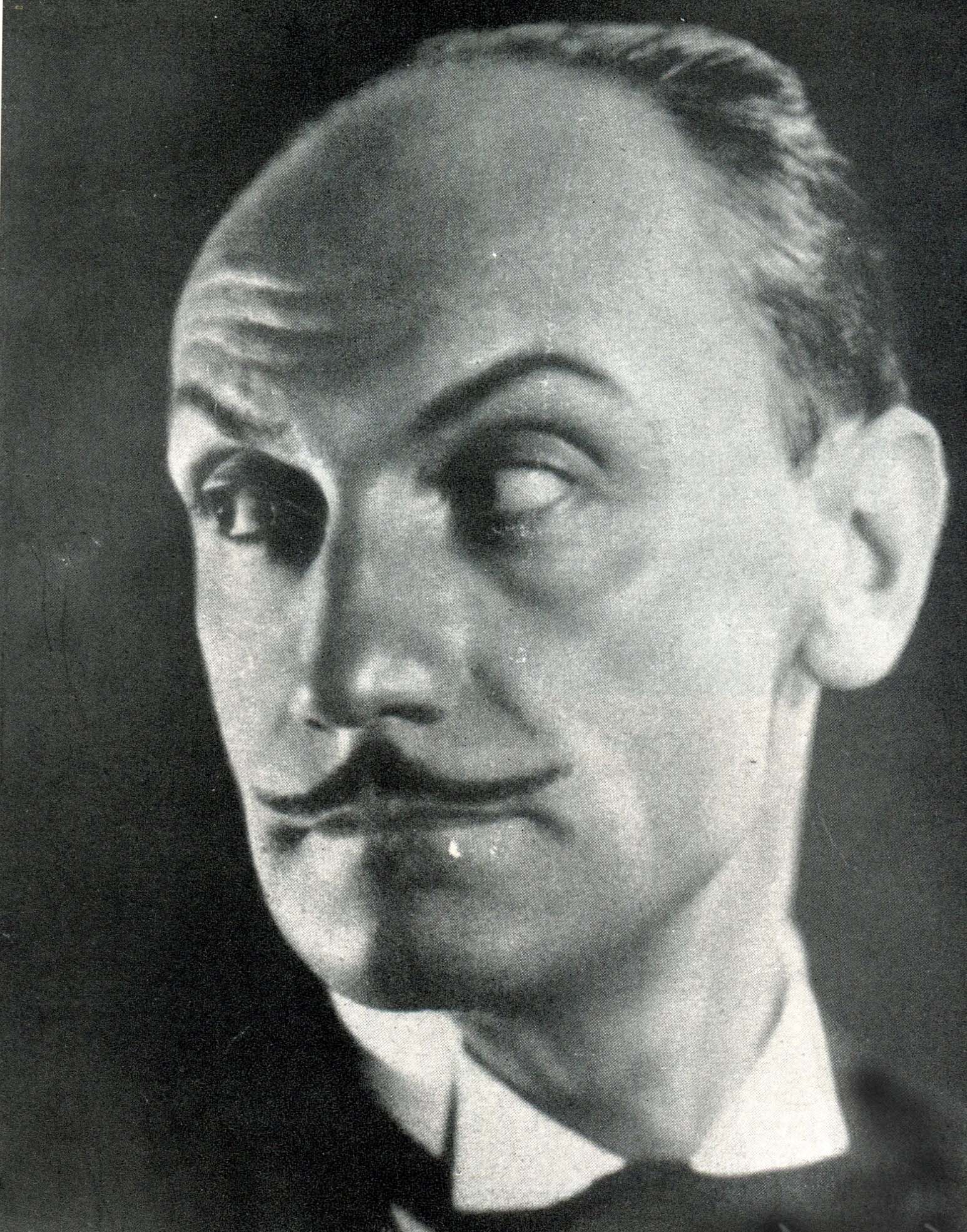
Why Anton Giulio Bragaglia matters
Anton Giulio Bragaglia is best known as the inventor, with his brother Arturo, of "photodynamism," the Futurist movement's attempt to capture movement itself on film, and as the founder of one of Rome's most consequential early modern art galleries. He worked across photography, cinema, theatre direction, and criticism, and the gallery he founded, the Casa d'Arte Bragaglia, hosted nearly 300 exhibitions over two decades, introducing Roman audiences to figures such as Giorgio de Chirico, Gustav Klimt, and Egon Schiele. For collectors, he is a case study in a figure whose historical importance is secured by museum archives and institutional scholarship even though his auction market remains thin and largely undocumented in public sale records.
- Born
- 1890-02-11, Frosinone, Lazio, Italy
- Nationality
- Italian
- Media
- Photography, Film, Theatre direction, Criticism
- Movement
- Italian Futurism, Futurist photography (Photodynamism)
- Education
- No university degree documented. Educated 1897 to 1906 in religious colleges (Sessa Aurunca; the Scolopi college, Alatri; a Barnabite college, Rome), followed by professional training at the Cines film studio in Rome from 1906.
- Signature motifs
- Multiple-exposure "photodynamism", Blurred figures in motion, Futurist stage and film design
By the numbers
- Photography, film, theatre direction, criticismPracticePioneer of Futurist 'photodynamism'
- Casa d'Arte Bragaglia, Rome (1918)Gallery foundedNearly 300 exhibitions over two decades
- Met, MoMA, Galleria Nazionale Rome, and othersMuseum collectionsSee Collections
- Thin; no confirmed public hammer priceAuction marketSee Market
Selected works
Click any work to view it full screen.
Biography
Anton Giulio Bragaglia was born on 11 February 1890 in Frosinone, in the Lazio region of Italy. He was educated between 1897 and 1906 in religious colleges, beginning under his uncle in Sessa Aurunca, then continuing at a Scolopi (Piarist) college in Alatri and at a Barnabite college in Rome. No university degree is documented. From 1906 he trained professionally at the Cines film studio in Rome, working as an assistant to directors Mario Caserini and Enrico Guazzoni, an apprenticeship that shaped his later work in cinema and theatre.
Working with his brother Arturo, Bragaglia developed "fotodinamismo futurista," a photographic technique using multiple exposures and blurred motion to render the sensation of movement, which he positioned as a Futurist counterpart to painting and sculpture. In 1918 he founded and directed the Casa d'Arte Bragaglia in Rome, opening with an exhibition of Giacomo Balla and going on to present nearly 300 exhibitions over the following twenty years, including work by Giorgio de Chirico, Mario Sironi, Julius Evola, Gustav Klimt, Egon Schiele, and Ossip Zadkine. Alongside his gallery work, he directed films and theatre productions and wrote criticism across those fields for much of his career. In 1959 he was elected president of the Associazione Nazionale Registi e Scenografi, the Italian association of directors and set designers. He died in Rome on 15 July 1960.
Critical reception
Bragaglia is treated by major museums and Italian cultural institutions as a founding figure of Futurist photography and one of early twentieth-century Rome's most important gallerists and cultural organizers. The Metropolitan Museum of Art holds several of his photodynamic images in its permanent collection, and the Galleria Nazionale d'Arte Moderna e Contemporanea in Rome has organized archival scholarship around his papers and practice. His photodynamic work has also been placed within broader museum surveys of the Futurist movement internationally. No exact, attributable critical quotation from a named critic in a major outlet could be verified for this profile, so none is reproduced here.
Market
Bragaglia's secondary market is thin and not well documented in public auction records. The clearest reference point in the dossier is Le Rose, a work credited to Anton Giulio and Arturo Bragaglia, offered by Sotheby's in its "Photographs" sale in New York on 5 April 2018 with an estimate of USD 40,000 to 60,000; the realized hammer price was not made public. No higher, publicly confirmed auction result for the artist has been identified. Collectors should treat his auction history as data-thin: the bulk of his known photographic output sits in institutional archives, principally the Metropolitan Museum's Gilman Collection and the Galleria Nazionale d'Arte Moderna e Contemporanea in Rome, rather than circulating regularly through the salerooms.
Top auction results
| Work | Price | Sale |
|---|---|---|
| Le Rose (with Arturo Bragaglia) | Estimate USD 40,000 to 60,000; hammer price not publicly disclosed | Sotheby's, New York, 2018-04-05 |
Selected exhibitions
| Years | Exhibition | Venues |
|---|---|---|
| 1918 | Inaugural exhibition (Giacomo Balla) | Casa d'Arte Bragaglia, Rome, founded and directed by Bragaglia |
| 2022 | Anton Giulio Bragaglia. L'archivio di un visionario | Galleria Nazionale d'Arte Moderna e Contemporanea, Rome |
| c. 2014 | Italian Futurism, 1909 to 1944: Reconstructing the Universe | Solomon R. Guggenheim Museum, New York |
Museum collections
- Metropolitan Museum of Art, New York
- Museum of Modern Art, New York
- Galleria Nazionale d'Arte Moderna e Contemporanea, Rome (archive and collection)
- Galleria Civica di Modena / Fondazione AGO, Modena
- Fondazione Sergio Poggianella, Palermo
- Fondazione Cirulli, San Lazzaro di Savena
Awards and honors
- President, Associazione Nazionale Registi e Scenografi (Italian directors and set designers association) (1959)
Authentication and provenance
No catalogue raisonne.
No catalogue raisonne or certificate-of-authenticity program has been identified for Bragaglia. His photographic prints, held largely in institutional archives such as the Metropolitan Museum's Gilman Collection and the Galleria Nazionale in Rome, are typically authenticated through museum provenance and archival documentation rather than a market-facing certification body.
Primary reference: https://www.treccani.it/enciclopedia/anton-giulio-bragaglia_(Dizionario-Biografico)/
What collectors should know
There is no catalogue raisonne for Bragaglia, and no certificate-of-authenticity program has been identified; verification of his photographic prints relies on provenance and institutional archives rather than a market body. His auction footprint is small and the one notable recent lot identified in research, Le Rose at Sotheby's in 2018, is documented only by its pre-sale estimate, not a confirmed hammer price, so any price benchmark for this artist should be treated with caution. Collectors should also weigh that much of his surviving photographic work sits in museum and foundation collections rather than in private hands, which limits available supply and makes each individual sale hard to compare to a broader trend line.
Further reading and resources
Data current as of 2026-07-16.

