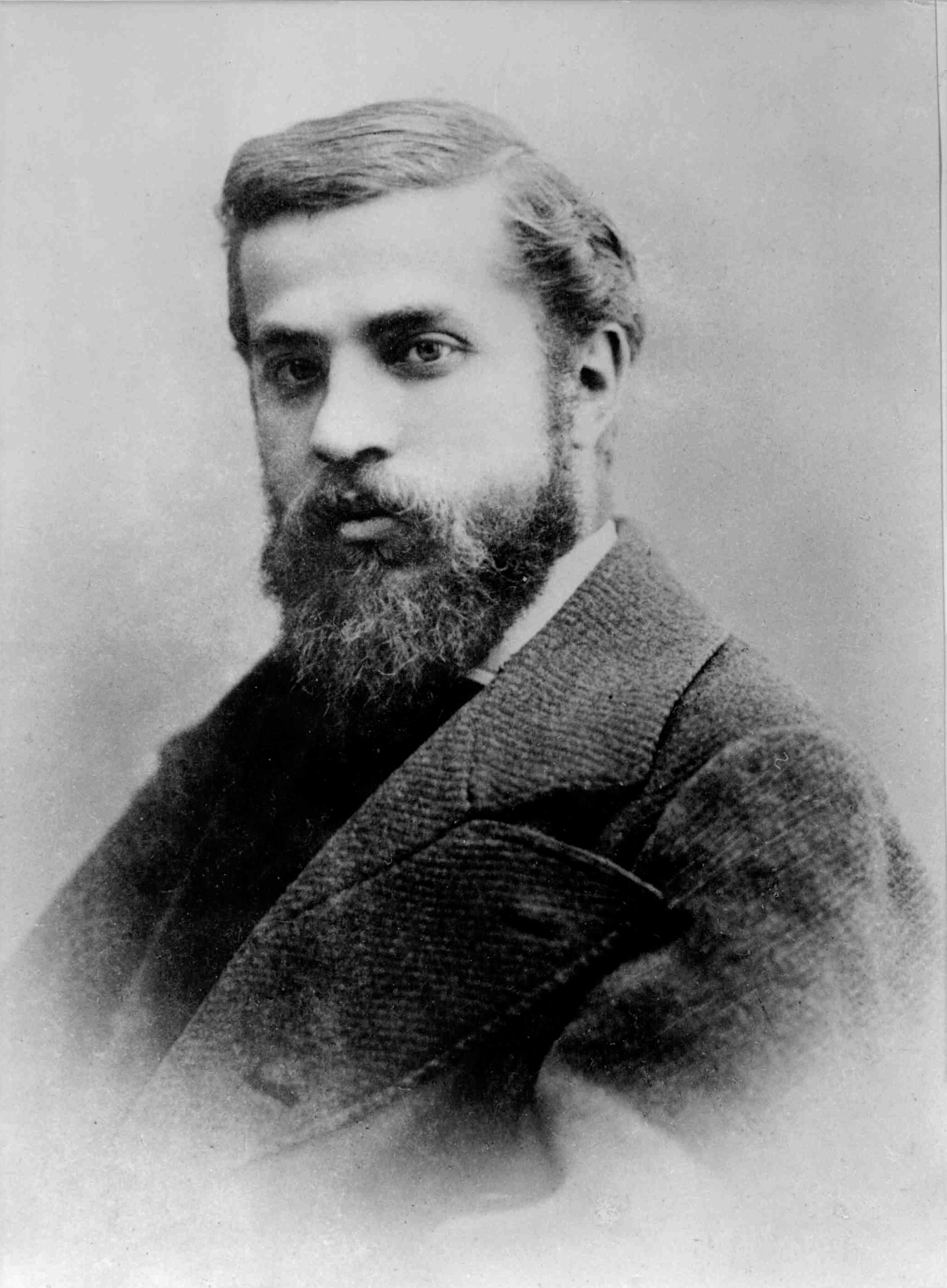
Why Antoni Gaudí matters
Antoni Gaudi is the defining figure of Catalan Modernisme and one of the most recognized architects in the world, the creator of the Sagrada Familia, Park Guell, Casa Batllo, and Casa Mila. Seven of his works carry UNESCO World Heritage status, and 2026 marks the centenary of his death, a year of citywide commemoration in Barcelona alongside a reported advancing Vatican process toward his beatification (Le Monde, February 2026). For a collector, Gaudi represents an unusual case: his primary body of work is architecture, owned by cities, foundations, and museums rather than traded privately, so the market that exists is a narrow one built around the rare decorative object, drawing, or architectural fragment tied to a specific building.
- Born
- 1852-06-25, Reus or Riudoms, Catalonia, Spain
- Nationality
- Spanish (Catalan)
- Media
- Architecture, Design, Decorative arts
- Movement
- Catalan Modernisme, Art Nouveau
- Education
- Baccalaureate studies, Reus and Barcelona, to circa 1871; preparatory science courses, Faculty of Sciences, University of Barcelona, from 1871; architecture degree, Escola Provincial d'Arquitectura de Barcelona, awarded 15 March 1878
- Signature motifs
- Organic and naturalistic forms, Catenary arches, Trencadis mosaic
- Representation
- No commercial gallery. Legacy administered by building-owning foundations and public institutions, including the Sagrada Familia Foundation, Fundacio Catalunya La Pedrera, and the Consell per a la Promocio i Difusio de l'Obra de Gaudi
By the numbers
- USD 1,385,000Auction highFolding screen from La Pedrera, Christie's New York, 2007
- 7 works recognizedUNESCO World HeritageInscribed 1984 and extended 2005
- 10 June 1926, BarcelonaDiedStruck by a tram on 7 June 1926
Selected works
Click any work to view it full screen.
Biography
Antoni Gaudi i Cornet was born on 25 June 1852, with sources divided between Reus and the nearby town of Riudoms in Catalonia, Spain, as his exact birthplace. He attended school in Reus, including the Escolapis (Pious School), before moving to Barcelona around 1868 to 1869 for further baccalaureate studies. He then took preparatory science courses at the Faculty of Sciences of the University of Barcelona, enrolling for the 1871 to 1872 academic year, before entering the city's architecture school in the early to mid 1870s. He received his architecture degree, the title d'arquitecte, on 15 March 1878, from the Escola Provincial d'Arquitectura de Barcelona. Casa Batllo's own account of the ceremony recounts that the school's director, Elies Rogent, remarked on handing over the title that it had gone to either a madman or a genius, an anecdote widely repeated in biographical sources though not independently verified in a primary transcript.
Gaudi's career unfolded almost entirely in and around Barcelona. Early commissions included Casa Vicens and the Pavilions of the Finca Guell, followed by Palau Guell, Park Guell, Casa Calvet, the crypt of the Colonia Guell, Casa Batllo, and Casa Mila, known as La Pedrera. From 1883 he was also the principal architect of the Sagrada Familia, the basilica that remained under construction at his death and continues to be built today.
On 7 June 1926, Gaudi was struck by a tram while on his customary walk in Barcelona. He died of his injuries three days later, on 10 June 1926, at the Hospital de la Santa Creu, at age 73. He was buried in the crypt of the Sagrada Familia. Vatican interest in his cause for sainthood has grown alongside the centenary, with reporting in early 2026 describing an active process that could lead to his beatification, though Masterworks could not independently confirm the date or formal title of any Vatican declaration.
Critical reception
Gaudi is treated by architectural historians and heritage bodies as the central figure of Catalan Modernisme, credited with a personal synthesis of Gothic structural principles, natural forms, and Art Nouveau ornament that UNESCO recognized by inscribing seven of his works as World Heritage sites in 1984 and 2005. His reputation has only broadened with time: institutions including the Museu Nacional d'Art de Catalunya, the Museu d'Historia de Catalunya, MACBA, and Casa Batllo built 2026 centenary programming around his legacy, including a project pairing his work with Joan Miro. No verified verbatim critical assessment from a named critic in a major outlet could be confirmed for this profile, so none is quoted here.
Market
Gaudi's market is small and highly specialized because most of what he made is architecture, held by cities, foundations, and museums and not available for sale. The confirmed auction high is USD 1,385,000, paid at Christie's New York on 13 November 2007 for a folding screen in oak and pink glass that Gaudi designed for La Pedrera, at the time reported as a world auction record for the artist. Outside that result, prices for Gaudi-attributed sculptural and decorative pieces have typically been far lower, for example a sculpture described as Vase that sold for USD 51,540 in 2020. Individual decorative pieces tied to specific commissions, such as a prayer bench from the Colonia Guell crypt estimated at USD 200,000 to 300,000 by Bonhams, occasionally surface, but realized prices for these are not consistently documented. A widely reported 2022 sale of a Casa Batllo-inspired NFT by the digital artist Refik Anadol for USD 1.38 million is not a work by Gaudi himself and should not be read as a Gaudi auction result.
Top auction results
| Work | Price | Sale |
|---|---|---|
| Folding screen (biombo) designed for La Pedrera, oak and pink glass, c. 1909 (2007) | USD 1,385,000 (USD 1,385,000) | Christie's, New York, 2007-11-13 |
Selected exhibitions
| Years | Exhibition | Venues |
|---|---|---|
| 2026 to 2027 | Gaudi and His Contemporaries / More Gaudi, Reflections and Analogies | Museu Nacional d'Art de Catalunya (MNAC), Barcelona |
| 2026 | Gaudi, Miro, Gomis: Deconstructed | Casa Batllo, Barcelona |
| 2026 to 2027 | Centennial project on Gaudi's legacy | MACBA, Barcelona |
| 2026 | Survey exhibition of Gaudi's architectural oeuvre | Museu d'Historia de Catalunya, Barcelona |
| 2026 | Permanent Gaudi gallery: original drawings and notebook | Museu de Reus, Reus |
| 2026 | Gaudi Year centenary programming: concerts, exhibitions, lectures | Palau Guell, Barcelona |
Museum collections
- Museu Nacional d'Art de Catalunya (MNAC), Barcelona
- Museu de Reus, Reus
- Sagrada Familia Basilica, Barcelona
- Casa Batllo, Barcelona
- Casa Mila (La Pedrera), Barcelona
- Palau Guell, Barcelona
- Casa Vicens, Barcelona
- Park Guell, Barcelona
Awards and honors
- UNESCO World Heritage inscription (Park Guell, Palau Guell, Casa Mila) (1984)
- UNESCO World Heritage extension (Casa Vicens, Casa Batllo, Sagrada Familia Nativity facade and crypt, Colonia Guell crypt) (2005)
Authentication and provenance
No catalogue raisonne.
No catalogue raisonne exists. Gaudi's output is largely architecture and site-specific design rather than portable fine art, so verification runs through building-owning foundations, municipal and university archives, and academic bodies such as the Catedra Gaudi, rather than a certificate-of-authenticity program.
Primary reference: https://sagradafamilia.org/en/antoni-gaudi
What collectors should know
There is no catalogue raisonne for Gaudi, and the great majority of his output is architecture that is not, and cannot be, privately traded. The collectible market consists almost entirely of decorative objects, furniture, and design pieces made for specific commissions, such as the La Pedrera screen or the Colonia Guell furnishings, where value depends heavily on documented provenance back to the original building. Auction data points are few and unevenly reported, so any single result should be read in the context of the specific object and commission rather than as evidence of a broader trend. The 2026 centenary of his death and renewed reporting on a possible Vatican beatification process have raised his public profile, which may increase attention to the rare decorative pieces that do come to market, but this has not yet translated into a deep or liquid auction record.
Further reading and resources
Data current as of 2026-07-13.

