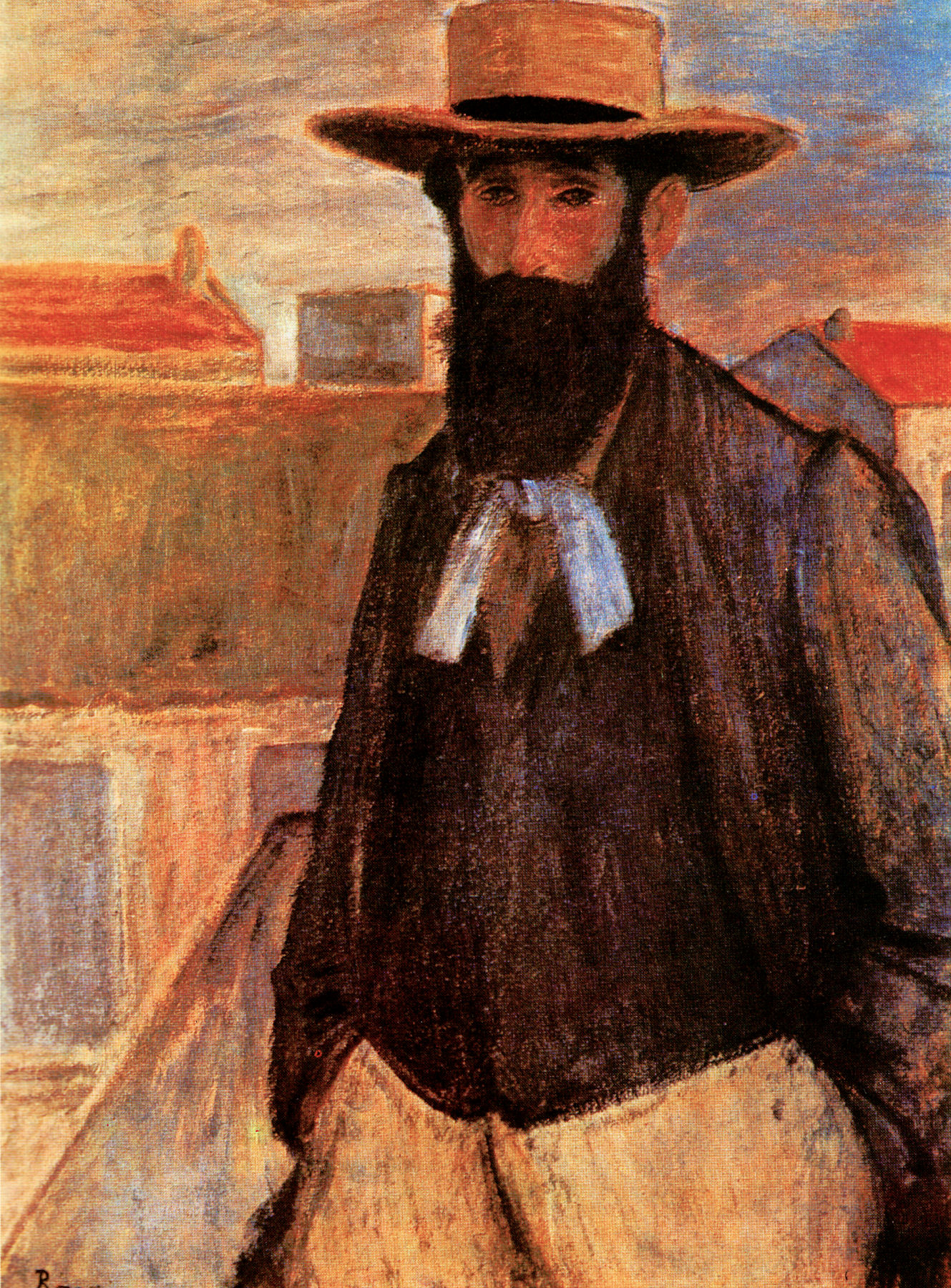
Why Aristide Maillol matters
Aristide Maillol occupies a hinge point in the history of modern sculpture, moving away from the anecdotal, gesture-heavy modeling of Rodin toward a calmer, more architectural treatment of the human form that helped open the door for Matisse, Brancusi, and later twentieth century figuration. For a collector, he is also a case study in a reputation built almost entirely on museum and institutional validation, from the Fondation Dina Vierny to the Musée d'Orsay, MoMA, and the Guggenheim, in a market where individual auction results are infrequent and public information about representation is thin.
- Born
- 1861-12-08, Banyuls-sur-Mer, France
- Nationality
- French
- Media
- Sculpture, Painting, Printmaking, Tapestry design
- Movement
- Nabis, Modern sculpture
- Education
- École des Arts Décoratifs, Paris, reportedly circa 1882 to 1883. École des Beaux-Arts, Paris, admitted 1885, studied under Jean-Léon Gérôme and Alexandre Cabanel for about five years. No formal degree is documented.
- Signature motifs
- Monumental female nudes, Mediterranean classicism
- Representation
- "Fondation Dina Vierny, Musée Maillol (estate steward)"
By the numbers
- EUR 6.18MAuction highLe Fleuve (La Rivière), Artcurial, Paris, 2 December 2013
- Deceased, 1944StatusDied in Banyuls-sur-Mer following a car accident
- Musée d'Orsay, 2022 to 2023Major retrospectiveFirst French monographic exhibition since 1961
- Fondation Dina Vierny, Musée MaillolEstate steward
Selected works
Click any work to view it full screen.
Biography
Aristide Joseph Bonaventure Maillol was born on 8 December 1861 in Banyuls-sur-Mer, on the Catalan coast of southern France. He left home for boarding school around 1874 and took his first art lessons there before returning to Banyuls in 1879 determined to become an artist. He moved to Paris in 1881 to study art, took informal drawing lessons under Jean-Léon Gérôme after repeated failed attempts to gain formal admission to the École des Beaux-Arts, and, according to some biographical accounts, enrolled at the École des Arts Décoratifs around 1882 to 1883, a period marked by poverty and hospitalization for illness. In 1885 he was finally admitted to the École des Beaux-Arts, where he studied for about five years under Gérôme and Alexandre Cabanel.
In the early 1890s Maillol turned to tapestry, drawing on the medieval tapestries at the Cluny Museum, exhibiting his first tapestry work in 1893, and opening a tapestry studio in Banyuls-sur-Mer. He later moved into the sculpture for which he is now best known, developing a style of monumental, classically composed female nudes. His first major solo exhibition, thirty-three works shown at Ambroise Vollard's Paris gallery in 1902, brought critical acclaim. Public recognition followed: a 1912 commission for a monument to Paul Cézanne, numerous French war memorial commissions after the First World War, and service from 1919 as a juror for the Prix Blumenthal alongside Florence Meyer Blumenthal.
Maillol died on 27 September 1944 at his home in Banyuls-sur-Mer, following injuries sustained in a car accident on 15 September 1944 while traveling to visit Raoul Dufy. The Musée Maillol records the immediate cause of death as uraemia. He was eighty-two. His last model, Dina Vierny, became the universal legatee of the Lucien Maillol estate in 1972 and founded the Fondation Dina Vierny, which opened the Musée Maillol in Paris in 1995 and a second museum in Banyuls-sur-Mer, both dedicated to preserving and presenting his work.
Critical reception
Museums and scholars treat Maillol as a pivotal figure who redirected sculpture away from Rodin's expressive, fragmentary modeling toward calm, geometric mass and classical proportion, a shift later curators and historians have credited with opening space for Matisse's and Brancusi's own reductions of the figure. The Musée d'Orsay's own text for its 2022 to 2023 retrospective notes that it was the first true monographic exhibition devoted to him in France since the 1961 centenary tribute at the Musée National d'Art Moderne, a six-decade gap that curators have read as evidence of a reputation better sustained by international museums than by his home country's exhibition calendar.
Market
Maillol's auction record is Le Fleuve, also catalogued as La Rivière, a bronze which sold for EUR 6,180,000 (about USD 8.37 million) at Artcurial in Paris on 2 December 2013, in a sale of works from the Dina Vierny collection. Recent secondary market activity sits well below that outlier, concentrated in smaller sculptures, tapestries, and decorative pieces; specific rolling-average figures for recent sales could not be independently confirmed and are not reported here.
Top auction results
| Work | Price | Sale |
|---|---|---|
| Le Fleuve (La Rivière) | USD 8,370,312 (EUR 6,180,000) | Artcurial, Paris, 2013-12-02 |
Selected exhibitions
| Years | Exhibition | Venues |
|---|---|---|
| 2022 to 2023 | Aristide Maillol (1861 to 1944). The Quest for Harmony | Musée d'Orsay, Paris; toured to La Piscine, Musée d'Art et d'Industrie André Diligent, Roubaix |
| 1995 | Founding of the Musée Maillol | Musée Maillol, Paris, established by Dina Vierny |
| 1961 | Hommage à Maillol | Musée National d'Art Moderne, Paris, centenary of the artist's birth |
| 1925 to 1926 | Exhibition of Sculpture and Drawings by Aristide Maillol | Albright Art Gallery, Buffalo; toured to Brummer Gallery (New York), Museum of Fine Arts (Boston), Art Institute of Chicago, and other North American venues |
| 1902 | First major solo exhibition | Galerie Ambroise Vollard, Paris |
Museum collections
- Musée Maillol, Paris and Banyuls-sur-Mer
- Musée d'Orsay, Paris
- Museum of Modern Art, New York
- Solomon R. Guggenheim Museum, New York
- Art Institute of Chicago
- Kröller-Müller Museum, Otterlo, Netherlands
Awards and honors
- Commission for a monument to Paul Cézanne (1912)
- Juror, Prix Blumenthal, with Florence Meyer Blumenthal (1919)
- Multiple French war memorial commissions following the First World War (1920)
Authentication and provenance
No catalogue raisonne.
No published catalogue raisonne has been confirmed for Maillol's sculpture or graphic work. The Fondation Dina Vierny, Musée Maillol in Paris, formed from the artist's estate, is the primary institutional steward of his archive and the natural first reference for authentication questions.
Primary reference: https://museemaillol.com/en/maillol-and-his-work/
What collectors should know
No published catalogue raisonné for Maillol has been confirmed, and public sources do not clearly identify any commercial gallery currently representing his estate. The Fondation Dina Vierny, Musée Maillol in Paris is the estate's documented institutional steward and the natural first reference point for questions of attribution and provenance. Cataloguing sources also disagree on the exact title of his record setting bronze, Le Fleuve versus La Rivière, a reminder that bronze editions by sculptors of this period can carry more than one accepted name and that provenance documentation deserves close attention. With only a small number of significant public sales, and a market otherwise driven by smaller sculptures, tapestries, and decorative works, any single auction result should be read against the specific piece and edition rather than as a market wide trend.
Further reading and resources
Data current as of 2026-07-09.

