Why Aristotle matters
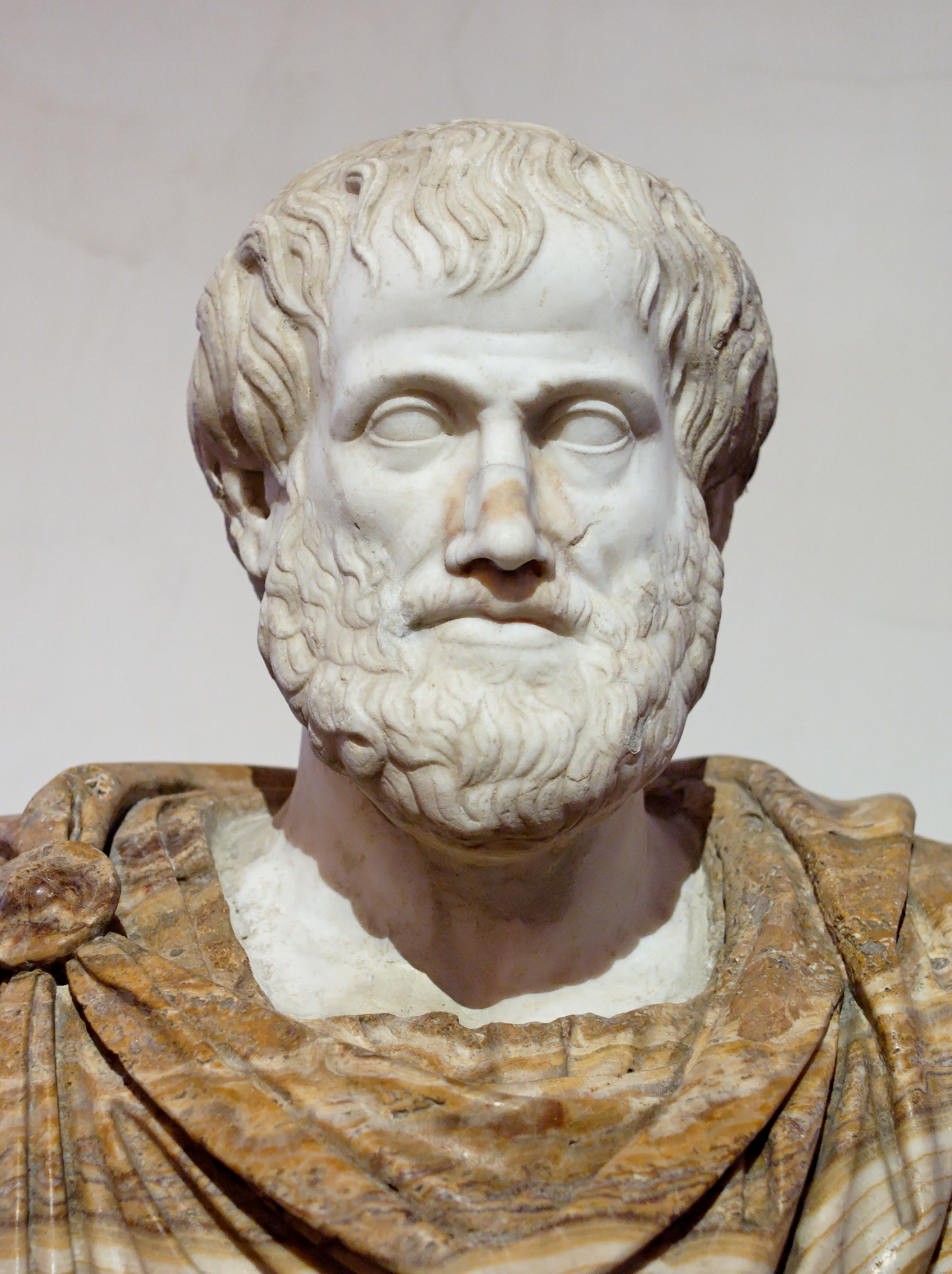
Aristotle (384 to 322 BCE) is one of the foundational figures of Western thought, and through surviving texts on poetics, rhetoric, and aesthetics he is also one of the earliest and most influential voices on the theory of art itself. He was not a painter, sculptor, or maker of visual works, and no confirmed body of artworks by his hand exists. His connection to art history runs almost entirely through his ideas and through the major works other artists made about him, most famously Rembrandt's Aristotle with a Bust of Homer. This profile documents Aristotle as a historical figure and as the subject of significant artworks, not as a working visual artist with an active market, because the research record does not support treating him as one.
- Nationality
- Ancient Greek
- Education
- Studied and later taught at Plato's Academy, Athens, circa 367 to 347 BCE. No formal degree is recorded; ancient academies did not confer degrees.
By the numbers
- DeceasedStatusDied 322 BCE, Chalcis, Euboea, Greece
- 384 BCEBornStagira, Chalcidice, Greece
- Plato's Academy, AthensEducationCirca 367 to 347 BCE, student then teacher
- None confirmedAuction record for a work by AristotleNo visual artworks by Aristotle are documented; see Market section
Biography
Aristotle was born in 384 BCE in Stagira, a coastal town in Chalcidice in northern Greece.
At about seventeen, in 367 BCE, Aristotle traveled to Athens and joined Plato's Academy, where he remained for roughly twenty years, first as a student and later as a teacher and colleague, until Plato's death in 347 BCE. He later served, circa 343 to 340 BCE, as tutor to the young Alexander, later Alexander the Great, at the Macedonian court. In 335 BCE he returned to Athens and founded his own school, the Lyceum.
He left Athens again amid anti-Macedonian political pressure after Alexander's death and died in 322 BCE at Chalcis, on the island of Euboea. Ancient and modern sources describe the cause as a digestive or stomach illness, though no single account is treated as definitive by scholars, and no source establishes an exact calendar date of death. No degree-granting institutions existed in his lifetime, and no source attributes a formal degree to him; his documented education consists of attendance and later teaching at Plato's Academy.
Critical reception
Aristotle's reception is philosophical rather than art-critical. His Poetics remains one of the most cited texts in the history of aesthetics, and later painters, notably Rembrandt, Jusepe de Ribera, and Luca Giordano, made him the subject of major works precisely because of that stature. No verbatim critical assessment of Aristotle as an artist appears in the available record, since the ordinary art-critical apparatus of reviews, gallery statements, and market commentary does not apply to a historical philosopher who left no visual works.
Market
There is no confirmed auction record for a work created by Aristotle, and no evidence that he produced paintings, sculptures, or other art objects that survive or have ever come to market. Items that carry his name at auction are ancient portraits or manuscripts in which he is the subject or the named author of a text, not the artist: examples include a Roman marble portrait head of Aristotle and early printed or illuminated editions of his writings, both catalogued under their actual makers or as anonymous antiquities. The best-known sale connected to his name is Rembrandt van Rijn's painting Aristotle with a Bust of Homer, which sold for 2.3 million US dollars at Parke-Bernet Galleries in New York on 15 November 1961 to the Metropolitan Museum of Art. That result is Rembrandt's auction record, not Aristotle's. No artist-level auction, gallery, or catalogue raisonne data exists for Aristotle because he has no market as a visual artist.
What collectors should know
Collectors should understand that "Aristotle" is not an active name in the auction market for artworks. Any auction result referencing him is for a work by another artist, one that depicts him or reproduces his writings, and the artist of record in those cases is the painter, sculptor, or printer involved, not Aristotle. There is no catalogue raisonne, authentication program, or gallery representation associated with Aristotle as a visual artist, and no comparison to a living or estate-managed artist's market is appropriate here. Several unrelated contemporary musicians perform under the name Aristotle or a close variant, including an artist billed simply as Aristotle on streaming platforms, Michael Aristotle, and Aristotle Jones, who performs as the Appalachian Soul Man; none of them should be conflated with the historical figure documented in this profile.
Further reading and resources
Data current as of 2026-07-13.

