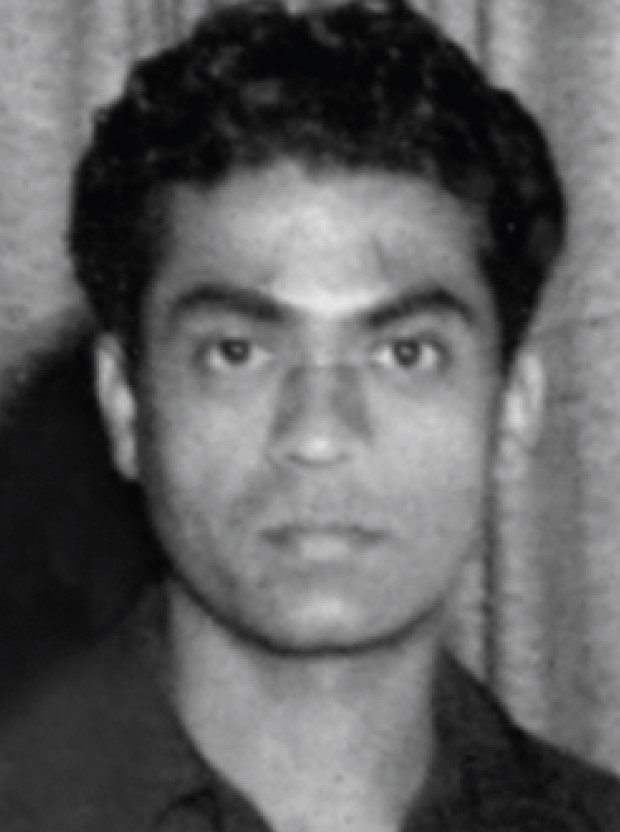
Why Bal Chhabda matters
Bal Chhabda was one of the connective figures of postwar Bombay art, a self-taught painter who was also a filmmaker, a gallerist, and a collector at the center of the circle around the Progressive Artists' Group. Christie's has called him "an unsung figure in the story of Indian Modernism," a fair summary of a career built more on quiet influence than on frequent exhibition. For collectors, he represents a case where institutional and historical standing runs well ahead of a thin, only recently active auction market.
- Nationality
- Indian
- Media
- Painting
- Movement
- "Indian Modernism", "Progressive Artists' Group circle (Bombay)"
- Education
- Self-taught as a painter; pursued an early career in filmmaking, though specific institutions and dates are not documented in sources reviewed
- Signature motifs
- "Abstract landscapes"
By the numbers
- INR 13,000,000+Auction highSouth Indian Landscape, sold via Christie's; reported by Indian art press as several times the artist's prior record; exact sale date and location not confirmed in sources reviewed
- Gallery 59, BombayFounded1959, one of Mumbai's earliest galleries to show the Progressive Artists' Group
- Governor's Award, 1961Tokyo BiennalePainting title not confirmed in sources reviewed
- No current gallery or estate representation confirmedRepresented by
Biography
Bal Chhabda was born in 1923 in pre-Partition Punjab, in territory now part of Pakistan. His family moved to Ahmedabad around 1930, where his father ran a cinema business. As a young man Chhabda pursued an early career in filmmaking, though the specific institutions, titles, and dates involved are not documented in the sources reviewed.
He had no formal training as an artist. In the late 1950s, encouraged by his friends M.F. Husain and V.S. Gaitonde, he began to draw and paint, teaching himself as he went. In 1959, finding few galleries in Bombay willing to show contemporary work, he founded his own space, Gallery 59, which gave early exhibitions to members of the Progressive Artists' Group. His own painting soon reached an international audience: he showed at the Salon de la Jeune Peinture in Paris and at the Tokyo Biennale in 1960, and in 1961 he won the Governor's Award at the Tokyo Biennale. A Lalit Kala Akademi Award followed in 1965, and a Rockefeller Foundation grant allowed him to travel and work in New York, though the exact date of the grant is not confirmed in the sources reviewed.
Despite this recognition, Chhabda exhibited rarely. He painted for roughly thirty years before holding his first solo exhibition around 1985; the specific venue and any subsequent solo shows are not confirmed in the sources reviewed. He continued to live in Mumbai, where he died in the second week of March 2013; no source consulted gives an exact calendar date. In the years after his death, a dispute over his estate among family members was reported in the Mumbai press.
Critical reception
Institutional and market sources consistently frame Chhabda as an important but under-recognized figure of Indian Modernism, valued as much for his role as a connector and enabler of other artists as for his own painting. Christie's has described him as an unsung figure in the story of Indian Modernism, a framing reinforced by his founding of Gallery 59 and his long reluctance to exhibit his own work, which together have shaped a critical picture of an artist more comfortable supporting the scene around him than promoting himself.
Market
Chhabda's auction market is small and only intermittently active. Indian art press coverage, citing Christie's, describes an oil on canvas titled South Indian Landscape as having sold for a reported price in excess of Rs 1.3 crore (roughly INR 13,000,000), several times higher than his prior auction results; the exact sale date and location are not confirmed in the sources reviewed. A separately and clearly documented December 2025 sale at AstaGuru of an untitled work brought roughly Rs 20.7 lakh, well below the reported Christie's figure, underscoring how much individual results can vary given how few of his works come to market.
Top auction results
| Work | Price | Sale |
|---|---|---|
| South Indian Landscape | INR 13,000,000+ (reported in excess of Rs 1.3 crore) | Christie's, Not confirmed in sources reviewed |
Selected exhibitions
| Years | Exhibition | Venues |
|---|---|---|
| 1960 | Salon de la Jeune Peinture | Paris |
| 1960 to 1961 | Tokyo Biennale | Tokyo, Governor's Award awarded in 1961 |
| 1969 | Exhibition of Contemporary Art of the East and West | Museum of Modern Art, Tokyo |
| c. 1985 | First solo exhibition | Mumbai, venue not confirmed in sources reviewed |
| 1994 | Seven Indian Painters | Gallerie Le Monde de l'Art, Paris |
Awards and honors
- Governor's Award, Tokyo Biennale (1961)
- Lalit Kala Akademi Award (1965)
- Rockefeller Foundation grant to travel and work in New York, exact date not confirmed in sources reviewed
Authentication and provenance
No catalogue raisonne.
No catalogue raisonne or estate authentication program has been identified for Bal Chhabda. His estate was reportedly the subject of a family asset dispute covered in the Indian press. Collectors should rely on auction house and gallery provenance research on a work by work basis.
Primary reference: https://jnaf.org/artist/bal-chhabda/
What collectors should know
There is no catalogue raisonne and no documented estate authentication program for Bal Chhabda, and no gallery currently appears to represent his estate. His family was reported to be in a legal dispute over his assets after his 2013 death, which adds a further reason to verify provenance carefully on any individual work. His auction record is thin, with only a small number of tracked sales and a wide gap between his highest and most recent results, so any single price should be read in that context rather than as a stable market trend.
Further reading and resources
Data current as of 2026-07-16.

