Bernaert van Orley
Flemish (Netherlandish), 1488 to 1541
Painting · Tapestry design · Stained glass design
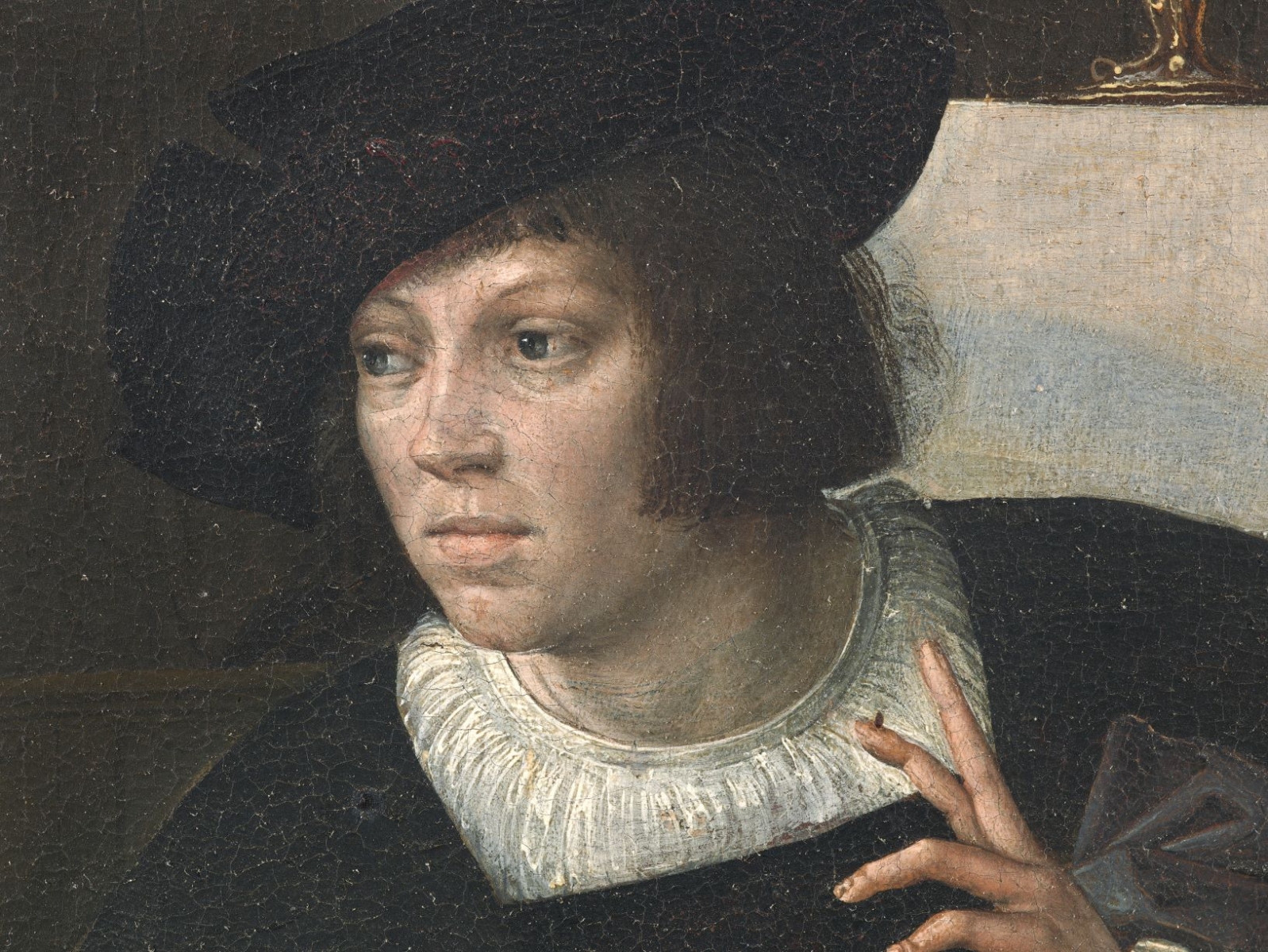
Why Bernaert van Orley matters
Bernaert van Orley was the leading painter in Brussels in the first half of the sixteenth century and the artist most credited with importing Raphael's Italianate vocabulary into Netherlandish art. As court painter to two successive Habsburg regents and the era's foremost designer of large scale tapestry cycles, he sits at the center of any serious account of the Northern Renaissance. For collectors, he represents a different kind of market than a contemporary artist: a museum bound Old Master with no living estate, no gallery, and a thin, infrequent auction record, where scholarly attribution matters as much as price.
- Nationality
- Flemish (Netherlandish)
- Media
- Painting, Tapestry design, Stained glass design
- Movement
- Northern Renaissance, Romanism
- Education
- No formal school is documented. Presumed initial training in the workshop of his father, painter Valentin van Orley. Later claims that he studied in Raphael's workshop in Rome are unproven and not supported by reliable sources.
- Signature motifs
- Italianate Romanist figures, Tapestry cartoon design, Stained glass window design
By the numbers
- EUR 720,000Auction highMount Calvary, Lempertz, Cologne, 20 Nov 2008
- 1518Court painterAppointed to Margaret of Austria, Regent of the Netherlands
- No gallery or estateRepresented byOld Master; works trade through auction houses and specialist dealers
Selected works
Click any work to view it full screen.
Biography
Bernaert van Orley, also recorded historically as Bernard, Barent, Barend, or Bernaerdt van Orley and as Barend van Brussel, was born in Brussels. Sources disagree on the exact year, with estimates ranging from about 1487 to 1492; no single archival birth record has been confirmed. He was presumably first trained in the workshop of his father, the painter Valentin van Orley. There is no evidence he ever traveled to Italy; his Italianate style is instead attributed to his study of engravings and of Raphael's tapestry cartoons, which were displayed in Brussels around 1516 to 1519.
By 1515 he was working for Margaret of Austria, Regent of the Netherlands, and in 1518 he was formally appointed her official court painter, a position he continued to hold under her successor, Mary of Hungary, from 1532. As head of a large Brussels workshop, he became one of the first entrepreneurial artists in Northern Europe, producing altarpieces, portraits, stained glass, and tapestry designs at scale. Major surviving works include the Job altarpiece, or Triptych of the Virtue of Patience, commissioned by Margaret of Austria in 1521; the Haneton Triptych; The Last Judgment, a triptych commissioned in 1525 for the Cathedral of Our Lady in Antwerp; the Altarpiece of Calvary of 1534 in the Church of Our Lady, Bruges; and stained glass windows in the Cathedral of St. Michael and St. Gudula in Brussels depicting members of the Habsburg house. His tapestry designs include the Hunts of Maximilian and the Battle of Pavia series, the latter woven in seven panels now held in Naples, with the surviving cartoons in the Louvre.
He died in Brussels. Most specialist sources, including the RKD database, Wikipedia, WikiArt, and the National Gallery of Art, give the date as 6 January 1541. A smaller group of standard references, including Art UK, Britannica, and the Web Gallery of Art, instead record 1542. Both the day and month, and the place, Brussels, are consistent across sources; only the year is disputed.
Critical reception
Van Orley's reputation rests on his role in carrying Raphael's Roman style north. Standard reference sources, including the National Gallery of Art, Wikipedia, and the Museo Thyssen Bornemisza, describe him as a leading figure of the Romanist movement in the Low Countries, absorbing Raphael's Italianate style largely through engravings and through Raphael's tapestry cartoons on view in Brussels rather than through direct travel to Italy. Art UK notes there is no evidence he ever visited Italy himself. The first major monographic exhibition devoted to him, "Bernard van Orley: Brussels and the Renaissance," was held at BOZAR in Brussels in 2019, reassembling works from collections worldwide and reaffirming his standing as the city's central Renaissance master.
Market
Van Orley's market is that of a well documented but infrequently traded Old Master. The best documented public auction result identified is Mount Calvary, which sold for EUR 720,000 including premium at Lempertz in Cologne, Auction 929, understood from the Lempertz sale calendar to have taken place on 20 November 2008. Artprice records him as having been offered at public auction 27 times in its database. There is no gallery or estate representing the artist; his paintings, drawings, and tapestry designs move through Old Master auction houses and specialist dealers rather than through a managed contemporary market.
Top auction results
| Work | Price | Sale |
|---|---|---|
| Mount Calvary | EUR 720,000 | Lempertz, Cologne, 2008-11-20 |
Selected exhibitions
| Years | Exhibition | Venues |
|---|---|---|
| 2019 | Bernard van Orley: Brussels and the Renaissance | BOZAR (Palais des Beaux-Arts), Brussels |
Museum collections
- Royal Museums of Fine Arts of Belgium, Brussels
- Royal Museum of Fine Arts Antwerp
- Kunsthistorisches Museum, Vienna
- Museo Nacional Thyssen-Bornemisza, Madrid
- National Gallery of Art, Washington, D.C.
- Musee du Louvre, Paris
- Museo di Capodimonte, Naples
- National Gallery, London
- Metropolitan Museum of Art, New York
Awards and honors
- Appointed court painter to Margaret of Austria, Regent of the Netherlands (1518)
- Continued as court painter under Mary of Hungary (1532)
Authentication and provenance
No catalogue raisonne.
No published catalogue raisonne has been confirmed for this artist. Attribution relies on the 1943 Brussels monograph 'Bernard van Orley, 1488 to 1541,' museum catalogues, and the RKD database. A large studio output means many surviving paintings are catalogued as 'circle of' or 'follower of' rather than autograph works.
Primary reference: https://www.rkd.nl/en/explore/artists/60937
What collectors should know
There is no confirmed catalogue raisonne for Bernaert van Orley, and the large scale of his Brussels workshop means many surviving paintings are catalogued as "circle of" or "follower of" rather than as autograph works, so provenance research and connoisseurship carry unusual weight in any acquisition. Public auction supply is small and infrequent, with roughly two dozen or so recorded sales tracked by Artprice, so any single result, including the EUR 720,000 Lempertz sale, should be read as a data point rather than a stable benchmark. There is no gallery or estate to consult; transactions run through Old Master auction houses and specialist dealers. Even his birth and death years carry minor, unresolved disagreement among standard reference sources, a reminder that dates for artists this early are approximate rather than fixed.
Further reading and resources
Data current as of 2026-07-10.

