Bernard van Orley
Flemish (Netherlandish, Brussels)
Panel painting · Tapestry cartoon design · Stained glass design
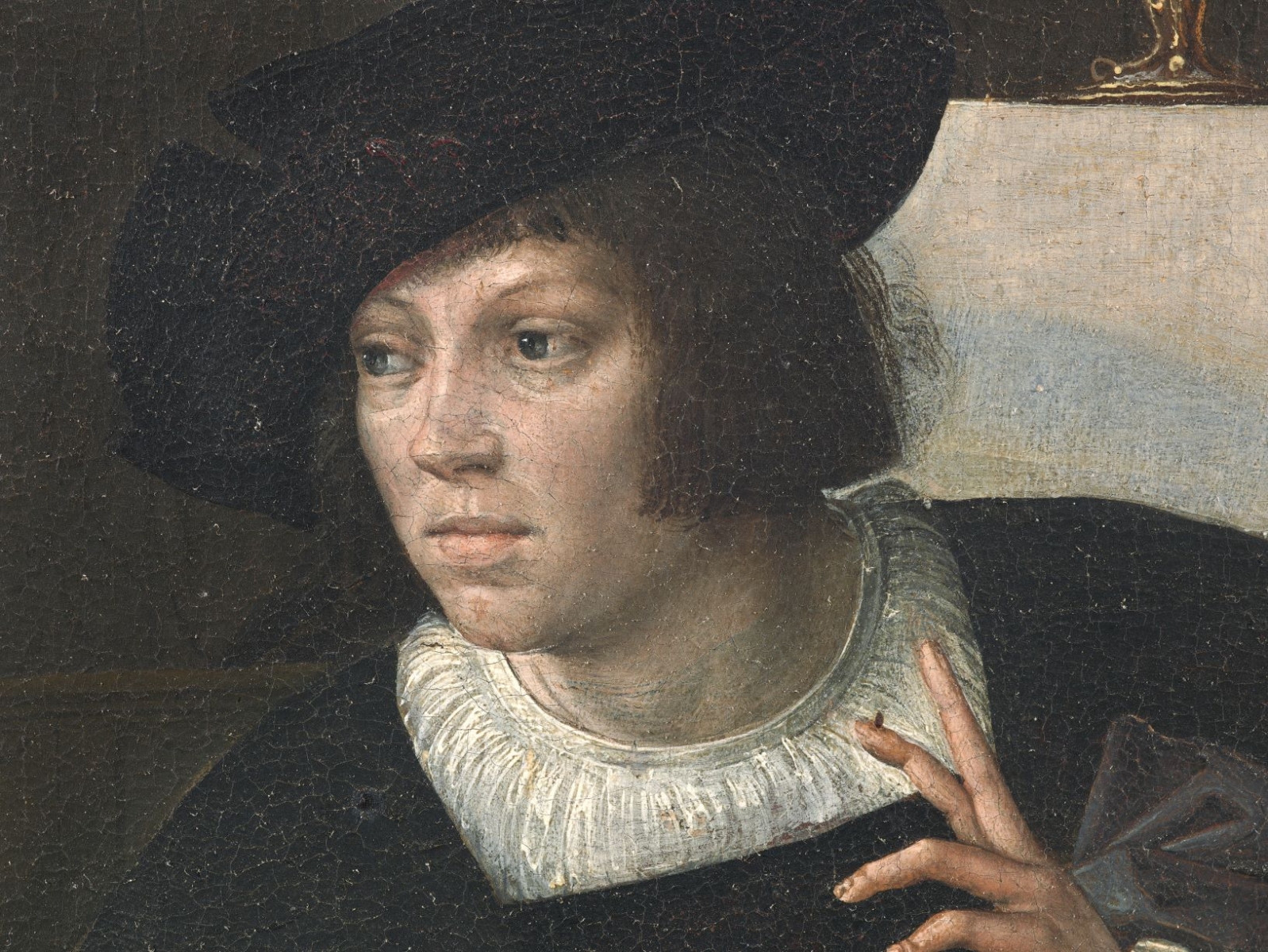
Why Bernard van Orley matters
Bernard van Orley was the leading painter in Brussels during the first half of the sixteenth century, serving as court painter to two successive regents of the Habsburg Netherlands and helping carry Italian Renaissance ideas into Flemish panel painting, tapestry design, and stained glass. For collectors of Old Master material, he represents one of the few Northern Renaissance names whose autograph paintings still surface at auction, sold alongside a much larger volume of workshop, circle, and follower pictures that trade at a fraction of the price.
- Nationality
- Flemish (Netherlandish, Brussels)
- Media
- Panel painting, Tapestry cartoon design, Stained glass design
- Movement
- Northern Renaissance, Flemish Renaissance
- Education
- No confirmed formal school or degree. Likely trained in the workshop of his father, painter Valentin van Orley, in Brussels, and thought to have taken over that workshop when Valentin moved to Antwerp in 1512.
- Signature motifs
- Italianate ornament in Flemish panel painting, Large-scale tapestry cartoons
By the numbers
- GBP 2,040,000Auction recordVirgin and Child, Sotheby's London, 2026; about USD 2.71M, exact sale date not established
- c. 1487 to 1491BornBrussels; exact date not established in scholarship
- From 1518, then 1532 onwardCourt painterTo Margaret of Austria, then Mary of Hungary; end date of first term not established
- None publishedCatalogue raisonneAttribution via museum scholarship and connoisseurship
Selected works
Click any work to view it full screen.
Biography
Born in Brussels sometime between 1487 and 1491, an exact date not established in the scholarly record, van Orley likely trained in the workshop of his father, the painter Valentin van Orley, and is thought to have taken over that Brussels workshop when Valentin moved to Antwerp in 1512. Claims that he completed his training in Rome under Raphael are not supported by reliable sources. By 1518 he had become court painter to Margaret of Austria, regent of the Netherlands. He was reinstated as court painter under her successor, Mary of Hungary, from 1532 onward.
Van Orley became the central figure of the Brussels art scene, working across panel painting, portraiture, tapestry cartoons, and stained glass window design. Period accounts describe him, together with Michael Coxcie, overseeing the weaving of tapestries after Raphael's cartoons for the Vatican, and he is credited with tapestry designs that survive today at Hampton Court.
He died in Brussels on 6 January, in a year the sources give as either 1541 or 1542. The National Gallery of Art's systematic catalogue of Early Netherlandish painting favors 1541, while other major reference works, including Encyclopaedia Britannica and the Web Gallery of Art, give 1542.
Critical reception
Museums and Old Master scholarship treat van Orley as one of the pivotal figures of the Renaissance in the Low Countries, credited with helping shift Flemish painting from a late Gothic idiom toward the Italian manner. His 2019 monographic exhibition, "Bernard van Orley: Brussels and the Renaissance," at the Bozar Centre for Fine Arts in Brussels, presented him as a bridge between earlier Flemish masters and Pieter Bruegel the Elder, drawing together paintings, tapestry designs, and stained glass to argue for his central place in the Brussels Renaissance. Scholars point to his oversight of Vatican tapestry weaving after Raphael's designs, alongside Michael Coxcie, as evidence of his standing among European contemporaries.
Market
Van Orley's market is a small, specialist corner of the Old Master auction world. The current auction record for an autograph work is Virgin and Child, which sold for GBP 2,040,000 (about USD 2.71 million) at Sotheby's London in 2026, a new high for the artist; the exact calendar date of the sale has not been independently established. The next-highest confirmed price is Portrait of a Nobleman, a rediscovered Renaissance portrait that sold at Lempertz in Cologne on 21 May 2026 for EUR 845,000, though Lempertz's own auction-summary page lists a slightly different result of EUR 812,800 for the same lot. A third autograph painting, Mount Calvary, sold through Lempertz for EUR 720,000. The wider market for his name includes many works catalogued as "circle of," "follower of," or "workshop of" Bernard van Orley, which typically sell well below autograph prices, underscoring how much the attribution level moves price for this artist.
Top auction results
| Work | Price | Sale |
|---|---|---|
| Virgin and Child (2026) | USD 2,710,000 (GBP 2,040,000) | Sotheby's, London |
Selected exhibitions
| Years | Exhibition | Venues |
|---|---|---|
| 2019 | Bernard van Orley: Brussels and the Renaissance | Bozar, Centre for Fine Arts, Brussels |
Museum collections
- Royal Museums of Fine Arts of Belgium, Brussels
- Kunsthistorisches Museum, Vienna
- Musee du Louvre, Paris
- Museo di Capodimonte, Naples
- Metropolitan Museum of Art, New York
- National Gallery of Art, Washington, D.C.
- Museo del Prado, Madrid
- Fitzwilliam Museum, Cambridge
Awards and honors
- Appointed court painter to Margaret of Austria, Regent of the Netherlands (1518)
- Reinstated as court painter to Mary of Hungary, Regent of the Netherlands (1532)
Authentication and provenance
No catalogue raisonne.
No published catalogue raisonne has been located. Attribution rests on museum scholarship and Old Master connoisseurship, and auction catalogues routinely distinguish autograph paintings from workshop, circle, and follower versions, which trade at markedly lower prices.
Primary reference: https://www.nga.gov/collection/artist-info.1758.html
What collectors should know
There is no catalogue raisonne for Bernard van Orley, and attribution is handled through museum scholarship and specialist connoisseurship rather than any certification body. Because so much of what circulates under his name is workshop, circle, or follower material, the gap between an autograph attribution and a studio attribution is the single biggest driver of price, and it is worth checking exactly how a given auction house has catalogued a work before treating any sale as a signal for the artist's own market. Given the sparse resale history and the scholarly disagreement even over his death year, any single auction result should be read as a data point, not a trend line.
Further reading and resources
Data current as of 2026-07-13.

