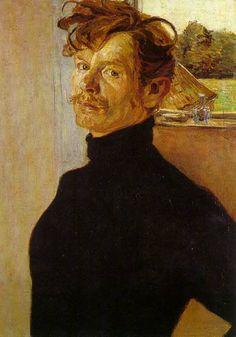
Why Bernhard Pankok matters
Bernhard Pankok is a transitional figure in German design and painting around 1900, working across furniture, interiors, graphic art, architecture, and stage design as the Jugendstil movement gave way to early modernism. He was a cofounder of the Deutscher Werkbund in 1907 and, as head and later director of Stuttgart's royal school of applied arts, helped shape a generation of German designers. For a collector, his importance today rests almost entirely on institutional and art-historical standing rather than on any established auction market, which is thin and only lightly documented.
- Born
- 1872-05-16, Münster, Germany
- Nationality
- German
- Media
- Painting, Graphic art, Architecture, Design
- Movement
- Jugendstil, Deutscher Werkbund, Early modernism
- Education
- Apprenticeship as a decorative painter and restorer, Münster, circa 1886 to 1889; Kunstakademie Düsseldorf, painting, 1889 to 1891; Königliche Akademie der Künste, Berlin, circa 1891 to 1892; became an independent, freelance artist in Munich from 1892
- Signature motifs
- Total interior ensembles, Applied-arts and furniture design
By the numbers
- UnconfirmedAuction recordBest documented price is EUR 952 (Maronibaum am Abhang, Lempertz); higher, unverified results are indicated in other sources. See Market section.
- Cofounder, 1907Deutscher Werkbund
- Prize, 1900Paris Exposition Universellefor the Erkerraum interior ensemble
- No current gallery representation; museum and auction market onlyRepresented by
Selected works
Click any work to view it full screen.
Biography
Bernhard Wilhelm Maria Pankok was born on 16 May 1872 in Münster, Germany. He trained as a decorative painter and restorer in Münster from about 1886 to 1889, work that brought him into direct contact with significant historical artworks. He then entered formal academic training, studying painting at the Kunstakademie Düsseldorf from 1889 to 1891, followed by roughly a year at the Königliche Akademie der Künste in Berlin. In 1892 he settled in Munich, where he became an independent, freelance artist rather than enrolling at the academy there.
Pankok gained international recognition at the 1900 Exposition Universelle in Paris, where his Erkerraum interior ensemble won a prize, and he presented a Damenzimmer interior that received a prize at the 1901 international exhibition in Dresden, followed by a music room that won a prize at the 1904 World's Fair in St. Louis. In 1901 he was called to head the royal teaching and research workshop (Lehr- und Versuchswerkstätte) in Stuttgart, becoming director of the Royal School of Arts and Crafts there in 1913, a post he held until his retirement in 1937. In 1907 he was among the founders of the Deutscher Werkbund. Later honors included associate membership in the Berlin Secession (1907), the Knight's Cross of the Order of the Württemberg Crown (1911), membership in the Prussian Academy of Arts in Berlin (1925), an honorary doctorate from the Technical University of Stuttgart (1932), honorary membership in the Westphalian Art Association (1932), and honorary membership in the State Academy of Fine Arts Stuttgart (1942).
He died on 5 April 1943. Most reference and museum sources place his death in Baierbrunn, near Munich, where he had built a summer house and studio, though at least two specialist accounts, including reporting in the Süddeutsche Zeitung, indicate he more likely died in a Munich clinic and was subsequently buried at the Baierbrunn house. One of his paintings, Lesender Mann, was returned by the city of Münster to the heirs of a Jewish collector after research established it had been looted under National Socialism, a documented case reported by German press.
Critical reception
Art-historical treatment of Pankok positions him as a central figure in the shift from Jugendstil to twentieth-century design, valued for total interior ensembles that unified painting, furniture, and architecture. A comprehensive retrospective of his oeuvre at the Landesmuseum Württemberg in Stuttgart in 1973 remains the benchmark scholarly survey of his work. More recent institutional attention includes his inclusion in "The Academy in the Museum: Artists as Professors in Stuttgart, 1761 to 1920" at the Staatsgalerie Stuttgart (2011) and "Summer of Modernism" at the LWL-Museum für Kunst und Kultur (2023), as well as a dedicated monographic exhibition, "Bernhard Pankok, ganz privat," at the Stadtmuseum Münster in 2023 to 2024, built around the museum's extensive holdings and the preserved interior of his summer house. No verbatim critical assessment from a named critic in a major outlet could be confirmed for this profile.
Market
Pankok's secondary market is small and only lightly documented. The one auction result with a fully documented price in available sources is EUR 952, including premium, for Maronibaum am Abhang at Lempertz in Cologne; the exact sale date could not be confirmed. Other sources point to higher results, including undated yearly record-price listings on MutualArt for works such as Selbstportrait and a general indication from Artsy of results in the range of 50,000 US dollars, but the specific prices, currencies, houses, and dates for those could not be verified. Other located results, including a set of two etchings sold for EUR 40 at a smaller German house, sit well below the Lempertz figure. There is no evidence that any contemporary commercial gallery or estate currently represents Pankok; his work reaches the market almost exclusively through auction houses and occasional specialist dealers, while the bulk of his output is held in museum and institutional collections rather than in private trade.
Top auction results
| Work | Price | Sale |
|---|---|---|
| Maronibaum am Abhang | EUR 952 (including premium) | Lempertz, Cologne, Germany |
Selected exhibitions
| Years | Exhibition | Venues |
|---|---|---|
| 1900 | Exposition Universelle | Paris |
| 1901 | International Art Exhibition | Dresden |
| 1904 | Louisiana Purchase Exposition | St. Louis, USA |
| 1916 | First major solo exhibition | Münster |
| 1917 | Deutscher Werkbund exhibition | Basel and Berlin |
| 1973 | Comprehensive retrospective of his oeuvre | Landesmuseum Württemberg, Stuttgart |
| 2011 | The Academy in the Museum: Artists as Professors in Stuttgart, 1761 to 1920 | Staatsgalerie Stuttgart |
| 2023 to 2024 | Bernhard Pankok, ganz privat | Stadtmuseum Münster |
Museum collections
- LWL-Museum für Kunst und Kultur, Münster
- Stadtmuseum Münster
- Münchner Stadtmuseum, Munich
- Kunstgewerbemuseum, Berlin
- MAK, Museum für angewandte Kunst, Vienna
- The Metropolitan Museum of Art, New York
- Staatsgalerie Stuttgart
Awards and honors
- Associate member, Berlin Secession (1907)
- Knight's Cross, Order of the Württemberg Crown (1911)
- Member, Prussian Academy of Arts, Berlin (1925)
- Honorary doctorate (Dr.-Ing. e.h.), Technical University of Stuttgart (1932)
- Honorary member, Westphalian Art Association (1932)
- Honorary member, State Academy of Fine Arts Stuttgart (1942)
Authentication and provenance
No catalogue raisonne.
No catalogue raisonne has been identified for Pankok, and no certificate-of-authenticity program is documented. Verification relies on museum and archival records, provenance documented by auction houses, and institutional collection catalogues such as those of the LWL-Museum and Stadtmuseum Münster.
Primary reference: https://sammlung-online.lwl-museum-kunst-kultur.de/kuenstler-details/pankok-bernhard
What collectors should know
Pankok's auction footprint is small and only partly documented. The one fully verifiable price is a modest EUR 952, though other sources point to higher, unverified results, so any pricing history should be treated with caution given how few transactions are traceable. There is no catalogue raisonne, so provenance and museum or archival documentation carry the weight of verification, a point underscored by at least one of his paintings being subject to a documented Nazi-era restitution claim that was resolved in the 2020s. His significance is currently institutional and art-historical rather than market-driven, and collectors should weigh museum holdings and exhibition history more heavily than any single auction result.
Further reading and resources
Data current as of 2026-07-18.

