Biagio d'Antonio
Italian, 1446 to 1516
Panel painting · Tempera · Cassone and spalliera decoration
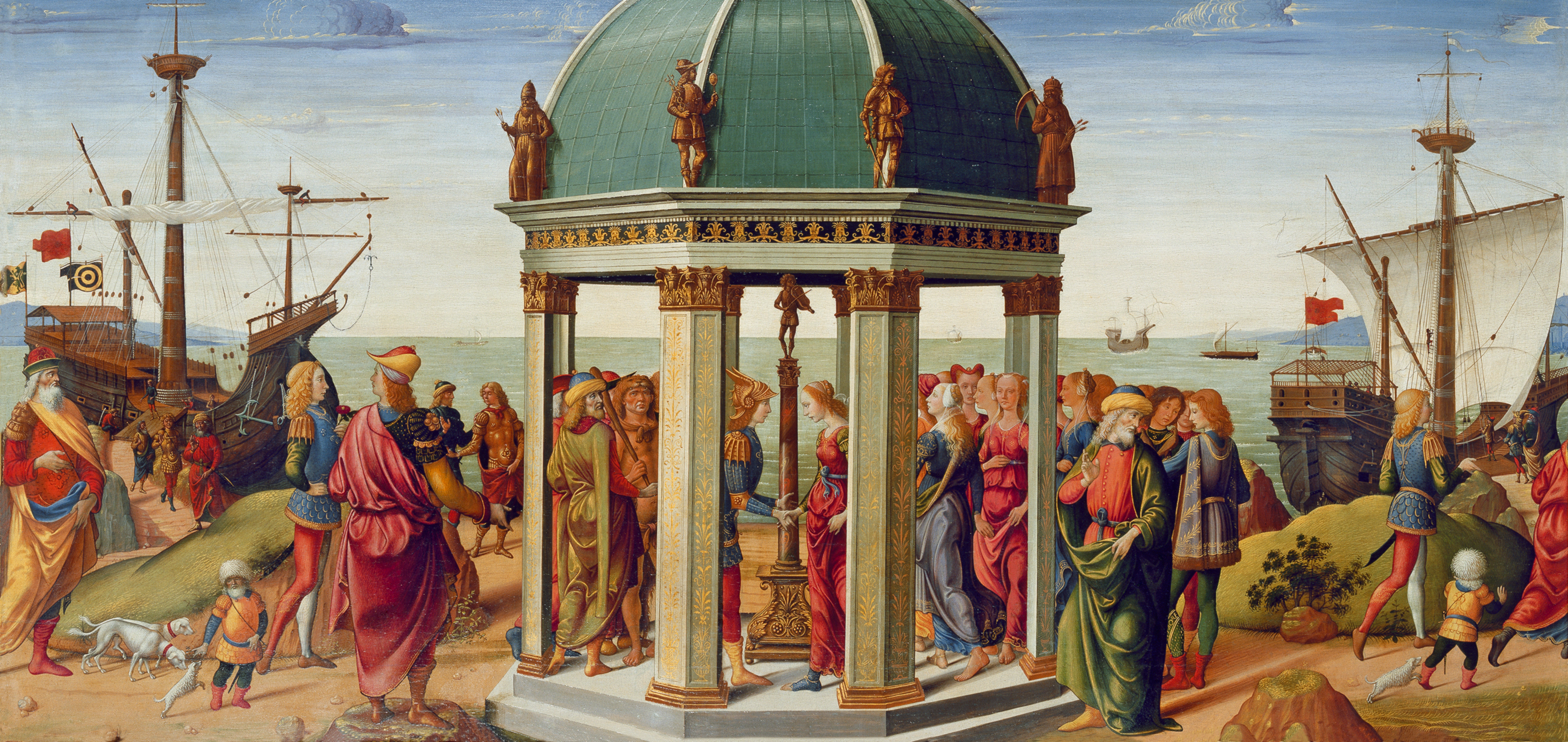
Why Biagio d'Antonio matters
Biagio d'Antonio was a Florentine Renaissance painter active from at least 1472 until his death in 1516, working in the orbit of Filippo Lippi, Andrea del Verrocchio, and Domenico Ghirlandaio. His surviving output, mostly cassoni and spalliere panels made for domestic interiors, plus a handful of independent portraits, now sits in the permanent collections of institutions including the Metropolitan Museum of Art, the National Gallery of Art, and the J. Paul Getty Museum. For collectors, he is a case study in how rarity and museum placement, rather than gallery promotion, drive value for an artist five centuries removed from the market.
- Nationality
- Italian
- Media
- Panel painting, Tempera, Cassone and spalliera decoration
- Movement
- Italian Renaissance, Florentine School
- Education
- No documented formal schooling. Trained in the workshop tradition of Renaissance Florence; no specific master is recorded, though his early style shows the influence of Filippo Lippi, Andrea del Verrocchio, and Domenico Ghirlandaio.
- Signature motifs
- Cassone and spalliera narrative panels, Portraiture, Mythological and classical subjects
By the numbers
- USD 2,307,000Auction recordPortrait of a Young Man Wearing a Red Berretto, Sotheby's New York, February 2026
- Florence, active by 1472 to 1516Active
- 3 documentedKnown portraitsPer Sotheby's, 2026
- No gallery or estate; market is auction-onlyRepresented by
Selected works
Click any work to view it full screen.
Biography
Biagio d'Antonio, also recorded as Biagio d'Antonio Tucci, was born in Florence around 1446 and trained there in the workshop tradition typical of the period. No specific master is documented, but his early work reflects the influence of Filippo Lippi, Andrea del Verrocchio, and Domenico Ghirlandaio, placing him within the same Florentine milieu that produced Botticelli and the young Leonardo da Vinci.
He was active by 1472 and spent much of the last quarter of the fifteenth century working in Faenza, in the Romagna region, while his style continued to reflect Florentine conventions. He specialized in painted wood panels for domestic interiors, including cassoni (marriage chests) and spalliere (narrative panels set into furniture or wainscoting), alongside mythological and classical subjects rendered in richly colored costume and armor. He also produced independent portraits, of which only three are documented to survive today. Biagio d'Antonio died in Florence on 1 June 1516.
Critical reception
Institutional and scholarly writing on Biagio d'Antonio centers on his place within the Florentine workshop system and on the long history of misattribution that surrounded his oeuvre; the Samuel H. Kress Foundation notes that a body of his work was for years assigned to other Faenza-based painters before being reunited under his name. Museum descriptions consistently frame him as a follower of Verrocchio and Ghirlandaio whose narrative panels animate mythological and biblical subjects with detailed costume and armor. No verbatim critical assessment from a named critic in a major outlet could be confirmed for this profile, so none is quoted here.
Market
Biagio d'Antonio has no gallery or estate representation in the contemporary sense; as a painter five centuries deceased, his work reaches the market exclusively through major auction houses. Artprice records seventeen public auction appearances for the artist to date. His auction record was set on 5 February 2026, when Portrait of a Young Man Wearing a Red Berretto, one of only three known portraits by the artist, sold at Sotheby's New York for USD 2,307,000, well above its pre-sale estimate and a rise of about 34 percent over his prior record. That earlier record, USD 1.72 million for the panel A Spalliera: The Battle of Zama, 202 BC, was set at Uppsala Auktionskammare in Sweden on 2 June 2009.
Top auction results
| Work | Price | Sale |
|---|---|---|
| Portrait of a Young Man Wearing a Red Berretto (2026) | USD 2,307,000 (USD 2,307,000) | Sotheby's, New York, 2026-02-05 |
| A Spalliera: The Battle of Zama, 202 BC (2009) | USD 1,720,000 | Uppsala Auktionskammare, Uppsala, Sweden, 2009-06-02 |
Selected exhibitions
| Years | Exhibition | Venues |
|---|---|---|
| 2026 | Auction record sale: Portrait of a Young Man Wearing a Red Berretto | Sotheby's, New York |
| Permanent collection | Portrait of a Young Man | Metropolitan Museum of Art, New York |
| Permanent collection | Italian Renaissance holdings | National Gallery of Art, Washington, D.C. |
| Permanent collection | Panels for domestic interiors (cassoni and spalliere) | J. Paul Getty Museum, Los Angeles |
| Permanent collection | Kress Collection holdings | Philbrook Museum of Art, Tulsa (Kress Collection) |
| 2009 | Prior auction record: A Spalliera, The Battle of Zama, 202 BC | Uppsala Auktionskammare, Uppsala, Sweden |
Museum collections
- Metropolitan Museum of Art, New York
- National Gallery of Art, Washington, D.C.
- J. Paul Getty Museum, Los Angeles
- Philbrook Museum of Art, Tulsa
Authentication and provenance
No catalogue raisonne.
No catalogue raisonne has been published for this artist. Attribution rests on curatorial and scholarly connoisseurship at the holding museums and at major auction houses, given the artist's fifteenth-century date and small surviving corpus.
Primary reference: https://en.wikipedia.org/wiki/Biagio_d'Antonio
What collectors should know
Biagio d'Antonio's market is defined by scarcity: only a handful of independent portraits are known, and his broader body of panel paintings is concentrated in museum collections rather than in private or dealer hands. There is no catalogue raisonne, so attribution depends on curatorial and scholarly connoisseurship at the holding institutions and at the major auction houses that occasionally bring his work to sale. Because sales are infrequent, any single auction result, including the 2026 record, should be read as a data point on a very thin market rather than as a stable trend line.
Further reading and resources
Data current as of 2026-07-09.

