Why Blas de Ledesma matters
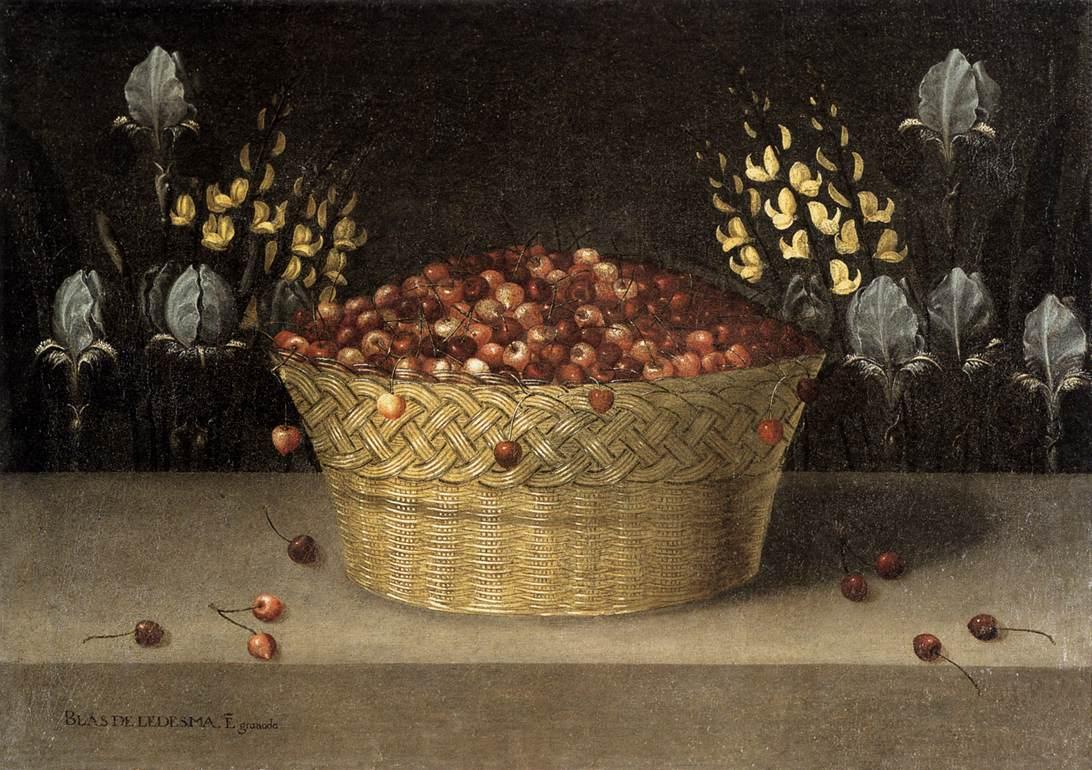
Blas de Ledesma is counted among the earliest definable personalities of Spanish still-life painting, active in Granada in the same years as Juan Sanchez Cotan helped establish the genre in Spain. His surviving, securely attributed body of work is extremely small, and only one signed canvas is unanimously accepted by scholars. For a collector, he represents the opposite end of the market from a blue-chip contemporary artist: a historically important but sparsely documented Old Master whose value depends entirely on connoisseurship, provenance, and comparison to a single benchmark painting rather than on a deep, liquid auction history.
- Nationality
- Spanish
- Media
- Painting, Fresco and stucco decoration
- Movement
- Spanish Golden Age, Baroque still-life painting
- Education
- No school, degree, or period of training is documented. Surviving records say nothing about his youth or formation.
- Signature motifs
- Still-life compositions, Fruit and flower baskets, Decorative fresco grotesques
By the numbers
- 1Signed autograph worksStill Life with Cherries, Lupin, and Iris, High Museum of Art, Atlanta
- 1587 to 1617 or 1618Documented active yearsMalaga, Granada, and Jaen
- 2Museum collections confirmedHigh Museum of Art; The Bowes Museum
- Not verifiable from public sourcesAll-time auction recordsee Market section
Biography
Blas de Ledesma was a Spanish painter of the Golden Age, first documented taking a painter's examination in Malaga in 1587. He is subsequently recorded working in Granada and Jaen from 1597 onward, with his most secure documentation running from 1602 to 1614 in Granada, where archival sources describe him as a painter of decorative fresco and stucco grotesques as well as still lifes. In 1614 he is documented designing a stucco vault decoration for the Alhambra. The painter and theorist Francisco Pacheco mentioned him in his treatise Arte de la Pintura, noting that Ledesma had studied the work of the Renaissance artists Julio de Aquiles and Alejandro Mayner. Nothing precise is known about his birth date, birthplace, or early training.
The date of his death is not settled in the scholarly literature. One reconstruction, based on a Brotherhood of Corpus Christi mass said for the repose of his soul on 5 January 1616, places his death at the end of 1615 or the start of 1616. Another reading of archival records, based on a 1618 document that refers to his wife, Leonor de Cardenas, as a widow, places his death sometime between 1616 and 9 October 1618. Both lines of evidence agree that he died in Granada. Because the sources disagree on the exact date, this profile reports the range rather than a single year.
Scholars caution that his still-life oeuvre is difficult to establish with certainty, in part because his work has at times been confused with that of the painter Blas de Prado. As a result, the modern catalogue of his paintings rests on a small number of signed or closely comparable canvases rather than on a broad, settled body of work.
Critical reception
The Web Gallery of Art describes archival evidence of Ledesma's renown as a painter of decorative fresco grotesques and still lifes, while noting that his standing as a still-life painter specifically "remains debatable, partly because he has been confused with Blas de Prado." Christie's lot literature discussing two still lifes attributed to Ledesma describes the Atlanta painting as, until recently, "the only known signed work by Ledesma" and "still our touchstone for knowledge of the artist," language that captures how thin and provisional the modern critical consensus on his oeuvre remains. Later scholarship, including the study of his 1587 examination record in Malaga, has extended the documented span of his career without resolving the deeper attribution questions. The recurring theme in the literature is caution: Ledesma is acknowledged as historically significant to the emergence of Spanish still-life painting, but every specific attribution beyond the Atlanta canvas is presented as provisional.
Market
Blas de Ledesma has no current gallery or estate representation; his work reaches the market through Old Master auctions and appears in a small number of public and private collections rather than through ongoing dealer representation. No catalogue raisonne has ever been published. The only unanimously accepted signed work, Still Life with Cherries, Lupin, and Iris, is held by the High Museum of Art in Atlanta and is treated by scholars and auction houses alike as the touchstone against which other attributions are measured. A second attributed still life is recorded in the collection of The Bowes Museum in the United Kingdom.
Public reporting on Ledesma's auction history is thin and inconsistent. Spanish-language coverage of a sale at Ansorena in Madrid references a pair of still lifes connected to the name Blas de Ledesma selling for 60,000 euros, alongside a separate 40,000 euro lot attributed to another painter, but the available reporting does not clearly confirm the lot number, exact date, or that the 60,000 euro figure belongs to a work securely attributed to Ledesma alone. No source available to this profile documents a fully specified, verifiable all-time auction record, so none is reported here. Collectors should treat any auction figure attached to his name with caution until it can be traced to a specific lot with a confirmed hammer price and date.
Museum collections
- High Museum of Art, Atlanta
- The Bowes Museum, Barnard Castle, United Kingdom
Authentication and provenance
No catalogue raisonne.
No catalogue raisonne exists for Blas de Ledesma. The only unanimously accepted signed work is the still life at the High Museum of Art, Atlanta, which functions as the reference point for attribution. Other proposed still lifes are debated among specialists, and the artist has historically been confused with the painter Blas de Prado. There is no certificate of authenticity program; new attributions rely on connoisseurship, provenance research, and comparison to the Atlanta canvas.
Primary reference: https://high.org/collection/still-life-with-cherries-lupin-and-iris/
What collectors should know
Any work offered as a Blas de Ledesma should be weighed against the single securely signed canvas in Atlanta, since it is the primary basis for stylistic comparison. Given the documented confusion with Blas de Prado and the small, contested body of attributed still lifes, provenance research and expert connoisseurship matter more here than for almost any market artist with an established catalogue raisonne. Reported auction prices tied to his name should be verified lot by lot rather than taken from secondary press summaries, since available public reporting has not produced a fully confirmed, sourced price record. Collectors should also expect no gallery or estate infrastructure standing behind attributions; verification runs through museum curators, Old Master specialists, and archival scholarship rather than through a representing dealer.
Further reading and resources
Data current as of 2026-07-16.

