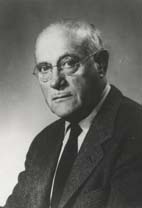
Why C. Paul Jennewein matters
C. Paul Jennewein was one of the most prolific American architectural sculptors of the early to mid twentieth century, and his Art Deco and Beaux-Arts figures anchor some of the country's most visible civic buildings, from the Philadelphia Museum of Art's north pediment to federal buildings in Washington, D.C. For a collector, he is best understood as a historically important but market-thin figure. Almost all of his major work sits inside public and museum collections, above all the large studio bequest at the Tampa Museum of Art, while his individual auction activity is sparse and modest in value.
- Born
- 1890-12-02, Stuttgart, Germany
- Nationality
- German-born American
- Media
- Sculpture, Medals
- Movement
- Art Deco, Beaux-Arts
- Education
- Apprenticeship, Kunstmuseum Stuttgart, from age 13 (c. 1903) until his 1907 emigration; apprenticeship, Buhler and Lauter, New York, from 1907; evening study, Art Students League of New York, under George Bridgman and Dewitt Clinton Peters; Prix de Rome fellowship, American Academy in Rome, 1916 to 1919. No formal academic degree is documented in available sources.
- Signature motifs
- Architectural and pediment sculpture, Classical allegory, Art Deco figuration
- Representation
- No confirmed current gallery or estate representation, Secondary market: Taylor | Graham, New York, Secondary market: Graham Shay 1857, New York
By the numbers
- USD 110,500Auction highIris, Christie's New York, 2011
- 1916Prix de RomeFellowship, American Academy in Rome
- Studio bequestTampa Museum bequestReceived following 1978 death; object count not confirmed
- Philadelphia Museum of ArtMajor commissionNorth Pediment, unveiled 1933
Selected works
Click any work to view it full screen.
Biography
Carl Paul Jennewein, who worked under the name C. Paul Jennewein, was born on December 2, 1890, in Stuttgart, Germany. He left formal schooling at 13 to apprentice with artisans at the Kunstmuseum in Stuttgart, studying painting, sculpture, and architectural drawing while also taking university courses in art history, until his 1907 emigration to the United States. That year he apprenticed with Buhler and Lauter, a New York firm of architectural sculptors and commercial modelers, while attending evening classes in drawing and sculpture at the Art Students League of New York under George Bridgman and Dewitt Clinton Peters.
In 1916 he won the Prix de Rome (sources vary between 1916 and 1917 for the exact award year), a fellowship that took him to the American Academy in Rome for two to three years of study, interrupted by service with the American Red Cross in Italy. He went on to become one of the leading American architectural sculptors of the Art Deco era, producing figural work for the Woolworth Building and Rockefeller Center in New York, for federal buildings in Washington, D.C. including the House of Representatives and Justice Department buildings, and, most prominently, the polychrome north pediment of the Philadelphia Museum of Art, unveiled in 1933. According to Wikipedia, works matching his bronzes were also shown in the Nazi-sponsored Great German Art Exhibitions in Munich in 1937, 1938, and 1939. Hyperallergic has referred to him, in connection with his sculptural work on the Brooklyn Public Library facade, as a pro-Nazi artist; available sources here do not provide further detail on the basis for that characterization or on the extent of his personal involvement in the Munich exhibitions, so the claim is reported here without elaboration beyond its documented source.
Jennewein was long active in American sculpture institutions, serving as President of the Board of Trustees of Brookgreen Gardens from 1963 to 1976 and as President Emeritus from 1976 until his death. He died in February 1978 at his home in Larchmont, New York, at the age of 87; Wikipedia gives the date as February 22, 1978, while another biographical database gives February 23, 1978. Following his death, his family donated a large body of studio material, including sculpture, drawings, and plaster models, to what is now the Tampa Museum of Art, forming the largest single-artist holding in that museum's collection.
Critical reception
Jennewein was recognized during his lifetime through a steady accumulation of institutional honors rather than through widely quoted critical writing: the Prix de Rome in 1916, the Saltus Medal and later the Elizabeth Watrous Gold Medal and Daniel Chester French Medal from the National Academy of Design, and the Medal of Honor of the National Sculpture Society in 1969. Museums have since framed him as a central figure in the transition from Beaux-Arts classicism to American Art Deco, a framing made explicit in the title of the Tampa Museum of Art-drawn 2015 exhibition, "C. Paul Jennewein: An Usher for a New American Style." No exact verbatim review from a named critic in a major outlet has been located in available sources.
Market
Jennewein's auction market is thin and modest relative to his institutional standing. The highest documented price for his work is USD 110,500 for the sculpture Iris, sold at Christie's New York in 2011; MutualArt's database, which tracks his results since 2004, describes this as the record price within that window, with other results ranging from about USD 450 to USD 110,500. No exact sale date beyond the year has been located for the Iris sale. There is no confirmed current gallery or formal estate representation; examples of his work have appeared on the secondary market through dealers including Taylor | Graham and Graham Shay 1857, both in New York.
Top auction results
| Work | Price | Sale |
|---|---|---|
| Iris (2011) | USD 110,500 | Christie's, New York |
Selected exhibitions
| Years | Exhibition | Venues |
|---|---|---|
| 1920 | Exhibited work, Cupid and Gazelle | American Academy in Rome |
| 1921 | Honorable mention, Cupid and Gazelle | Art Institute of Chicago |
| 1924 to 1978 | Annual exhibitions | National Academy of Design, New York |
| 1933 | North Pediment unveiled | Philadelphia Museum of Art |
| 1937 to 1939 | Great German Art Exhibition (Grosse Deutsche Kunstausstellung) | Haus der Kunst, Munich |
| 2015 | C. Paul Jennewein: An Usher for a New American Style | Ashley Gibson Barnett Museum of Art, drawn from the Tampa Museum of Art collection |
Museum collections
- Tampa Museum of Art (C. Paul Jennewein Collection, studio bequest received 1978)
- Smithsonian American Art Museum, Washington, D.C.
- Metropolitan Museum of Art, New York
- Philadelphia Museum of Art (North Pediment, 1933)
- Brookgreen Gardens, Murrells Inlet, South Carolina
- Pennsylvania Academy of the Fine Arts, Philadelphia
Awards and honors
- Prix de Rome, American Academy in Rome (1916)
- Saltus Medal, National Academy of Design (1942)
- Elizabeth Watrous Gold Medal, National Academy of Design (1960)
- Medal of Honor, National Sculpture Society (1969)
- Daniel Chester French Medal (1972)
- 150th Anniversary Gold Medal, National Academy of Design (1975)
Authentication and provenance
No catalogue raisonne.
No published catalogue raisonne has been identified. Attribution and documentation questions are generally addressed through museum records, in particular the Tampa Museum of Art's C. Paul Jennewein Collection, formed from a large bequest of studio objects, drawings, and plaster models following the artist's 1978 death; the exact size of the bequest is not confirmed in available sources.
Primary reference: https://tampamuseum.org/c-paul-jennewein/
What collectors should know
There is no published catalogue raisonne for Jennewein. The closest equivalent is the documentary archive built around the Tampa Museum of Art's studio bequest, which includes finished sculpture, drawings, and plaster models and functions as the primary reference point for attribution. Because so much of his output was made for specific architectural sites or entered museum collections directly, the pool of freely tradable work is small, auction results are infrequent, and any single sale price should be read with that scarcity in mind rather than as evidence of a broad, liquid market.
Further reading and resources
Data current as of 2026-07-18.

