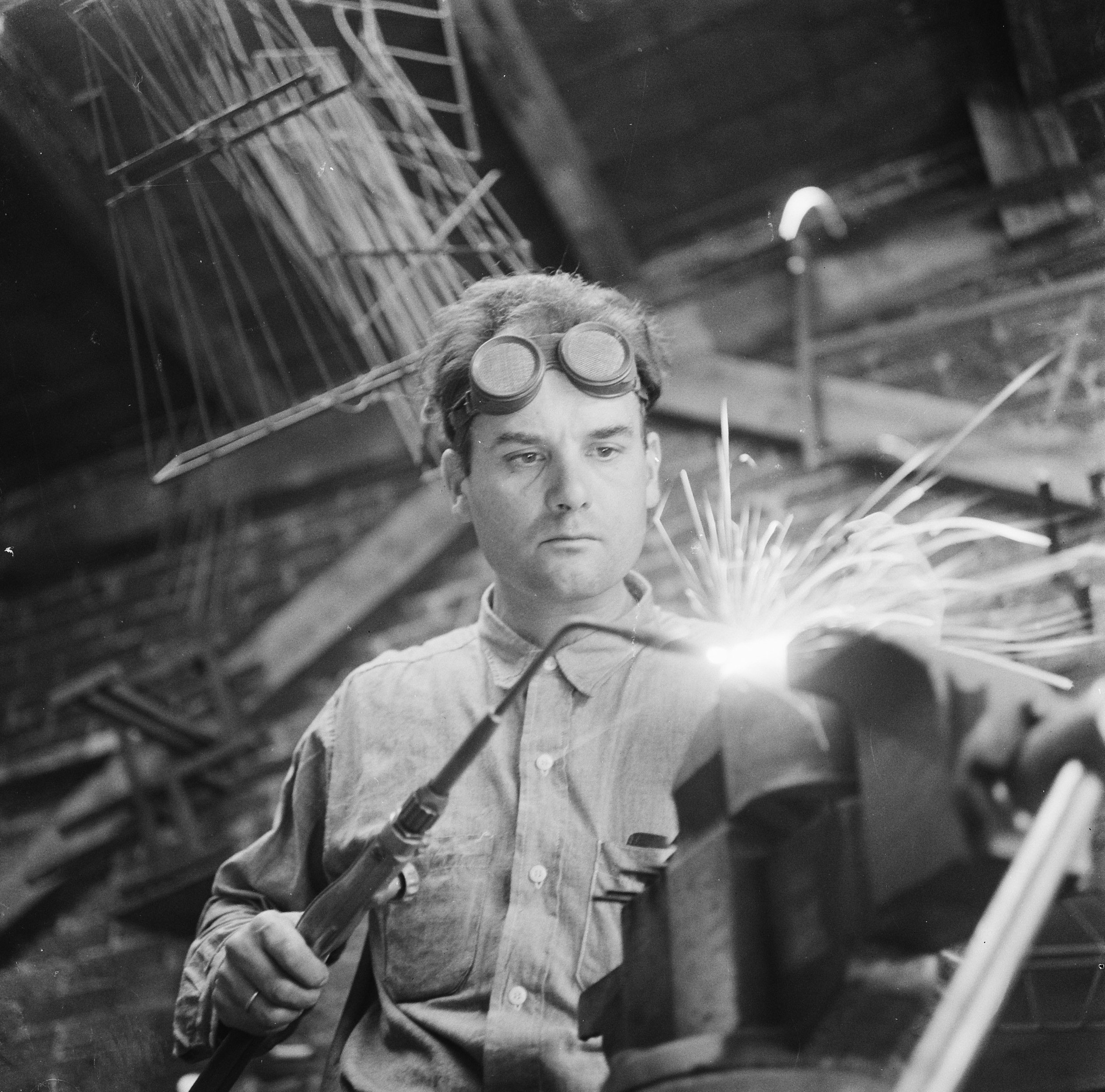
Why Carel Visser matters
Carel Visser is widely regarded as one of the most important Dutch sculptors of the twentieth century, a central figure in the postwar shift toward constructivist and minimalist abstraction in sculpture. He represented the Netherlands at the 1968 Venice Biennale and showed at Documenta 4 the same year, and his work sits in the permanent collections of the Rijksmuseum, the Museum of Modern Art, and Tate. For a collector, he is a case study in museum-grade art historical standing that has not yet translated into a deep or liquid auction market, a profile more common among artists whose reputations were built through institutions and academies rather than through the commercial gallery circuit of their era.
- Born
- 1928-05-03, Papendrecht, Netherlands
- Nationality
- Dutch
- Media
- Sculpture, Drawing, Collage
- Movement
- Constructivism, Dutch abstract sculpture
- Education
- Architecture, Technical University of Delft, 1948 to 1949; sculpture and drawing, Royal Academy of Arts, The Hague, 1949 to 1951
- Signature motifs
- Welded steel and iron forms, Geometric constructivist abstraction
- Representation
- "BorzoGallery, Amsterdam", "The Mayor Gallery, London"
By the numbers
- USD 352,172Best-documented auction resultSculpture; per MutualArt aggregate data, the specific work, house, and date are not publicly disclosed
- Dutch Pavilion, 1968Venice BiennaleDavid E. Bright Sculpture Prize
- 1992Heineken Prize for Art
- BorzoGallery; The Mayor GalleryRepresented by
Biography
Carel Nicolaas Visser was born on 3 May 1928 in Papendrecht, in the Netherlands. He studied architecture at the Technical University in Delft from 1948 to 1949, then turned to sculpture and drawing at the Royal Academy of Arts in The Hague from 1949 to 1951. After study visits to England and France in 1951, he settled in Amsterdam in 1952 as an independent artist, and went on to take scholarship-funded study trips to Sardinia, Italy, in 1957 and to Mexico in 1965.
Visser worked primarily in welded steel and iron, building geometric, constructivist sculptural forms, alongside a parallel body of drawings, collages, and prints. The Stedelijk Museum in Amsterdam gave him a major retrospective in 1960, when he was thirty-two. In 1968 he represented the Netherlands in the Dutch Pavilion at the Venice Biennale, where he received the David E. Bright Sculpture Prize, and the same year his work appeared at Documenta 4 in Kassel. From 1966 to 1998 he served as a professor at Ateliers '63 in Haarlem, an influential Dutch postgraduate art institute. He received the Dr. A.H. Heineken Prize for Art in 1992 and the Wilhelmina-ring lifetime achievement award in 2004. Carel Visser died on 1 March 2015 in Le Fousseret, France, at the age of eighty-six.
Critical reception
Institutions consistently place Visser at the center of postwar Dutch sculpture. Tate describes him as an important representative of Dutch abstract minimalist constructivism in sculpture, and galleries presenting his estate today, including BorzoGallery and The Mayor Gallery, describe him in similar terms as one of the most important sculptors of postwar Netherlands. A retrospective discussion in Sculpture magazine characterized his practice as driven by a deep need to make things, employing a wide range of materials and techniques to work through his ideas, and noted that he rarely followed prevailing artistic trends. The recurring theme across critical and institutional writing is his independence from stylistic fashion and his commitment to material experimentation across a long career.
Market
Visser's auction market is thin relative to his institutional standing. Aggregator data from MutualArt cites a realized price of up to USD 352,172 for a sculpture as his highest documented auction result, though the specific work, auction house, and sale date behind that figure are not publicly disclosed. Other recorded results run far lower, including a Lempertz sale of an untitled work for EUR 8,400. This is a market defined by modest transaction volume and price levels far below his museum reputation, a pattern typical of artists whose primary validation has come from institutions rather than from sustained secondary market activity.
Top auction results
| Work | Price | Sale |
|---|---|---|
| Untitled sculpture (specific work not publicly disclosed) | USD 352,172 |
Selected exhibitions
| Years | Exhibition | Venues |
|---|---|---|
| 2026 | Carel Visser, Sculptures, Drawings, Collages | BorzoGallery, Amsterdam |
| 2026 | Carel Visser in the Rijksmuseum Gardens | Rijksmuseum Gardens, Amsterdam |
| 2018 | Carel Visser, Aluminium Reliefs 1965 to 68 | The Mayor Gallery, Frieze Masters, London |
| 2015 | Carel Visser, Counterbalance | The Mayor Gallery, London |
| 1988 to 1989 | Abstractions | Museum of Modern Art, New York |
| 1968 | Documenta 4 | Kassel, Germany |
| 1968 | Venice Biennale, Dutch Pavilion | Netherlands Pavilion, Venice Biennale |
| 1960 | Retrospective | Stedelijk Museum, Amsterdam |
Museum collections
- Rijksmuseum, Amsterdam
- Museum of Modern Art, New York
- Tate, London
Awards and honors
- David E. Bright Sculpture Prize, Venice Biennale (1968)
- Dr. A.H. Heineken Prize for Art (1992)
- Wilhelmina-ring, lifetime achievement award (2004)
- Appointed Professor, Ateliers '63, Haarlem (1966 to 1998) (1966)
Authentication and provenance
No catalogue raisonne.
No catalogue raisonne has been confirmed in current sources. The galleries currently presenting his estate, BorzoGallery in Amsterdam and The Mayor Gallery in London, along with the Dutch museums holding his work, are the primary points of reference for verification.
Primary reference: https://www.tate.org.uk/art/artists/carel-visser-2108
What collectors should know
No catalogue raisonne for Visser has been confirmed, so provenance and verification currently rest with the galleries presenting his estate, BorzoGallery in Amsterdam and The Mayor Gallery in London, and with the museums that hold his work, including the Rijksmuseum, MoMA, and Tate. His auction history is sparse and prices have stayed modest, so any individual sale result should be read with caution rather than as evidence of a broad or liquid market. Renewed institutional attention, including a 2026 exhibition in the Rijksmuseum Gardens and a concurrent gallery show at BorzoGallery, may signal growing interest, but there is not yet auction data to confirm whether that translates into higher secondary market prices.
Further reading and resources
Data current as of 2026-07-11.

