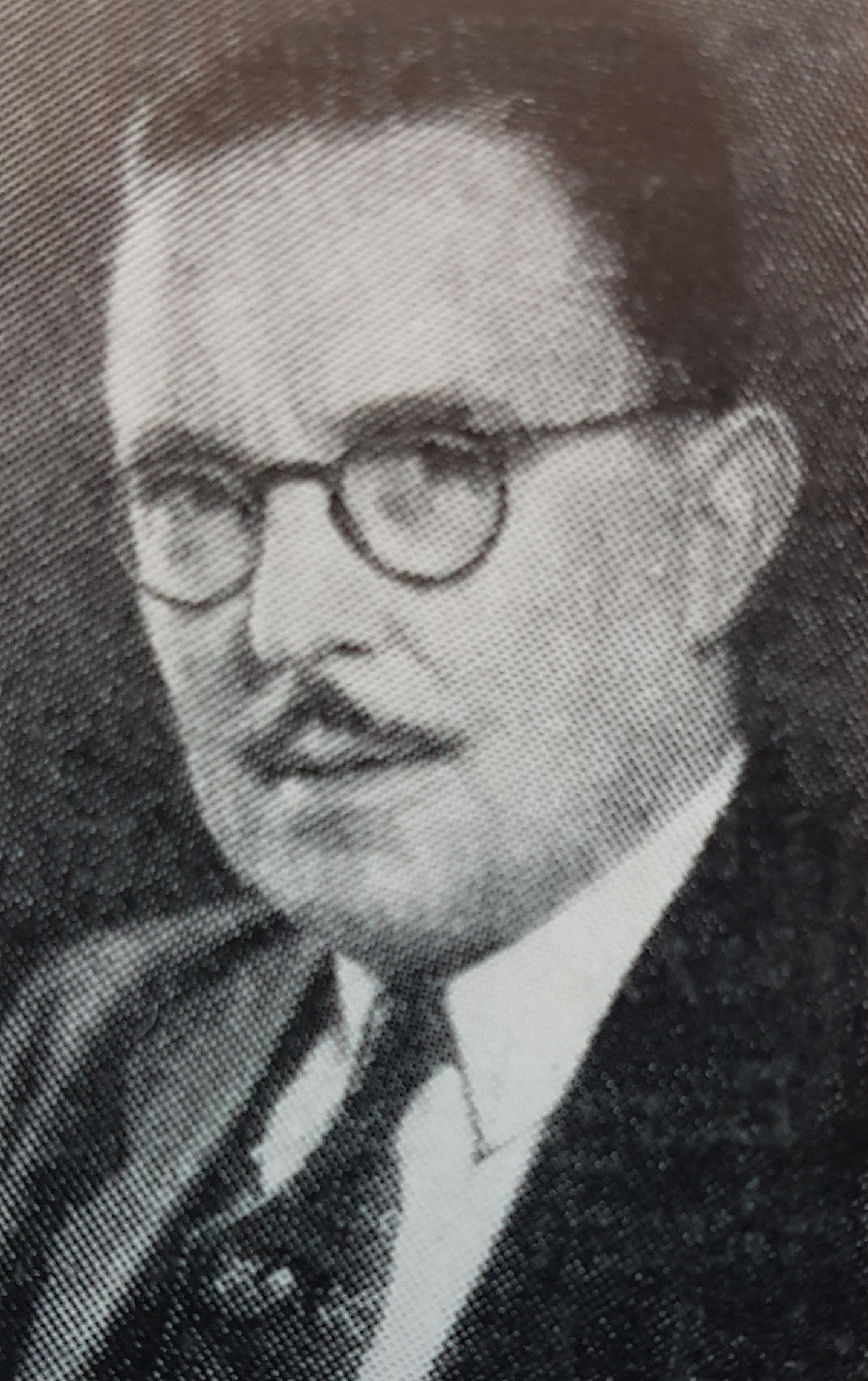
Why Carl Oscar Borg matters
Carl Oscar Borg is a Swedish-born painter whose views of the American Southwest, California, and Native American life made him one of the more distinctive chroniclers of the early-twentieth-century American West. His path from a poor family in rural Sweden to a several-year, patron-funded study of the Old Masters in Europe, and then to a long career painting the Grand Canyon and the Southwest, gives him a biography as compelling as his canvases. For collectors, he is also a useful case study in how a historically significant but thinly documented artist trades today: through specialist regional dealers rather than a single controlling estate, and without the anchor of a published catalogue raisonne.
- Born
- 1879-03-03, Grinstad (Dals-Grinstad), Sweden
- Nationality
- Swedish-American
- Media
- Painting, Printmaking
- Movement
- Western American art
- Education
- Largely self-taught. Apprenticed to a house painter-decorator in Vanersborg, Sweden; worked as assistant to marine and portrait painter George Johansen in London from about age 15; undertook several years of patron-funded study of Old Masters in Europe (Paris, Rome), circa the early 1910s, sponsored by Phoebe Hearst. No formal art-school degree is documented.
- Signature motifs
- Native American portraiture, California and Southwest landscapes, Grand Canyon views
- Representation
- No exclusive estate gallery identified; secondary-market works are handled principally by specialist dealers, including George Stern Fine Arts, Medicine Man Gallery, Nedra Matteucci Galleries, and Annex Galleries Fine Prints
By the numbers
- USD 212,800Auction highA Knight of the West, Coeur d'Alene Art Auction; exact sale date unconfirmed
- 1915 to 1936Active exhibition spanPanama-Pacific International Exposition to Berlin Olympic art competitions
- US entrant, Berlin1936 Olympic Art CompetitionsPainting, Graphic Arts, Open category
- Multiple institutionsMuseum collectionsIncluding Smithsonian American Art Museum and LACMA
Biography
Carl Oscar Borg was born on March 3, 1879, in Grinstad (often recorded as Dals-Grinstad), Sweden, into an impoverished family. Largely self-taught as a child, he showed early talent and was apprenticed to a master house painter and decorator in Vanersborg, Sweden. At about age 15 he moved to London, where he worked as an assistant to the marine and portrait painter George Johansen.
Borg later emigrated to the United States and settled in California, where his talent drew the attention of Phoebe Hearst, mother of William Randolph Hearst. Hearst's patronage sponsored several years of study in Europe, generally described as four to five years, during which Borg studied the Old Masters in Paris and Rome and traveled through Europe and North Africa. He won awards in France in 1913 and 1914, and between 1913 and 1920 he received a series of medals, chiefly from French exhibitions, along with a silver medal at the Panama-Pacific International Exposition in San Francisco in 1915.
Back in the United States, Borg built a career painting the California coast, the Southwest, and the Grand Canyon, with a particular focus on Native American subjects. He also worked at times in the film industry as an art director in Hollywood. He taught at the Santa Barbara School of the Arts and later at the California Art Institute in Los Angeles, though exact teaching dates are not confirmed in available sources. In 1936 he represented the United States as a painter in the art competitions held alongside the Berlin Olympic Games.
Borg returned to Santa Barbara after the Second World War. According to a widely repeated biographical account, on May 8, 1947, he was painting in his studio, as he did every day, when he suffered a massive heart attack and died en route to the hospital. Multiple reference sources, in several languages, confirm both the date, May 8, 1947, and the place, Santa Barbara, California.
Critical reception
No verifiable, exactly quoted assessment from a named critic in a major outlet was located for Borg. His reputation instead rests on a consistent, cross-referenced biographical record: a rapid rise from an impoverished Swedish upbringing to Phoebe Hearst's patronage, a series of medals from French salons and the Panama-Pacific International Exposition between 1913 and 1920, and steady placement of his work in major public collections, including the Smithsonian American Art Museum, the Los Angeles County Museum of Art, and the Bibliotheque Nationale in Paris. Dealers who handle his work consistently describe him as a versatile figure, comfortable across painting, etching, illustration, and photography, and as a significant recorder of Southwest and Native American subject matter during his lifetime.
Market
Borg's market runs almost entirely through specialist dealers in historic American and Western art rather than through the major international auction houses. The best-documented public auction result is USD 212,800, for the painting A Knight of the West, sold at Coeur d'Alene Art Auction; the auction house's own artist-results page lists this figure and title together but does not state an exact sale date. A separate summary page from the same auction house shows a higher, unattributed figure of USD 287,500 for the artist, without a work title or date, so it cannot be confirmed as belonging to a specific painting and is not treated here as the record. A market reference also cites a 1998 "record price" for a work titled Desert Storm, Arizona, though no price, currency, or sale date for that transaction could be independently confirmed. Most other recorded results for Borg's work, at Coeur d'Alene and elsewhere, fall well below USD 100,000. There is no single gallery or estate that exclusively represents his work; dealers including George Stern Fine Arts, which states that it actively purchases his paintings, along with Medicine Man Gallery, Nedra Matteucci Galleries, and Annex Galleries Fine Prints, handle his work on the secondary market.
Top auction results
| Work | Price | Sale |
|---|---|---|
| A Knight of the West | USD 212,800 | Coeur d'Alene Art Auction |
Selected exhibitions
| Years | Exhibition | Venues |
|---|---|---|
| 1915 | Panama-Pacific International Exposition | San Francisco, California |
| 1936 | Olympic Art Competitions | Berlin, Germany |
Museum collections
- Smithsonian American Art Museum, Washington, D.C.
- Los Angeles County Museum of Art
- Fine Arts Museums of San Francisco (de Young Museum)
- Seattle Art Museum
- Bibliotheque Nationale de France, Paris
- Library of Congress
Awards and honors
- French salon honors (specific medal not documented) (1913)
- French salon honors (specific medal not documented) (1914)
- Silver Medal, Panama-Pacific International Exposition, San Francisco (1915)
Authentication and provenance
No catalogue raisonne.
No catalogue raisonne has been published and no artist-authorized certificate-of-authenticity program is documented. Works are typically authenticated through provenance research and the expertise of specialist historic American and Western art dealers, such as George Stern Fine Arts.
Primary reference: https://americanart.si.edu/artist/carl-oscar-borg-507
What collectors should know
There is no catalogue raisonne for Carl Oscar Borg, so provenance and the expertise of dealers who specialize in his market carry particular weight when evaluating a work. His auction history is thin and inconsistently documented: the same auction house has published both a titled result of USD 212,800 for A Knight of the West and a separate, higher, untitled figure of USD 287,500, and a market database separately references a 1998 "record price" for a different work without a price attached. Collectors should ask a specialist dealer to verify any headline price before relying on it as a benchmark. Because his work is spread across several regional dealers rather than concentrated with a single estate representative, comparing asking prices and past results across more than one source is advisable before a purchase.
Further reading and resources
Data current as of 2026-07-18.

