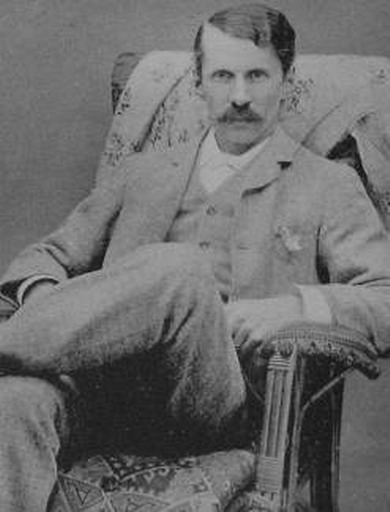
Why Charles Burton Barber matters
Charles Burton Barber was one of the most successful animal and genre painters of the late Victorian period, and the artist Queen Victoria turned to for portraits of her family and pets after the death of Edwin Landseer. For a collector today, he is a useful case study in a thin, decorative, and historically rich secondary market: strong institutional exhibition history and royal provenance, but a comparatively small and inconsistently documented auction record.
- Nationality
- British
- Media
- Painting, Oil on canvas
- Movement
- Victorian genre painting, Animal painting
- Education
- Royal Academy Schools, London, entered around age 18 (circa 1863); awarded a silver medal for drawing from the antique in 1864. No formal degree is recorded, consistent with nineteenth century academy training.
- Signature motifs
- Children and dogs, Sentimental domestic genre scenes
- Representation
- Rehs Galleries, Inc., New York (secondary market dealer, not exclusive representation)
By the numbers
- 1866 to 1894CareerAnnual Royal Academy exhibitor, 1866 to 1893
- Queen VictoriaRoyal patronageCommissions from the early 1870s to 1894
- Rehs Galleries, Inc., New YorkMarketActive secondary market dealer
Selected works
Click any work to view it full screen.
Biography
Charles Burton Barber was born in 1845 in Great Yarmouth, Norfolk. He moved to London around age eighteen to study at the Royal Academy Schools, where he won a silver medal for drawing from the antique in 1864 and first exhibited at the Royal Academy in 1866. He went on to exhibit there annually through 1893, and was also a regular exhibitor at the Royal Institute of Oil Painters, the Walker Art Gallery in Liverpool, the Manchester City Art Gallery, and the Fine Art Society in London. He was elected a member of the Royal Institute of Oil Painters in 1883.
Barber built his reputation on sentimental scenes of children with their pets, most often dogs, painted with a tender, anecdotal touch that made his work widely popular and frequently reproduced as engravings. In the early 1870s he received a royal commission from Queen Victoria to paint her favorite dogs, and he is generally described as her preferred animal painter following Landseer's death, continuing to receive commissions from her, and from the Prince of Wales, through the early 1890s. His final royal commission, in 1894, was a portrait of Queen Victoria in her pony carriage with her grandchildren.
Barber died in 1894 in London, at about age forty nine. His death is consistently placed in London in 1894 across biographical sources, though only one detailed gallery account gives an exact date and cause, stating that he died of diabetes on 27 November 1894 at his home at 1 Tichefield Street, Regent's Park. Other standard references confirm the year and place but do not repeat the specific date or cause, so those two details should be treated as reasonably but not fully corroborated.
Critical reception
In his lifetime, Barber was regarded as one of England's finest painters of children and animals, and his standing was reinforced by sustained royal patronage and by regular exhibition at the Royal Academy and other major Victorian venues. His paintings were widely engraved and reproduced, including in advertising, which broadened his popular reputation beyond the exhibition-going public. No verbatim critical assessment from a named critic in a major outlet could be confirmed from available sources, so none is quoted here; his reputation rests instead on institutional exhibition history, royal commissions, and the durability of his images in prints and reproductions.
Market
Barber's market is small relative to his historical stature, and no single, fully documented auction record, naming a specific work, price, sale house, and date, could be confirmed from available sources. One market data aggregator, MutualArt, reports a top realized price for a Barber painting of about USD 638,213, but does not identify the work, sale house, or sale date, so this figure cannot be confirmed as his actual record. Collectors should expect a market built more on decorative and provenance appeal, including royal commission history, than on a long, consistent run of high-value public sales.
Selected exhibitions
| Years | Exhibition | Venues |
|---|---|---|
| 1866 to 1893 | Annual exhibitor | Royal Academy, London |
| 1883 | Elected member and exhibitor | Royal Institute of Oil Painters, London |
| 19th century, dates not individually documented | Frequent exhibitor | Walker Art Gallery, Liverpool; Manchester City Art Gallery, Manchester; Fine Art Society, London |
| 1873 to 1894 | Royal commissions | Court of Queen Victoria |
Awards and honors
- Silver medal for drawing from the antique, Royal Academy Schools (1864)
- Royal patronage as painter to Queen Victoria, succeeding Edwin Landseer (approximate date) (1873)
- Elected member, Royal Institute of Oil Painters (1883)
Authentication and provenance
No catalogue raisonne.
No catalogue raisonne has been published for Barber. His paintings are authenticated principally through auction house cataloguing and specialist secondary market dealers such as Rehs Galleries, New York, rather than through an artist estate or foundation.
Primary reference: https://en.wikipedia.org/wiki/Charles_Burton_Barber
What collectors should know
There is no catalogue raisonne for Barber, and no estate or foundation oversees authentication; works are generally vetted through auction house cataloguing and specialist dealers such as Rehs Galleries in New York. The auction record is thin and the data across market aggregators is inconsistent, so any single reported price, including the highest ones circulating online, should be checked against a named work, sale house, and date before it is relied upon. Given how many of his compositions were engraved and reproduced in period, buyers should also confirm that a given picture is the original painting rather than a period engraving or later copy.
Further reading and resources
Data current as of 2026-07-11.

