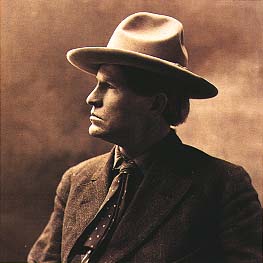
Why Charles Marion Russell matters
Charles Marion Russell is among the most influential visual chroniclers of the American West, often discussed alongside Frederic Remington. A self-taught former cowboy who turned ranch life and Blackfeet, Piegan, and other Plains Indian subjects into paintings, bronzes, and illustrated letters, he built a body of work of roughly 4,000 pieces that now anchors the Western American art category at auction and fills the galleries of the museum built around his name in Great Falls, Montana. For a collector, he is a benchmark for what sustained institutional stewardship, thin but headline-grabbing top-end demand, and a genuinely untrained artistic voice can look like a century after an artist's death.
- Born
- 1864-03-19, St. Louis, Missouri, USA
- Nationality
- American
- Media
- Painting, Sculpture, Illustration
- Movement
- Western American art
- Education
- No formal art-school education is documented in major institutional biographies. Some secondary accounts describe brief early schooling attempts, including a short-lived art school placement and a stint at a military boarding school, but these are not corroborated by the primary sources reviewed for this profile. He was self-taught, developing his practice through ranch work in Montana.
- Signature motifs
- Cowboys and range life, Native American subjects, Frontier narrative scenes, Bronze sculpture of Western subjects
By the numbers
- USD 5.81MAuction highDust (1925), Christie's, New York, January 20, 2026
- About 4,000 worksLifetime outputPaintings, watercolors, drawings, bronzes, and illustrated letters, per the C.M. Russell Museum
- C.M. Russell Museum, Great Falls, MTPrincipal collectionIncludes his preserved home and studio
Selected works
Click any work to view it full screen.
Biography
Russell was born on 19 March 1864 in St. Louis, Missouri. Standard institutional biographies describe him as self-taught, with no documented formal art-school education; some secondary accounts describe brief early schooling attempts, including a short-lived art school placement and a stint at a military boarding school, but these specifics are not corroborated by the primary sources reviewed for this profile. At sixteen he left school for good and went to Montana, where he spent more than a decade working as a cowboy and wrangler on ranches and open range. What he learned as an artist came from practice and from ranch life itself.
Russell began painting and modeling the world he lived in, cowboys, cattle drives, and the Plains Indian peoples and history of Montana, gradually shifting from working cowboy and hobbyist to professional artist through the 1890s. In 1896 he married Nancy Cooper, who took an active role in managing and promoting his career and is often credited with helping move him from magazine illustration toward the fine-art market. In 1912 he completed a permanent mural, Lewis and Clark Meeting Indians at Ross' Hole, for the House Chamber of the Montana State Capitol in Helena, one of his most significant public commissions.
Russell and Nancy lived and worked in Great Falls, Montana, in a home and studio that is preserved today within the C.M. Russell Museum complex. He died of a heart attack at that home on 24 October 1926, at age 62. His funeral in Great Falls was widely reported at the time as one of the largest the city had seen, reflecting the regard in which he was held in Montana during his lifetime.
Critical reception
Russell's institutional recognition has grown substantially since his death, driven by museums rather than lifetime prizes; standard institutional biographies do not record a codified list of major lifetime art awards for him. His work anchors dedicated holdings at the C.M. Russell Museum in Great Falls, is held by the Whitney Western Art Museum at the Buffalo Bill Center of the West and the Gilcrease Museum in Tulsa, and museums generally treat him as a primary source on frontier life rather than a secondary interpreter of it. No verbatim critical assessment from a named critic at a major outlet could be confirmed for this profile.
Market
Russell's market runs almost entirely through the auction room rather than through gallery representation, since he has no living estate or dealer network; the principal venues for his work are Sotheby's, Christie's, and The Coeur d'Alene Art Auction, a house that specializes in Western American art and has recorded several of his historic top prices. His confirmed all-time auction record is Dust, a 1925 painting that sold for USD 5,810,000 at Christie's in New York on 20 January 2026, surpassing the previous record held by Piegans (1918), which sold for USD 5,000,000 at The Coeur d'Alene Art Auction in Hayden, Idaho, on 30 July 2005. A separate USD 5,600,000 figure cited on The Coeur d'Alene Art Auction's own results page is not tied to a documented title or sale date and is therefore excluded from this ranking.
Top auction results
| Work | Price | Sale |
|---|---|---|
| Dust (1925) | USD 5,810,000 (USD 5,810,000) | Christie's, New York, 2026-01-20 |
Selected exhibitions
| Years | Exhibition | Venues |
|---|---|---|
| 1912 | Lewis and Clark Meeting Indians at Ross' Hole (mural, permanent installation) | Montana State Capitol, House Chamber, Helena |
| Ongoing | Permanent collection | C.M. Russell Museum, Great Falls, Montana |
| Ongoing | Permanent collection | Whitney Western Art Museum, Buffalo Bill Center of the West, Cody, Wyoming |
Museum collections
- C.M. Russell Museum, Great Falls, Montana
- Whitney Western Art Museum, Buffalo Bill Center of the West, Cody, Wyoming
- Gilcrease Museum, Tulsa
Authentication and provenance
No catalogue raisonne.
No published catalogue raisonne was confirmed in research. Authentication of Russell's paintings, sculpture, and illustrated letters relies primarily on provenance history and the archives of the C.M. Russell Museum in Great Falls, Montana, the principal institutional steward of his legacy.
Primary reference: https://cmrussell.org/meet-charlie/
What collectors should know
There is no published catalogue raisonne for Russell, so provenance and the C.M. Russell Museum's archives carry significant weight in authenticating a given work. His top-end auction results are widely spaced in time and concentrated in a handful of specialist Western-art sales, so a collector should treat any single record price as a data point about one work and one moment rather than a smooth market curve. Because he has no current gallery or estate representation, buying and selling runs through major auction houses, which is also where research on comparable sales should start.
Further reading and resources
Data current as of 2026-07-09.

