Charles Rennie Mackintosh
Scottish, 1868 to 1928
Architecture · Furniture and interior design · Watercolor painting · Decorative arts and graphic design
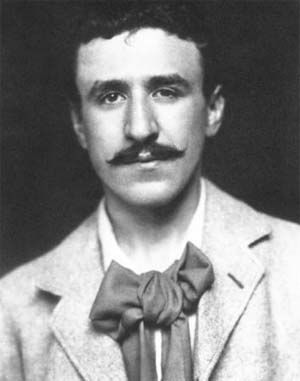
Why Charles Rennie Mackintosh matters
Charles Rennie Mackintosh is the central figure of the Glasgow Style and one of the defining architect-designers of European Art Nouveau. Working across architecture, furniture, textiles, metalwork, graphic design, and watercolor, he treated a building and everything inside it as a single, unified work, an approach that made him a touchstone for the Vienna Secession and for twentieth-century design more broadly. For collectors, his market is unusual: there is no living estate or commercial gallery, so the artist's legacy is stewarded almost entirely by museums and archives, and the material that surfaces at auction spans everything from major architectural drawings to watercolors and decorative objects, a rarity and cross-category range that few other historical designers can match.
- Born
- 1868-06-07, Glasgow, Scotland
- Nationality
- Scottish
- Media
- Architecture, Furniture and interior design, Watercolor painting, Decorative arts and graphic design
- Movement
- Art Nouveau, Glasgow Style, Arts and Crafts movement
- Education
- Reid's Public School and Allan Glen's Institution, Glasgow, 1880 to 1883; Glasgow School of Art, evening classes 1883 to 1894 (no degree conferred); apprenticed to architect John Hutchison from 1883 or 1884, joined Honeyman and Keppie in 1889.
- Signature motifs
- Stylized rose motif, Elongated vertical geometry, High-backed chair silhouette
- Representation
- No commercial gallery or living estate representation; artist deceased since 1928, Institutional stewardship: Glasgow Museums, The Hunterian, University of Glasgow, The Glasgow School of Art Archives and Collections
By the numbers
- 1868 to 1928LivedBorn Glasgow, Scotland; died London, England
- USD 177,456Best-documented auction result1904 writing cabinet or desk, Sotheby Parke Bernet, London, 1979
- 1902Turin Diploma of HonourScottish Section, International Exhibition of Modern Decorative Art
- Glasgow Museums; The Hunterian; Glasgow School of ArtInstitutional stewards
Selected works
Click any work to view it full screen.
Biography
Charles Rennie Mackintosh was born on 7 June 1868 in Glasgow, Scotland. He attended Reid's Public School and then Allan Glen's Institution from 1880 to 1883, a school with a scientific and technical emphasis. Around 1883 or 1884 he began an apprenticeship with the Glasgow architect John Hutchison while also enrolling in evening classes at the Glasgow School of Art, where he studied drawing, painting, modelling, and design from 1883 until 1894; no degree was awarded, as the school did not confer university degrees at the time. In 1889 he joined the Glasgow architectural firm Honeyman and Keppie. A travelling studentship, for which he placed second in 1890 and first in 1891, funded an architectural study tour of Italy.
Mackintosh's design language, combining Scottish vernacular forms with Art Nouveau's curving line and his own severe geometry, matured through the 1890s in partnership with his wife, the artist Margaret Macdonald, whom he married in 1900. That year the couple exhibited at the 8th Vienna Secession Exhibition, where their work impressed Viennese architects including Josef Hoffmann and Joseph Maria Olbrich. In 1902 Mackintosh designed the Scottish Section of the International Exhibition of Modern Decorative Art in Turin, which received a Diploma of Honour. His best-known building, the Glasgow School of Art, was designed and built in phases between 1896 and 1909 and remains his signature work. His Glasgow architectural practice declined after about 1913, and he later moved to Walberswick in Suffolk and then to London, before spending much of the 1920s in Port Vendres, France, painting watercolors of landscape and botanical subjects.
Mackintosh died on 10 December 1928 in London, England, at a nursing home on Porchester Square, after treatment for cancer of the tongue, as documented by the Charles Rennie Mackintosh Society and corroborated by medical-history literature and contemporary obituaries in the Glasgow Herald.
Critical reception
Mackintosh's reputation followed an unusual arc: strong continental recognition during his lifetime, followed by decades of relative neglect in Britain, and then a sustained institutional revival from the mid-twentieth century onward. The 1900 Vienna Secession exhibition and the 1902 Turin exhibition, where his Scottish Section won a Diploma of Honour, established him as a significant figure in Europe, and Hermann Muthesius featured his work prominently in Das Englische Haus. In Glasgow, his practice struggled commercially, and after his death in 1928 his reputation faded until the 1933 Memorial Exhibition at the McLellan Galleries, described by scholars as the first major retrospective and a turning point in reclaiming his standing. A 1968 centenary exhibition in Glasgow, the 2018 sesquicentennial show Making the Glasgow Style at Kelvingrove, and the 2019 to 2021 United States touring retrospective Designing the New have each renewed critical and popular attention. Writing in Smithsonian magazine in 1990, journalist Stanley Meisler explored the recurring critical tension between readings of Mackintosh as a prophet of modernism and as an exponent of Art Nouveau, and described how he approached every room and building as a unified work of imagination.
Market
Because Mackintosh has no living estate or commercial gallery, his market runs almost entirely through auction houses that specialize in design and decorative arts, with major institutions such as Glasgow Museums, The Hunterian, and the Glasgow School of Art acting as the principal lenders and authorities for exhibitions rather than as sellers. The best-documented individual auction result is a 1904 writing cabinet or desk that sold for USD 177,456 at Sotheby Parke Bernet in London in 1979, reported at the time as a record price for twentieth-century furniture. A watercolor, Yellow Tulips, sold for GBP 130,000 at Lyon and Turnbull in Edinburgh in 2012. A market-data aggregator, MutualArt, cites a higher figure of up to USD 576,500 for an architecture-and-design lot as Mackintosh's all-time auction record, but the specific work, auction house, city, and sale date for that result could not be confirmed in available sources, so it is noted here rather than treated as the established record.
Top auction results
| Work | Price | Sale |
|---|---|---|
| Writing cabinet or desk (1904) (1979) | USD 177,456 | Sotheby Parke Bernet, London |
| Yellow Tulips (watercolour) (2012) | GBP 130,000 | Lyon & Turnbull, Edinburgh |
Selected exhibitions
| Years | Exhibition | Venues |
|---|---|---|
| 1900 | 8th Vienna Secession Exhibition | Secession Building, Vienna |
| 1902 | International Exhibition of Modern Decorative Art, Scottish Section | Turin, Italy |
| 1933 | Memorial Exhibition | McLellan Galleries, Glasgow |
| 1968 | Centenary exhibition | Glasgow |
| 2018 | Charles Rennie Mackintosh: Making the Glasgow Style | Kelvingrove Art Gallery and Museum, Glasgow; Walker Art Gallery, Liverpool |
| 2019 to 2021 | Designing the New: Charles Rennie Mackintosh and the Glasgow Style | Walters Art Museum, Baltimore; Frist Art Museum, Nashville; Museum of the American Arts and Crafts Movement, St. Petersburg; Richard H. Driehaus Museum, Chicago |
Museum collections
- Glasgow Museums, Glasgow
- The Hunterian, University of Glasgow
- The Glasgow School of Art
- National Galleries of Scotland, Edinburgh
- Museum of Modern Art, New York
- Art Institute of Chicago
- Musee d'Orsay, Paris
- National Gallery of Art, Washington, D.C.
- Courtauld Institute of Art, London
Awards and honors
- Alexander Thomson Travelling Studentship (architectural competition, placed second in 1890 and first in 1891, funding a study tour of Italy) (1891)
- Diploma of Honour, International Exhibition of Modern Decorative Art, Turin, for the Scottish Section (1902)
Authentication and provenance
No catalogue raisonne.
No catalogue raisonne has been published for Mackintosh. Verification of works, particularly furniture, drawings, and decorative objects, is generally carried out through the Glasgow School of Art Archives, The Hunterian at the University of Glasgow, and Glasgow Museums, together with documented provenance and exhibition history.
Primary reference: https://www.tate.org.uk/art/artists/charles-rennie-mackintosh-1548
What collectors should know
Mackintosh's market is thin, specialized, and dominated by design and decorative-arts sales rather than the fine-art auction circuit, so individual results vary widely by object type, from major architectural drawings and furniture to watercolors and graphic works. There is no catalogue raisonne, so provenance and documentation through institutions such as the Glasgow School of Art Archives, The Hunterian, and Glasgow Museums matter more than usual in establishing authenticity. Because his furniture designs have been widely reproduced and licensed for decades, collectors should also take care to distinguish original period pieces from later reproductions when evaluating any offering attributed to him.
Further reading and resources
Data current as of 2026-07-10.

