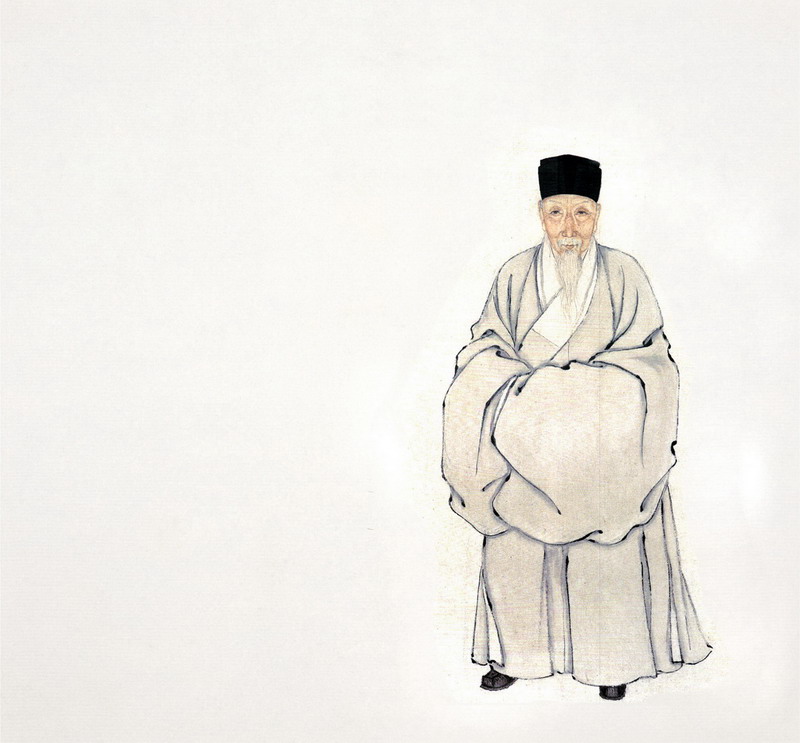
Why Chen Jiru matters
Chen Jiru was one of the most versatile figures of the late Ming literati world: a landscape painter, calligrapher, essayist, book collector, and publisher whose writings on painting, calligraphy, and the cultivated life were read and quoted for centuries afterward. For collectors, he is a useful example of the opposite case from a contemporary blue-chip artist. His cultural stature is well documented in art-historical reference works, but his auction market, unlike that of a living artist with decades of sale data, cannot currently be reconstructed from public sources into a single, verifiable record sale.
- Nationality
- Chinese
- Media
- Ink painting, Calligraphy, Essays
- Movement
- Late Ming literati painting
- Education
- No formal schooling or examination degree is documented. Chen Jiru failed the imperial civil service examinations and, at about 29 sui, committed himself to independent literary and artistic study rather than official office.
- Signature motifs
- Landscape painting, Xiaopin (short literary essays), Calligraphy in the manner of Su Shi and Mi Fu
By the numbers
- 1558 to 1639LifespanNo exact birth or death day or month is documented in available sources
- Late Ming dynastyEraMing dynasty, 1368 to 1644
- Not independently verifiedAuction dataAggregators show active results pages and a median near USD 114,000 (Appraisily, 34 lots), but no single confirmed sale could be traced
- No current gallery or estateRepresented byPre-modern historical artist
Selected works
Click any work to view it full screen.
Biography
Chen Jiru (陳繼儒), courtesy name Zhongchun, also known by the style names Meigong and Migong, was born in 1558 in Huating, in what is now the Songjiang District of Shanghai. He came from the local gentry milieu typical of the late Ming elite and received the classical training in Confucian texts, poetry, and calligraphy expected of that class, rather than instruction at any named school. He did not pass the imperial civil service examinations, and at about 29 sui he chose to devote the rest of his life to literature and the arts instead of pursuing official office.
He became known as a landscape painter and calligrapher working in the tradition of Su Shi and Mi Fu, and as an essayist associated with the xiaopin, or short personal essay. By 1595 he had written Tea Talks. His other works include two histories of Ming painting and calligraphy, Huang-Ming shuhua shi and Shuhua jintang, the essay collections Meigong miji and the Complete Works of Chen Meigong, and an anthology of Ming-dynasty poetry, Guochao minggong shixuan. The scholar Pei-yi Wu has noted that Chen Jiru's surviving autobiography contains a deliberately fictitious account of his own death, a detail treated by scholars as part of his self-fashioning as a writer rather than as a reliable historical record.
Reference sources consistently place his death in 1639. No source gives an exact day or month for either his birth or his death.
Critical reception
Chen Jiru's standing rests on his long afterlife as a source: his essays and his histories of Ming painting and calligraphy were repeatedly copied, anthologized, and cited in China and Japan long after his death, and reference works continue to describe him as a defining figure of late Ming literati culture. The principal modern academic treatment is Jamie Greenbaum's 2007 monograph, Chen Jiru (1558 to 1639): The Background to, Development and Subsequent Uses of Literary Personae, which examines his family, education, and the construction of his public persona. No exact, attributable quotation from a named critic in a major contemporary outlet could be confirmed for this profile, and no dedicated modern museum exhibition of his work, with a specific venue and year, could be verified from available sources.
Market
Chen Jiru's market is thin and difficult to verify against a single confirmed sale. Auction aggregators including Artnet, MutualArt, and Artsy maintain results pages for the artist, but detailed, sortable price data sits behind subscription access and could not be independently confirmed. Appraisily records 34 tracked lots for the artist with a median realized price near USD 114,000 and only one sale in the past twelve months, while Invaluable lists individual lot estimates, such as USD 20,000 to USD 200,000 for a landscape titled Resting under the Tree, without a confirmed hammer price. As of this profile's date, no single sale (work, price, house, and date together) could be confirmed from public sources, so no auction record is published here.
What collectors should know
Chen Jiru has no current gallery or estate representation and no catalogue raisonne; as a historical figure who died nearly four centuries ago, authentication depends on connoisseurship, seals, inscriptions, and documented provenance rather than a studio archive. His auction market is real but sparse, and the aggregator figures that do exist, such as Appraisily's median near USD 114,000 across 34 tracked lots, do not resolve into a single, fully documented record sale, so collectors should treat any headline price for this artist with caution until it can be traced to a specific lot.
Further reading and resources
- Chen JiruWikipedia
- Chen Jiru, Ming period personChinaKnowledge.de
- Chen Jiru, artist entityGoogle Arts & Culture
- Chen Jiru (1558-1639): The Background to, Development and Subsequent Uses of Literary Personae, reviewInternational Journal of Asian Studies, Cambridge University Press
- Chen Jiru, auction resultsMutualArt (also listed as Jiru Chen)
Data current as of 2026-07-11.

