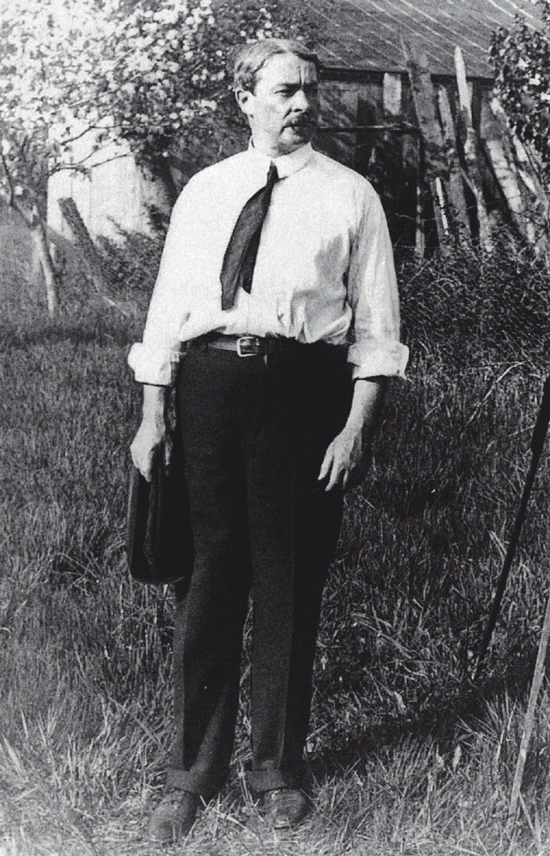
Why Childe Hassam matters
Childe Hassam is one of the central figures of American Impressionism, a painter whose scenes of New York streets, New England gardens, and flag-draped Fifth Avenue helped translate French Impressionist technique into a distinctly American subject matter. He was a founding presence in The Ten, the group of Impressionist painters who broke from the conservative Society of American Artists to exhibit on their own terms, and his work sits today in essentially every major American survey museum. For a collector, he is a study in how a historic, prolific artist with deep institutional standing and no living estate builds a market that runs entirely through auction houses and secondary-market dealers, with value driven heavily by subject and period.
- Born
- 1859-10-17, Dorchester, Boston, Massachusetts, USA
- Nationality
- American
- Media
- Painting, Watercolor, Printmaking
- Movement
- American Impressionism
- Education
- No university degree documented. Studied at the Lowell Institute and the Boston Art Club, Boston, and at the Academie Julian, Paris, 1886 to 1889.
- Signature motifs
- Flag paintings of Fifth Avenue, New England coastal and garden scenes, Urban Impressionist cityscapes
By the numbers
- USD 12.3MAuction highFlags on 57th Street, Winter 1918, Sotheby's New York, 2021
- The Ten American PaintersFounding memberBreakaway American Impressionist exhibiting group
- About 450 works, 1935Studio bequestBequeathed to the American Academy of Arts and Letters
- Deceased 1935Market statusNo estate; works trade only on the secondary market
Selected works
Click any work to view it full screen.
Biography
Frederick Childe Hassam was born on October 17, 1859, in the Dorchester neighborhood of Boston, Massachusetts. He left high school without graduating and had no formal university education. His early training was in Boston, at the Lowell Institute and the Boston Art Club, before he traveled to Paris and studied at the Academie Julian from 1886 to 1889. He exhibited at the Paris Salon in 1887 and 1888 and won a bronze medal at the Exposition Universelle in 1889.
Returning to the United States, Hassam settled in New York and became known for Impressionist views of the city, along with coastal and garden scenes painted in Massachusetts, Connecticut, and Long Island. In the 1890s he became a founding member of The Ten American Painters, a group formed to exhibit independently of the more academic Society of American Artists. Beginning around 1903, he was closely associated with the art colony at Old Lyme, Connecticut, centered on what is now the Florence Griswold Museum, and he is credited with bringing an American variant of French Impressionism there. During and after the First World War he produced his best-known series, paintings of American flags along Fifth Avenue, which remain his most sought-after works today.
Hassam received numerous medals and prizes over his career, including a bronze medal at the 1889 Exposition Universelle in Paris and prizes from the Pennsylvania Academy of the Fine Arts and the Society of American Artists; he was elected an Academician of the National Academy of Design in 1906 and, in 1920, to the American Academy of Arts and Letters, an honor he considered the greatest of his career. He died on August 27, 1935, at his summer home in East Hampton, New York, at age 75, as reported the next day in The New York Times. He bequeathed the contents of his studio, nearly 450 paintings, pastels, and decorative panels, to the American Academy of Arts and Letters, which subsequently sold much of the collection at auction.
Critical reception
Hassam was recognized during his lifetime with a medal at the 1889 Exposition Universelle in Paris, prizes from the Society of American Artists and the Pennsylvania Academy of the Fine Arts, and election as an Academician of the National Academy of Design in 1906 and to the American Academy of Arts and Letters in 1920. His decision to help found The Ten American Painters is generally treated by historians as a pivotal moment in bringing Impressionist technique into the American exhibiting mainstream on its own terms, apart from the more conservative academies. His flag paintings of Fifth Avenue during the First World War are widely discussed as a distinctly American fusion of Impressionist color and patriotic subject matter, and remain the works museums and historians cite most often when placing him among the defining American Impressionists.
Market
Hassam's auction record is Flags on 57th Street, Winter 1918, which sold for approximately USD 12.3 million at Sotheby's New York in 2021, reportedly consigned by the New-York Historical Society as part of a deaccession. Because Hassam died in 1935 and his studio was dispersed at auction shortly afterward, there is no living estate or gallery representing him today. His market runs entirely through the secondary market, with works appearing regularly at Sotheby's, Christie's, Heritage Auctions, and regional houses such as Doyle. Prices vary widely by subject: the wartime flag paintings and major New York cityscapes command the highest prices, while smaller coastal, garden, and interior scenes trade at a small fraction of that level.
Top auction results
| Work | Price | Sale |
|---|---|---|
| Flags on 57th Street, Winter 1918 (1918) | USD 12,300,000 | Sotheby's, New York |
Selected exhibitions
| Years | Exhibition | Venues |
|---|---|---|
| 1903 to 1907 | Old Lyme art colony | Old Lyme, Connecticut, associated with the Florence Griswold Museum |
| 1889 | Exposition Universelle | Paris |
| 1887 to 1888 | Paris Salon | Paris |
Museum collections
- Art Institute of Chicago
- Museum of Modern Art, New York
- National Gallery of Art, Washington, D.C.
- Museum of Fine Arts, Boston
- Metropolitan Museum of Art, New York
- Smithsonian American Art Museum, Washington, D.C.
- Florence Griswold Museum, Old Lyme, Connecticut
- New-York Historical Society, New York
Awards and honors
- Bronze Medal, Exposition Universelle, Paris (1889)
- Clarke Prize and Gold Medal, National Academy of Design (1905)
- Academician, National Academy of Design (1906)
- Prize, Carnegie Institute (1906)
- Carnegie Prize, Society of American Artists (1906)
- Lippincott Prize, Pennsylvania Academy of the Fine Arts (1906)
- Sesan Gold Medal, Pennsylvania Academy of the Fine Arts (1910)
- Evans Prize, American Water Color Society (1912)
- Gold Medal, Pennsylvania Academy of the Fine Arts (1920)
- Elected, American Academy of Arts and Letters (1920)
Authentication and provenance
No catalogue raisonne.
No published catalogue raisonne has been confirmed for this artist. Hassam bequeathed the contents of his studio, nearly 450 paintings, pastels, and decorative panels, to the American Academy of Arts and Letters in 1935, and the Academy subsequently dispersed the works at auction. As a result, authentication and provenance today rely on individual museum and auction-house records rather than a single centralized authority.
Primary reference: https://www.metmuseum.org/essays/childe-hassam-1859-1935
What collectors should know
There is no confirmed catalogue raisonne for Hassam, and no estate or gallery manages his authentication today, so provenance research and museum or auction-house records carry the weight of verification. He was a prolific painter, and the posthumous dispersal of nearly 450 studio works in the 1930s, combined with decades of prior production, means supply at auction is comparatively large for a historic artist of his stature. That supply also means results vary substantially by subject and period: the wartime flag paintings and prime New York and garden scenes have driven the highest prices, while more modest works trade well below the artist's headline auction figures.
Further reading and resources
Data current as of 2026-07-09.

