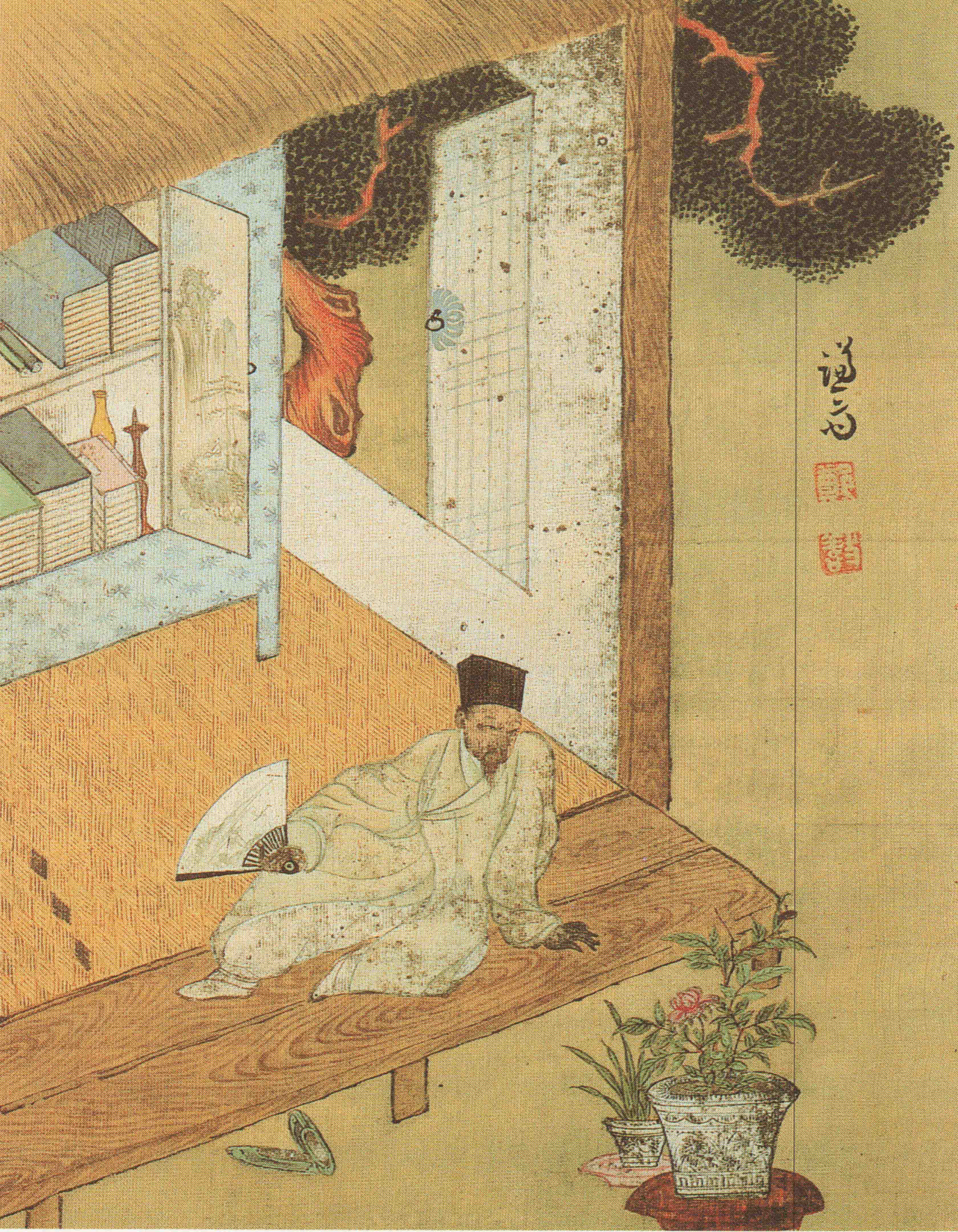
Why Chong Son matters
Chong Son, known in Korean as Chŏng Sŏn (art names Gyeomjae and Nangok), is regarded as the founder of Korea's "true-view" landscape tradition, jingyeong sansuhwa, the first major painter to depict actual, named Korean sites such as Mount Geumgang and Mount Inwang rather than the idealized Chinese-style landscapes that had dominated earlier Joseon dynasty painting. Encyclopaedia Britannica credits him as the first Korean artist to depart from Chinese academic models, and his paintings anchor the permanent collections of Korea's most important art museums. He is included on this platform as a historical reference figure rather than an active market name: unlike most artists profiled here, no catalogue raisonne, current gallery or estate representation, or verified auction record could be confirmed for him in this research.
- Nationality
- Korean
- Media
- Painting, Ink and color on silk, Ink and color on paper
- Movement
- Joseon dynasty court painting, True-view landscape painting (jingyeong sansuhwa)
- Education
- No degree-granting school is documented. Chong Son received a classical Confucian education within a scholar family and entered the royal painters' academy (Dohwaseo) between 1694 and 1703, on the recommendation of the official Kim Chang-jip.
- Signature motifs
- True-view landscape (jingyeong sansuhwa), Mount Geumgang, Mount Inwang
By the numbers
- 1676 to 1759Active eraLate Joseon dynasty, Korea
- Dohwaseo painterCourt roleJoined the royal painters' academy, 1694 to 1703
- True-view landscape paintingSignature contributionJingyeong sansuhwa, depicting actual Korean sites
- Not confirmedAuction recordNo verified public sale price located in current research
Selected works
Click any work to view it full screen.
Biography
Chong Son was born in 1676 into a family of land-owning Confucian scholars in Seoul. His father, Chong Si-ik, held a government post and sat on the Royal Education Council, and Chong Son himself received a classical education stressing calligraphy, literature, philosophy, and the arts. Sometime between 1694 and 1703, he joined the royal Korean painters' academy, the Dohwaseo, on the recommendation of the official Kim Chang-jip, one of the few painters admitted there purely on merit rather than family painting lineage.
Over the following decades he developed jingyeong sansuhwa, true-view landscape painting, applying direct observation to Korea's own rivers and mountains rather than the idealized Chinese landscape conventions of earlier Korean court painting. His best-known works, including Inwangjesaekdo (1751) and Geumgang jeondo (1734), depict Mount Inwang and the Diamond Mountains (Mount Geumgang) from direct experience of the sites. He gained the patronage of King Yeongjo, held the office of Geomgyosu (professor extraordinary) at the Office for Observance of Natural Phenomena in 1716 on the strength of his learning in the Book of Changes and astronomy, and served as a district magistrate at Hayang, Cheongha, and Yangcheon between roughly 1721 and 1745. He is said to have painted daily well into his eighties.
Chong Son died in 1759 in Korea, almost certainly in Seoul, though the standard references disagree on the exact day: Wikipedia lists 20 April 1759, while EBSCO's research summary gives 24 March 1759. Encyclopaedia Britannica and current academic literature confirm only the year. This profile treats the day of death as unconfirmed.
Critical reception
Standard reference works treat Chong Son as a pivotal figure in Korean art history. Encyclopaedia Britannica describes him as a noted painter who "was the first Korean artist to depart from the Chinese academic models." The University of Chicago Magazine, in a 1997 feature on Korean art, wrote that "the founder of 'true-view' landscape painting, Chong Son focused on Korea's rivers and mountains rather than idealized Chinese landscapes." The Christian Science Monitor, in a 1994 piece on Korea's place in Asian art, stated that "Chong Son pioneered 'true-view' landscape painting, depicting famous Korean sites such as many-peaked Mount Kumgang in a realistic manner as he experienced it." The individual authors of both passages could not be confirmed from available text, so the quotations are attributed to the publications rather than to named critics.
Market
Chong Son is a historical Joseon dynasty painter, not an artist with an active contemporary market in the usual sense. Major auction houses, including Christie's, have catalogued works attributed to Chong Son in sales of Korean and Asian art, describing him as the preeminent painter of the new true-view landscape style. However, this research was unable to confirm a specific all-time record price, work title, currency, sale house, and exact sale date that meet the sourcing standard used elsewhere on this site. No gallery or estate currently represents his work; his paintings are held almost exclusively in Korean museum and institutional collections rather than moving through active dealer or gallery channels.
Museum collections
- Leeum, Samsung Museum of Art, Seoul
- Ho-Am Art Museum, Yongin
- Gansong Art Museum, Seoul
- Korea University Museum, Seoul
Authentication and provenance
No catalogue raisonne.
No catalogue raisonne exists for Chong Son. As a Joseon dynasty court painter working from the late 1600s to 1759, attribution of his works rests on museum scholarship, provenance research, and connoisseurship rather than any modern certification or foundation program.
Primary reference: https://en.wikipedia.org/wiki/Ch%C5%8Fng_S%C5%8Fn
What collectors should know
There is no catalogue raisonne, no certificate-of-authenticity program, and no gallery or estate representation for Chong Son; attribution depends on museum scholarship, provenance, and connoisseurship appropriate to an eighteenth-century Korean painter. This research could not confirm a documented all-time auction record for his work, despite his name appearing in major auction house catalogue descriptions for Korean art sales, so collectors should treat any market claim about his prices as unverified until a specific, sourced sale result can be located. His significance rests on his historical and museum standing rather than on a demonstrated public secondary market.
Further reading and resources
Data current as of 2026-07-16.

