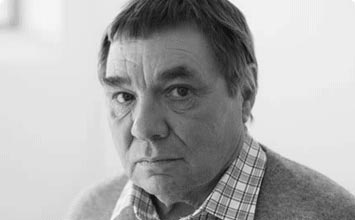
Why Chris Burden matters
Chris Burden helped define what performance art could be in the United States in the 1970s, using his own body as material in works that tested the limits of risk, trust, and endurance, before shifting over four decades toward monumental, engineering-driven sculpture. For a collector, he is a case study in an artist whose reputation rests almost entirely on museum history and public installation rather than on a deep or liquid auction record, which makes institutional context essential to understanding his market.
- Born
- 1946-04-11, Boston, Massachusetts, USA
- Nationality
- American
- Media
- Performance art, Installation, Sculpture
- Movement
- Conceptual art, Performance art
- Education
- Pomona College, BA 1969 (visual arts, physics, architecture; also cited as BFA in some sources); University of California, Irvine, MFA 1971
- Signature motifs
- Endurance and risk-based performance actions, Large-scale engineered sculpture from industrial and found materials
- Representation
- Gagosian (estate)
By the numbers
- USD 502,000Auction highWARSHIP, Sotheby's New York, 2016
- 1946 to 2015Life datesAmerican conceptual, performance, and installation artist
- Gagosian (estate)Represented by
- Guggenheim FellowshipMajor honorFellowship year not confirmed in primary sources.
Biography
Christopher Lee Burden was born on April 11, 1946, in Boston, Massachusetts, to a biologist mother and an engineer father. He studied visual arts, physics, and architecture at Pomona College, earning a BA in 1969, then completed an MFA at the University of California, Irvine in 1971, where his thesis piece, Five Day Locker Piece, saw him confine himself inside a campus locker for five days.
Burden's early career, through the 1970s, centered on extreme, body-based performances that placed him in genuine physical danger, most famously Shoot (1971), in which an assistant shot him in the arm with a rifle, and Trans-fixed (1974), in which he was nailed to the hood of a Volkswagen. These works positioned him at the center of American conceptual and performance art and remain the pieces most associated with his name.
From the 1980s onward, Burden moved toward large-scale sculpture and installation, often built from industrial materials, model kits, or engineering systems: Metropolis II, a motorized model of urban traffic at LACMA, Urban Light, his 2008 arrangement of vintage cast-iron street lamps that became an unofficial symbol of Los Angeles, and What My Dad Gave Me, a 65-foot tower of roughly one million Erector Set parts installed at Rockefeller Center in 2008. Gagosian represents his work and estate.
Burden died on May 10, 2015, at his home and studio in Topanga Canyon, California, at age 69. His assistant confirmed to the press that the cause was malignant melanoma, following a diagnosis roughly eighteen months earlier.
Critical reception
Burden is treated by museums as one of the pivotal figures of American performance and conceptual art, someone who used his own body to interrogate risk, violence, and trust in ways that reshaped what counted as sculpture. His standing was reaffirmed by Chris Burden: Extreme Measures at the New Museum in 2013 to 2014, described by the museum as his first major survey in New York and his first major U.S. exhibition in over twenty-five years, and by earlier retrospectives at the Newport Harbor Art Museum in 1988 and at MAK in Vienna in 1996. Recognition also came through a Guggenheim Fellowship, the Skowhegan Medal for Sculpture (1997), the College Art Association's Distinguished Artist Award for Lifetime Achievement (2009), and election to the American Academy of Arts and Sciences (2014).
Market
Burden's auction market is comparatively thin relative to his institutional standing. The highest price recorded for his work at auction is USD 502,000, for the sculpture WARSHIP, sold at Sotheby's in New York in 2016; the exact calendar date of that sale is not confirmed in available market records. Other tracked results, including sales at Heritage Auctions and Los Angeles Modern Auctions, have settled well below that figure, most in the low thousands of dollars or less. This reflects the nature of his output: much of his most significant work is performance-based, ephemeral, or built at architectural scale for museum and public sites, which limits the pool of transactable objects.
Top auction results
| Work | Price | Sale |
|---|---|---|
| WARSHIP (2016) | USD 502,000 (USD 502,000) | Sotheby's, New York |
Selected exhibitions
| Years | Exhibition | Venues |
|---|---|---|
| 2013 to 2014 | Chris Burden: Extreme Measures | New Museum, New York |
| 1996 | Chris Burden (retrospective) | MAK, Austrian Museum of Applied Arts, Vienna |
| 1988 | Chris Burden (retrospective) | Newport Harbor Art Museum, Newport Beach, California |
| 2008 | What My Dad Gave Me | Rockefeller Center, New York (Public Art Fund) |
| 2008 | Urban Light | Los Angeles County Museum of Art |
| 2011 to 2012 | Metropolis II | Los Angeles County Museum of Art |
| 1971 | Five Day Locker Piece | University of California, Irvine |
Museum collections
- Los Angeles County Museum of Art (LACMA)
- Museum of Contemporary Art, Los Angeles
- The Broad, Los Angeles
- Museum of Modern Art, New York
- Whitney Museum of American Art, New York
- Tate, London
- Museum of Contemporary Art Chicago
- Middelheim Museum, Antwerp
Awards and honors
- Elected to the American Academy of Arts and Sciences (2014)
- Distinguished Artist Award for Lifetime Achievement, College Art Association (2009)
- Skowhegan Medal for Sculpture (1997)
- National Endowment for the Arts Fellowships (four grants awarded between 1974 and 1983) (1974)
Authentication and provenance
No catalogue raisonne.
No published catalogue raisonne has been confirmed for Burden's work. Works from the estate are represented by Gagosian, and verification runs through the Chris Burden estate and Gagosian.
Primary reference: https://gagosian.com/artists/chris-burden/
What collectors should know
Burden's market is not deep: the record price of USD 502,000 sits far below the levels reached by many artists of comparable museum standing, and most tracked auction results are modest by comparison. There is no published catalogue raisonne, so provenance and studio or estate documentation, handled through Gagosian, carry significant weight in authentication. Many of his most important works are large-scale, site-specific, or held in permanent museum installations, which further limits the pool of works that could ever come to market and means any single sale result should be read with caution rather than as a stable price trend.
Further reading and resources
Data current as of 2026-07-11.

