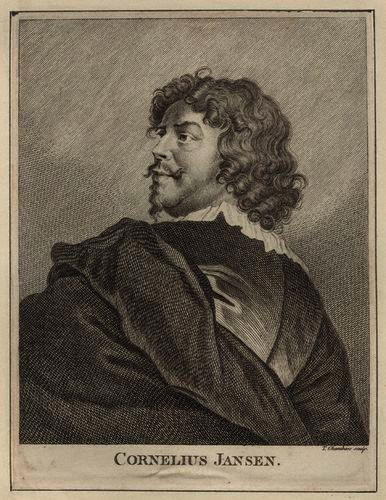
Why Cornelis Johnson van Ceulen I matters
Cornelis Johnson van Ceulen I, generally catalogued in art-market and museum literature as Cornelius Johnson, was one of the most technically accomplished and prolific portrait painters working in England in the 1620s and 1630s, and a rare figure whose career bridged the Jacobean and Caroline courts in London with the portrait tradition of the Dutch Republic. He was appointed a royal painter to Charles I in 1632, and after relocating to the Netherlands in the 1640s continued a substantial second career there under a Dutch form of his name. For collectors, he represents a museum-grade Old Master presence across major British, Dutch, and American institutions, paired with a comparatively thin and attribution-sensitive auction market.
- Born
- 1593-10-14, London, England
- Nationality
- English (Anglo-Dutch)
- Media
- Painting
- Movement
- Baroque, Anglo-Netherlandish portraiture
- Education
- No documented formal training is confirmed. He probably trained in the northern Netherlands; Michiel van Mierevelt has been suggested by several sources as a possible master, but no archival record of an apprenticeship survives.
- Signature motifs
- Finely finished, smooth portrait surfaces, Meticulous rendering of lace and drapery
- Representation
- Richard Green, London (secondary-market dealer), Weiss Gallery, London (secondary-market dealer)
By the numbers
- GBP 133,250 (USD 219,486)Auction high (documented)Portrait of a Lady (1629), Christie's, London, 9 December 2009, lot 213. Highest price confirmed in current research; an unlisted higher sale cannot be entirely ruled out.
- 1632Royal appointmentNamed His Majesty's servant in the quality of Picture drawer to King Charles I
- 1617 to 1661Documented active yearsFrom his earliest known dated portrait to his death
- 8+ institutionsMuseum collectionsIncluding the National Gallery, Tate, and the Rijksmuseum
Selected works
Click any work to view it full screen.
Biography
Cornelis Johnson van Ceulen I was baptized in London on 14 October 1593, the child of Flemish and German refugee parents. No school, degree, or dated apprenticeship record for him survives. Museum and scholarly sources describe his training only in probabilistic terms, most stating that he probably trained in the northern Netherlands, with Michiel van Mierevelt named repeatedly, though unconfirmed, as a possible master. His earliest known dated works are from 1617, and he was established back in London by about 1618 to 1619, where he built a busy practice painting the gentry, professionals, and court circle, working in a smooth, finely finished style noted for its careful treatment of lace and drapery.
In 1632, King Charles I appointed him His Majesty's servant in the quality of Picture drawer, formalizing his standing as a court portraitist alongside Anthony van Dyck. He is recorded under several closely related name forms across the literature, including Cornelius Johnson, Cornelis Janssens van Ceulen, and Cornelis Jonson van Ceulen, all referring to the same artist and market figure. Following the outbreak of the English Civil War, he and his family left England for the Netherlands in 1643, settling first in Middelburg, where he adopted the form "Cornelius Jonson van Ceulen" around 1649. He went on to work in Amsterdam and The Hague before settling in Utrecht around 1652. He was buried in Utrecht on 5 August 1661.
Critical reception
Johnson has long been treated by museums and specialists as a central figure of early Stuart portraiture, valued for his precise, unfussy naturalism and his careful, almost textile-like handling of costume and drapery. Secondary literature summarized in general reference sources has described him as one of the most accomplished and prolific portrait painters working in England during the 1620s and 1630s. No exact verbatim assessment from a named critic in a major contemporary outlet could be confirmed in current research, so this profile relies on that broader scholarly consensus rather than a single quoted source.
Market
Johnson's auction market is comparatively thin relative to his museum stature. The highest price confirmed in current research is GBP 133,250 (about USD 219,486) for Portrait of a Lady, a work dated 1629, sold at Christie's, London, on 9 December 2009, lot 213. A far smaller, more recent sale, GBP 12,600 for a portrait at Chiswick Auctions, London, on 21 January 2025, illustrates how much individual results can vary with attribution confidence and sitter identification. Full historical price data from every major auction house was not available for this profile, so a still higher, undocumented sale cannot be entirely ruled out, though none has been found. There is no formal gallery representation or estate for the artist, who died in 1661; his work moves through the secondary Old Master market, handled at various points by dealers including Richard Green and Weiss Gallery, both in London, as well as through the major auction houses.
Top auction results
| Work | Price | Sale |
|---|---|---|
| Portrait of a Lady (1629) | USD 219,486 (GBP 133,250) | Christie's, London, 2009-12-09 |
| Portrait (lot title not fully specified in source) | USD 15,700 (GBP 12,600) | Chiswick Auctions, London, 2025-01-21 |
Selected exhibitions
| Years | Exhibition | Venues |
|---|---|---|
| 2016 | Cornelius Johnson | Weiss Gallery, London (described as the first large-scale exhibition devoted solely to the artist) |
Museum collections
- National Gallery, London
- Tate, London
- National Portrait Gallery, London
- Royal Collection Trust, United Kingdom
- Dulwich Picture Gallery, London
- Rijksmuseum, Amsterdam
- Yale Center for British Art, New Haven
- Huntington Library, Art Collections, and Botanical Gardens, San Marino, California
Awards and honors
- Appointed His Majesty's servant in the quality of Picture drawer by King Charles I (1632)
Authentication and provenance
No catalogue raisonne.
No published catalogue raisonne of the artist's paintings is confirmed, and none is known to be forthcoming. Attribution relies on connoisseurship, provenance research, and institutional scholarship, including the RKD, Netherlands Institute for Art History, and museum curatorial departments. Because he worked over decades in England and the Netherlands under variant names, some paintings are catalogued cautiously as circle of or attributed to where documentation is incomplete.
Primary reference: https://dulwich-picture-gallery-i.rkdstudies.nl/jonson-lingelbach/cornelis-jonson-van-ceulen-i/
What collectors should know
Cornelis Johnson van Ceulen I has no published catalogue raisonne, and attribution depends on connoisseurship, provenance, and institutional scholarship rather than a fixed reference catalogue, so paintings by him can appear on the market with a range of confidence levels, from fully attributed to circle of or attributed to. His name also appears under several closely related forms, Cornelius Johnson, Cornelis Janssens van Ceulen, and Cornelis Jonson van Ceulen, all referring to the same artist, which is worth checking carefully against a separate later namesake, Cornelius Janson van Ceulen the Younger, when reviewing provenance. His documented auction history is limited; the highest price found in current research, GBP 133,250 for Portrait of a Lady (1629) at Christie's, London, in 2009, is the best sourced result available but should not be treated as a certified all-time record given gaps in access to full historical data from the major auction houses. His deep presence in national collections across Britain, the Netherlands, and the United States is the strongest available signal of enduring institutional regard.
Further reading and resources
Data current as of 2026-07-16.

