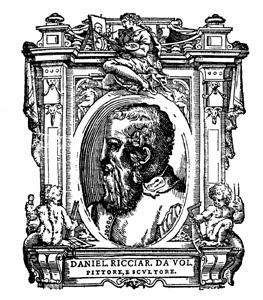
Why Daniele Ricciarelli matters
Daniele Ricciarelli, far better known by his working name Daniele da Volterra, is one of the most historically consequential painters and sculptors to emerge from Michelangelo's circle in sixteenth-century Rome. He produced a genuine masterpiece, the Descent from the Cross in the Trinita dei Monti, and also carried out a single, notorious commission, painting drapery over the nude figures in Michelangelo's Last Judgment, which earned him the enduring nickname Il Braghettone. For today's collectors he matters less as an active market name than as a benchmark of Old Master rarity: his surviving autograph works are few, most are held by museums or protected under Italian cultural-heritage export law, and documented examples reach the open market only rarely.
- Nationality
- Italian
- Media
- Painting, Sculpture
- Movement
- Mannerism
- Education
- No formal school or degree. Apprenticed in Siena under Giovanni Antonio Bazzi (Il Sodoma) and Baldassare Peruzzi, then trained in Rome under Perino del Vaga before becoming a close associate and student of Michelangelo.
- Signature motifs
- Michelangelo-influenced figuration, Draperies added over nude figures
By the numbers
- 1509BornVolterra, Italy. Exact day and month not documented.
- 4 April 1566DiedRome, Italy, age approximately 57
- GBP 797,000 (about USD 1.03M)Auction highDido reclining, asleep, Christie's London, Brian Sewell collection sale, 2016; exact sale date not confirmed
- Italian MannerismMovementClose associate and student of Michelangelo
- Descent from the Cross, c. 1545Best-known workCappella Orsini, Trinita dei Monti, Rome
Selected works
Click any work to view it full screen.
Biography
Daniele Ricciarelli was born in Volterra, in Tuscany, in 1509. The exact day and month of his birth are not recorded in surviving sources. He first learned to draw in Siena, according to tradition under Giovanni Antonio Bazzi, known as Il Sodoma, and then progressed under the architect and painter Baldassare Peruzzi. He then moved to Rome, where he worked with Perino del Vaga before entering the orbit of Michelangelo, who became his close friend, artistic guide, and the dominant influence on his mature style.
His major independent commission was the Descent from the Cross for the Orsini Chapel in the church of Santissima Trinita dei Monti, completed around 1545 and based on drawings by Michelangelo, still regarded as his masterpiece. He also worked on decorations for the Farnese Palace and the Medici palace at Piazza Navona, and began, but never finished, stucco and painted decoration for the Sala dei Re. Following the Council of Trent, Pope Paul IV commissioned him, in the years after Michelangelo's death in 1564, to paint draperies over the nude figures in Michelangelo's Last Judgment in the Sistine Chapel, the task that produced his lasting nickname. Late in his career he turned increasingly to sculpture, leaving unfinished an equestrian bronze of King Henry II of France, his final project. Daniele Ricciarelli died in Rome on 4 April 1566, at about the age of fifty-seven.
Critical reception
Reference sources consistently describe Ricciarelli as an Italian Mannerist painter and sculptor noted for finely drawn, highly idealized figures in the manner of Michelangelo, and his critical reputation has always been bound up with that relationship, both its prestige and its complications. The Braghettone episode has made him a recurring reference point in discussions of censorship and artistic legacy, while the Descent from the Cross is treated by Italian art-historical sources as one of the most important examples of Mannerist painting in Rome. Modern curatorial attention, including the 2017 exhibition of the d'Elci panels at the Palazzo Corsini in Rome and their subsequent acquisition by the Uffizi Galleries, has reinforced his standing as a significant if underrepresented figure in public collections, and Uffizi leadership has indicated openness to further exhibitions of his work in Volterra and Siena.
Market
Daniele Ricciarelli is a sixteenth-century Old Master rather than an artist with an active contemporary market. The confirmed auction record for a work attributed to him is the sculpture Dido reclining, asleep, sold at Christie's London in 2016 as part of the Brian Sewell: Critic & Collector sale for GBP 797,000 (about USD 1.03 million), which Christie's reported as a world auction record for the artist; the exact date of that 2016 sale is not confirmed. His most significant recent market episode involved two rediscovered panels from the Pannocchieschi d'Elci collection in Siena, Elijah in the Desert and Madonna and Child with Saints John and Barbara, which passed through the dealer Galleria Benappi and were subject to an Italian declaration of cultural interest restricting export, before being acquired directly by the Uffizi Galleries in Florence between 2017 and 2019 rather than sold at a headline public auction. That pattern, a rare discovery moving toward a museum rather than through the saleroom, is typical of how his surviving work tends to circulate.
Top auction results
| Work | Price | Sale |
|---|---|---|
| Dido reclining, asleep (sculpture) (2016) | USD 1,033,709 (GBP 797,000) | Christie's, London |
Selected exhibitions
| Years | Exhibition | Venues |
|---|---|---|
| 1545 ca. | Descent from the Cross completed | Cappella Orsini, Santissima Trinita dei Monti, Rome |
| 1564 to 1566 | Draperies added to Michelangelo's Last Judgment | Sistine Chapel, Vatican Palace, Rome |
| 2016 | Pannocchieschi d'Elci panels displayed | TEFAF Maastricht, via Galleria Benappi, Turin |
| 2017 | Daniele da Volterra. The d'Elci Paintings | Palazzo Corsini, Gallerie Nazionali di Arte Antica, Rome |
| 2017 to 2019 | Elijah in the Desert and Madonna and Child with Saints John and Barbara acquired | Uffizi Galleries, Florence |
| 2023 to present | Future exhibitions in Volterra and Siena discussed | Volterra and Siena, Italy |
Museum collections
- Uffizi Galleries, Florence
- The Metropolitan Museum of Art, New York
- Musei Capitolini, Rome (attributed work)
Authentication and provenance
No catalogue raisonne.
No catalogue raisonne exists for this artist. Attribution relies on Giorgio Vasari's sixteenth-century Lives, later art-historical scholarship, and museum curatorial review, and in at least one recent case on Italian cultural-heritage export assessment before a work entered a public collection.
Primary reference: https://www.britannica.com/biography/Daniele-da-Volterra
What collectors should know
There is no gallery or estate representing Daniele Ricciarelli and no catalogue raisonne. His only confirmed auction record, a 2016 Christie's sale of the sculpture Dido reclining, asleep for about USD 1.03 million, is now a decade old and reflects a single result rather than an active trading market. His known paintings are concentrated in museums, including the Uffizi, the Metropolitan Museum of Art, and the Capitoline Museums, the latter holding a work only attributed to him, with additional works remaining in Roman churches and palaces. When an autograph work does surface, as with the d'Elci panels, Italian export law can restrict its movement and museums are typically the eventual owner rather than a private buyer. Verification of any purported work rests on documentary sources, principally Vasari, and on curatorial and provenance research rather than on a modern authentication body.
Further reading and resources
- Daniele da Volterra, biographyEncyclopaedia Britannica
- Ricciarelli, Daniele, detto Daniele da VolterraTreccani, Dizionario Biografico
- Daniele da VolterraWikipedia
- Study for the Figure of Saint PeterThe Metropolitan Museum of Art
- A 16th-century masterpiece enters the Uffizi's collection: Elijah in the DesertUffizi Galleries
Data current as of 2026-07-16.

