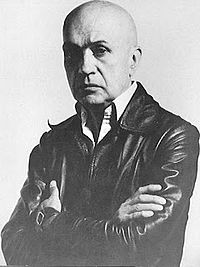
Why Edgar Negret matters
Edgar Negret is one of the central figures of twentieth-century Colombian and Latin American sculpture, a self-taught modernist who turned bolted sheets of painted aluminum and iron into a rigorous, internationally recognized language of geometric abstraction. He carried Colombian sculpture onto the world stage through the São Paulo and Venice biennials, and his work anchors the collections of MoMA, the Stedelijk, and other major museums. For collectors, he represents a case in which museum stature and prize history run well ahead of a thin, still-developing auction market.
- Born
- 1920-10-11, Popayán, Colombia
- Nationality
- Colombian
- Media
- Sculpture, Metalwork
- Movement
- Geometric abstraction, Latin American Constructivism
- Education
- Escuela de Bellas Artes, Cali, Colombia, 1938 to 1943, graduated as a sculptor; further study in metal techniques at the Clay Club / Sculpture Center, New York, circa 1949 to 1950
- Signature motifs
- Bolted aluminum and iron assemblage, Aparatos Mágicos series, Geometric modular forms
- Representation
- Leon Tovar Gallery, New York, Upsilongallery, Ascaso Gallery, Museo Edgar Negret (family-run estate museum, Popayán)
By the numbers
- USD 125,000Auction high (documented)Aparato Magico, reported by an auction-results database, November 2017; sale house and exact date not independently confirmed
- 1968Venice Biennale prizeDavid E. Bright Sculpture Prize, XXXIV Venice Biennale
- 1975Guggenheim Fellowship
- Leon Tovar Gallery; Upsilongallery; Ascaso Gallery; Museo Edgar Negret (estate)Represented by
Biography
Edgar Negret Dueñas was born on October 11, 1920, in Popayán, Colombia, the tenth and last child of Rafael Negret Vivas, a general and historian, and María Dueñas Rodríguez. He trained in sculpture at the Escuela de Bellas Artes in Cali from 1938 to 1943, graduating as a sculptor. In the late 1940s he traveled to New York, where he studied metal techniques at the Clay Club, later renamed the Sculpture Center, learning the welding and assemblage methods that would define his mature style.
Negret's signature works, bolted and painted constructions in aluminum and iron built from repeated geometric modules, grew out of his "Aparatos Mágicos" (Magical Apparatuses) series and drew comparisons to machines, architecture, and cosmology, with recurring titles referencing the sun, the moon, and navigation. He exhibited at the São Paulo Bienal in 1957, and by the 1960s his work appeared at the Venice Biennale and entered major museum collections, including the Stedelijk Museum in Amsterdam and the Museum of Modern Art in New York. In 1968 he received the David E. Bright Sculpture Prize at the XXXIV Venice Biennale, and in 1975 he was awarded a Guggenheim Fellowship. Accounts differ on the founding of a dedicated space for his work: Spanish-language sources describe a gallery he founded in Bogotá around 2000, while a separate family-run museum in Popayán, set in his former home, also preserves his estate; the exact founding date and the relationship between the two are not consistently reported.
Negret continued working into his final years and died in Bogotá on October 11, 2012, his 92nd birthday. Colombian press accounts of his final illness are not consistent: reports variously cite bladder cancer with metastasis, cardiac insufficiency aggravated by cancer, a heart attack linked to a prolonged Alzheimer's condition, or colorectal cancer, and no single official record resolves the discrepancy. El Colombiano reported that he left no direct descendants.
Critical reception
Negret is consistently placed among the leading figures of Latin American geometric abstraction and constructivist sculpture, recognized for adapting an industrial vocabulary of bolts, painted metal, and modular repetition into a personal and often cosmological iconography. His selection for the Venice Biennale prize in 1968 marked international confirmation of a reputation built at home through repeated top honors at Colombia's Salón Nacional de Artistas. Critical accounts of his 1957 São Paulo Bienal presentation describe it as a landmark moment for Colombian art on the international circuit, and his continuing presence in major museum collections, including the Stedelijk Museum and the Museum of Modern Art, reinforced his standing as a bridge between Latin American modernism and international constructivist sculpture.
Market
Negret's auction market is small relative to his museum profile. The highest price documented for a work by the artist is USD 125,000 for "Aparato Mágico," reported by an online auction-results database as an auction result from November 2017; the specific auction house and exact sale date for that transaction are not independently confirmed in the public record. Other recorded results, including works sold through Bogotá Auctions in Colombian pesos and lower-value lots recorded by Phillips, fall well below that figure, and most public sales of his work have occurred at regional Latin American auction houses rather than the major international salesrooms. Collectors should treat any single price point in this market with caution given the limited number of public transactions.
Top auction results
| Work | Price | Sale |
|---|---|---|
| Aparato Mágico (2017) | USD 125,000 |
Selected exhibitions
| Years | Exhibition | Venues |
|---|---|---|
| 1957 | São Paulo Bienal | São Paulo, Brazil, exhibiting the Aparatos Mágicos series |
| 1968 | XXXIV Venice Biennale | Venice, Italy; awarded the David E. Bright Sculpture Prize |
Museum collections
- Museum of Modern Art, New York
- Stedelijk Museum, Amsterdam
- Museo de Arte Moderno de Bogotá
Awards and honors
- Award, Bienal de São Paulo (exact prize and year inconsistently reported across sources) (1965)
- First Prize, XIX Salón Nacional de Artistas, Bogotá (1967)
- David E. Bright Sculpture Prize, XXXIV Venice Biennale (1968)
- John Simon Guggenheim Foundation Fellowship (1975)
- Best International Artist Award, ARCO, Madrid (single-source attribution) (1997)
- Colombian state honor, described variously as Orden del Congreso (grado de Oficial) or Gran Orden del Ministerio de Cultura across sources (2010)
Authentication and provenance
No catalogue raisonne.
No published catalogue raisonne has been confirmed for Negret. The Museo Edgar Negret in Popayan, housed in the artist's former home and operated by his family, holds a collection of the artist's work and functions as a principal reference point for the estate, though the exact size of its holdings is not independently confirmed. Collectors should verify individual works through the gallery of record and, where possible, the family museum rather than relying on a catalogue raisonne.
Primary reference: https://www.leontovargallery.com/artists/58-edgar-negret/biography/
What collectors should know
There is no published catalogue raisonne for Negret. The Museo Edgar Negret in Popayán, run by the artist's family, is among the closest things to an authoritative reference for the estate, though the size of its holdings is not independently confirmed; Leon Tovar Gallery, Upsilongallery, and Ascaso Gallery each present an institutional biography and collection history for the artist. Because his public auction record rests on a small number of transactions, and because the one figure identified as his all-time high is drawn from a single secondary database without full corroboration of the sale venue or date, collectors should verify any specific price claim against primary auction-house records before relying on it, and should expect individual results to vary widely given how thin the market currently is.
Further reading and resources
Data current as of 2026-07-16.

