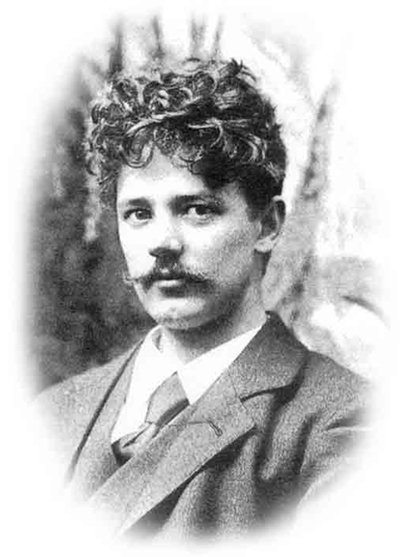
Why Edvard Eriksen matters
Edvard Eriksen is the Danish-Icelandic sculptor behind The Little Mermaid (Den Lille Havfrue), the bronze figure on Copenhagen's Langelinie waterfront that has become one of the most photographed public monuments in the world and a de facto symbol of Denmark. For collectors, he is a useful case study in a single-icon market: nearly all of his market recognition, including his auction record, traces back to one 1913 commission and its many later derivatives, rather than to a broad, continuously traded body of work. His academic training, teaching post at the Royal Danish Academy of Fine Arts, and long tenure as a museum conservator anchor him as a serious, institutionally credentialed sculptor of early twentieth-century Denmark, even as his commercial market remains narrow and thin.
- Born
- 1876-03-10, Copenhagen, Denmark
- Nationality
- Danish-Icelandic
- Media
- Sculpture, Bronze, Marble
- Movement
- Academic naturalism
- Education
- Royal Danish Academy of Fine Arts, Copenhagen, 1894 to 1899, following an earlier apprenticeship as a wood carver
- Signature motifs
- Mermaid iconography, Allegorical marble figures
By the numbers
- USD 541,800Auction highThe Little Mermaid, Phillips New York, 2026
- The Little Mermaid, 1913Known forLangelinie waterfront, Copenhagen
- Royal Danish Academy of Fine ArtsTraining1894 to 1899
- No current gallery representationRepresented byEstate managed by heirs; works surface through auction houses
Biography
Eriksen was born on 10 March 1876 in Copenhagen, Denmark. He apprenticed as a wood carver in his youth before training at the Royal Danish Academy of Fine Arts in Copenhagen from 1894 to 1899. He showed at the Academy's Charlottenborg exhibition for the first time in 1902 and exhibited there regularly, winning the annual medal in 1904 for his sculpture Hope, which was acquired that year by the State Museum of Art, now Statens Museum for Kunst.
His best known work, The Little Mermaid, was created over the years leading up to 1913 and installed on the Langelinie waterfront in Copenhagen that year, translating Hans Christian Andersen's fairy tale into what became a national monument. In 1908 he carved the allegorical marble figures Grief, Memory, and Love for the sarcophagus of King Christian IX and Queen Louise in Roskilde Cathedral. He taught at the Royal Danish Academy of Fine Arts from 1908 to 1919, was made a Knight of the Order of the Dannebrog in 1932, and was later named an honorary professor at the Accademia di Belle Arti di Carrara. He also served as a conservator at the Thorvaldsens Museum in Copenhagen from 1930 to 1953. He died on 12 January 1959 in Copenhagen and was buried at Vestre Cemetery.
Critical reception
No signed, verbatim critical assessment of Eriksen in a major outlet could be confirmed for this profile. Auction-house and reference biographies describe his work as rooted in academic naturalism with restrained symbolism, learned at the Royal Danish Academy of Fine Arts and reinforced by years of study. His reputation rests less on critical writing than on the enduring public and legal life of The Little Mermaid itself: the statue is treated as a national monument, is among the most visited sites in Copenhagen, and has repeatedly been the subject of copyright and image-rights disputes brought by Eriksen's heirs against unauthorized commercial and artistic uses, a sign of how tightly the sculpture's identity remains bound to the family that controls it.
Market
Eriksen's auction market is small and concentrated. His all-time high is USD 541,800, set at Phillips New York on 21 May 2026 for a cast of The Little Mermaid, a figure that far exceeded his previous auction record. Most other Eriksen lots at auction, including small bronzes and Royal Copenhagen porcelain mermaid figures produced from his model, sell for a few hundred to a few thousand dollars, so the 2026 result is an outlier tied to the singular fame of the original monument rather than evidence of a broad, active market for his sculpture generally. There is no current gallery or dealer publicly identified as representing Eriksen or his estate; secondary-market activity runs entirely through auction houses.
Top auction results
| Work | Price | Sale |
|---|---|---|
| The Little Mermaid (Den Lille Havfrue) | USD 541,800 (USD 541,800) | Phillips, New York, 2026-05-21 |
Selected exhibitions
| Years | Exhibition | Venues |
|---|---|---|
| 1902 | Charlottenborg Spring Exhibition (first major exhibition) | Charlottenborg, Royal Danish Academy of Fine Arts, Copenhagen |
| 1904 | Charlottenborg Spring Exhibition (Annual Medal for Hope) | Charlottenborg, Copenhagen |
| 1908 | Grief, Memory and Love, sarcophagus of Christian IX and Queen Louise | Roskilde Cathedral, Denmark |
| 1913 | The Little Mermaid installed | Langelinie waterfront, Copenhagen |
| 1930 to 1953 | Conservator | Thorvaldsens Museum, Copenhagen |
| 2026 | Auction record sale, The Little Mermaid | Phillips, New York |
Museum collections
- Statens Museum for Kunst (National Gallery of Denmark), Copenhagen
- City of Copenhagen, Langelinie waterfront (public monument)
Awards and honors
- Annual Medal, Charlottenborg Exhibition, Royal Danish Academy of Fine Arts (1904)
- Knight of the Order of the Dannebrog (1932)
Authentication and provenance
No catalogue raisonne.
No catalogue raisonne has been identified for Eriksen, and no certificate-of-authenticity program is documented. Verification of bronze casts, marble carvings, and licensed derivative objects such as the Royal Copenhagen porcelain mermaid model relies on provenance, foundry marks, and exhibition history rather than a formal registry.
Primary reference: https://en.wikipedia.org/wiki/Edvard_Eriksen
What collectors should know
Collectors should treat Eriksen as a single-icon market. There is no catalogue raisonne, so provenance, foundry marks, and documented exhibition history matter more than any centralized authentication registry. The 2026 auction record was set by an original cast of The Little Mermaid and should not be read as representative of prices for smaller bronzes or licensed porcelain editions carrying his name, which trade at a small fraction of that figure. Because Eriksen's heirs have actively pursued copyright and trademark claims over reproductions of the statue, buyers of any Mermaid-related object should also confirm what rights, if any, transfer with the physical work.
Further reading and resources
Data current as of 2026-07-11.

