Edward Burne-Jones
British, 1833 to 1898
Painting · Watercolour · Decorative arts and tapestry design
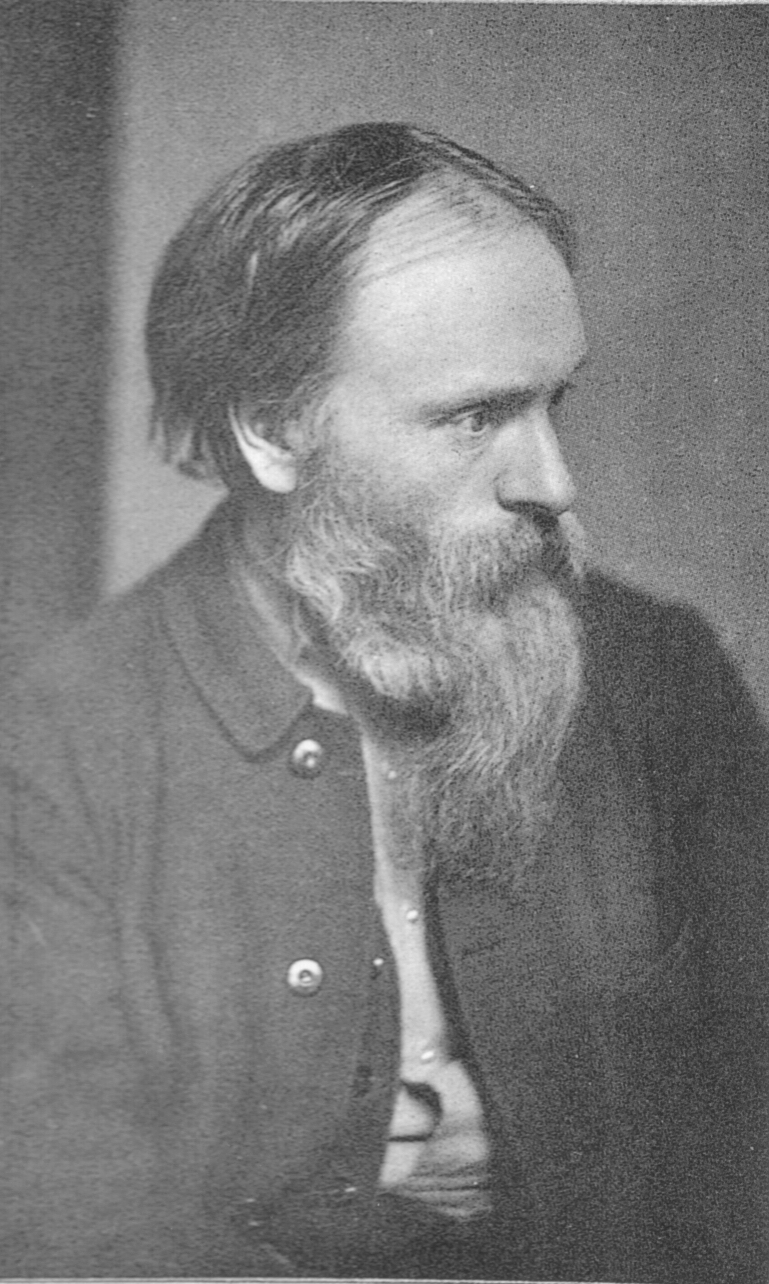
Why Edward Burne-Jones matters
Edward Burne-Jones is one of the central figures of British art in the second half of the nineteenth century, a painter and designer who carried the Pre-Raphaelite movement into a dreamlike, decorative Aestheticism that anticipated European Symbolism. His work sits in the permanent collections of Tate Britain, the Metropolitan Museum, the Musee d'Orsay, and other major institutions worldwide, and a 2013 sale of his watercolor Love Among the Ruins set an auction record for a Pre-Raphaelite work. For collectors, he represents a historically secure, museum-anchored market for a long-deceased artist whose supply at auction is limited and whose top prices are set infrequently.
- Born
- 1833-08-28, Birmingham, England
- Nationality
- British
- Media
- Painting, Watercolour, Decorative arts and tapestry design
- Movement
- Pre-Raphaelite, Aesthetic Movement, Symbolism
- Education
- King Edward VI School, Birmingham; Birmingham School of Art, c. 1848 to 1852; Exeter College, Oxford, matriculated c. 1853, theology, left without a degree c. 1855 to 1856. Formal art training was limited to the Birmingham years; in London he studied informally with Dante Gabriel Rossetti rather than through art-school instruction.
- Signature motifs
- Arthurian and mythological narrative, Aesthetic dreamlike figuration, Tapestry and decorative design
- Representation
- No current gallery or estate representation confirmed; the artist died in 1898, Works are traded through auction houses and specialist secondary-market dealers rather than through exclusive gallery representation
By the numbers
- GBP 14.85MAuction highLove Among the Ruins, Christie's London, 2013
- A.R.A., 1885Royal AcademyResigned 1893
- 1894Baronetcy
- Tate Britain, 2018 to 2019Major retrospective
Selected works
Click any work to view it full screen.
Biography
Edward Coley Burne-Jones was born on 28 August 1833 in Birmingham, England, the son of a frame carver and gilder; his mother died shortly after his birth. He attended King Edward VI School and the Birmingham School of Art in Birmingham before matriculating at Exeter College, Oxford, around 1853, intending to enter the clergy and beginning a course in theology. At Oxford he met William Morris, and the two abandoned theology after Burne-Jones's decisive encounter with the painter Dante Gabriel Rossetti in 1856; he left Oxford without taking a degree. Beyond his years at the Birmingham School of Art, he had no formal art-school training and instead studied informally under Rossetti after moving to London.
Burne-Jones became closely associated with the Pre-Raphaelite circle and, through his long working partnership with Morris, contributed designs for stained glass, tapestry, and other decorative arts alongside his painting. He was elected an associate of the Society of Painters in Water-Colours in 1864 and showed eight oils, including The Beguiling of Merlin, at the inaugural 1877 exhibition of the Grosvenor Gallery in London. His reputation grew internationally after the 1889 Exposition Universelle in Paris, where King Cophetua and the Beggar Maid brought him wide European recognition; the same year he received the Legion d'Honneur. He was elected an Associate of the Royal Academy in 1885, exhibited there only once, in 1886, and resigned in 1893. In 1894 he was created a baronet.
Burne-Jones married Georgiana MacDonald in 1860. According to the Delaware Art Museum, he died of heart failure on 17 June 1898 in London, at the age of sixty-four; his ashes rest at the church in Rottingdean, Sussex.
Critical reception
Burne-Jones achieved international recognition in his own lifetime, and institutional assessment has remained consistently high since. Tate Britain's exhibition guide for its 2018 to 2019 retrospective describes him as one of the key figures in Victorian art who achieved worldwide fame and recognition during his lifetime. His 1889 showing in Paris is credited with introducing his work to a European audience that included early Symbolist painters. Historians such as Fiona MacCarthy have framed him as a transitional figure, a thoroughly Victorian painter whose psychological and dreamlike preoccupations point toward the concerns of early twentieth-century art. The critical throughline across more than a century of writing is his fusion of Pre-Raphaelite narrative subject matter, drawn from Arthurian legend and classical myth, with an increasingly aestheticized, otherworldly treatment of the figure.
Market
The all-time auction record for Burne-Jones is Love Among the Ruins, a watercolor that sold for GBP 14,845,875 (roughly USD 22.3 million at the time) at Christie's London in 2013, a price that set a world record both for the artist and for a Pre-Raphaelite work. No public sale since has surpassed that result. Because Burne-Jones died in 1898, his market operates entirely on the secondary circuit, through auction houses and specialist dealers, rather than through any active gallery or estate representation.
Top auction results
| Work | Price | Sale |
|---|---|---|
| Love Among the Ruins (2013) | USD 22,300,000 (GBP 14,845,875) | Christie's, London, 2013-07-11 |
Selected exhibitions
| Years | Exhibition | Venues |
|---|---|---|
| 1864 | Elected Associate; exhibited The Merciful Knight | Society of Painters in Water-Colours (Old Water-Colour Society), London |
| 1877 | Inaugural exhibition, eight oils including The Beguiling of Merlin | Grosvenor Gallery, London |
| 1878 | Exposition Universelle | Paris |
| 1886 | The Depths of the Sea exhibited | Royal Academy of Arts, London |
| 1889 | Exposition Universelle, King Cophetua exhibited | Paris |
| 1933 | Burne-Jones Centenary Exhibition | Tate Gallery, London |
| 2018 to 2019 | Edward Burne-Jones | Tate Britain, London |
| 2019 to 2020 | Edward Burne-Jones: The Pre-Raphaelites and the North | KODE Art Museums, Bergen, Norway |
Museum collections
- Tate Britain, London
- Victoria and Albert Museum, London
- National Gallery, London
- The Metropolitan Museum of Art, New York
- Harvard Art Museums, Cambridge
- Musee d'Orsay, Paris
- Museum of Fine Arts, Boston
- Art Institute of Chicago
- Lady Lever Art Gallery, Port Sunlight
- National Gallery of Art, Washington, D.C.
Awards and honors
- Associate, Society of Painters in Water-Colours (1864)
- Associate of the Royal Academy (A.R.A.); resigned 1893 (1885)
- Legion d'Honneur (France) (1889)
- Member, Art Workers' Guild (1891)
- Baronetcy (1894)
Authentication and provenance
No catalogue raisonne.
No published catalogue raisonne has been confirmed for Burne-Jones. Attribution and authentication rely on documented provenance, exhibition history, and expert opinion from major auction houses such as Christie's and Sotheby's.
Primary reference: https://www.tate.org.uk/art/artists/sir-edward-coley-burne-jones-bt-68
What collectors should know
Burne-Jones has no confirmed catalogue raisonne, so provenance, exhibition history, and the expertise of major auction houses carry substantial weight in authenticating a given work. His market is thin at the top: the 2013 record for Love Among the Ruins remains the benchmark more than a decade later, and comparable major works surface at auction only occasionally. Because there is no active gallery or estate structure managing his output, prospective buyers should expect to work through the auction and specialist-dealer market and to lean on institutional documentation, since his paintings and designs are otherwise concentrated in museum collections rather than in circulation.
Further reading and resources
Data current as of 2026-07-09.

