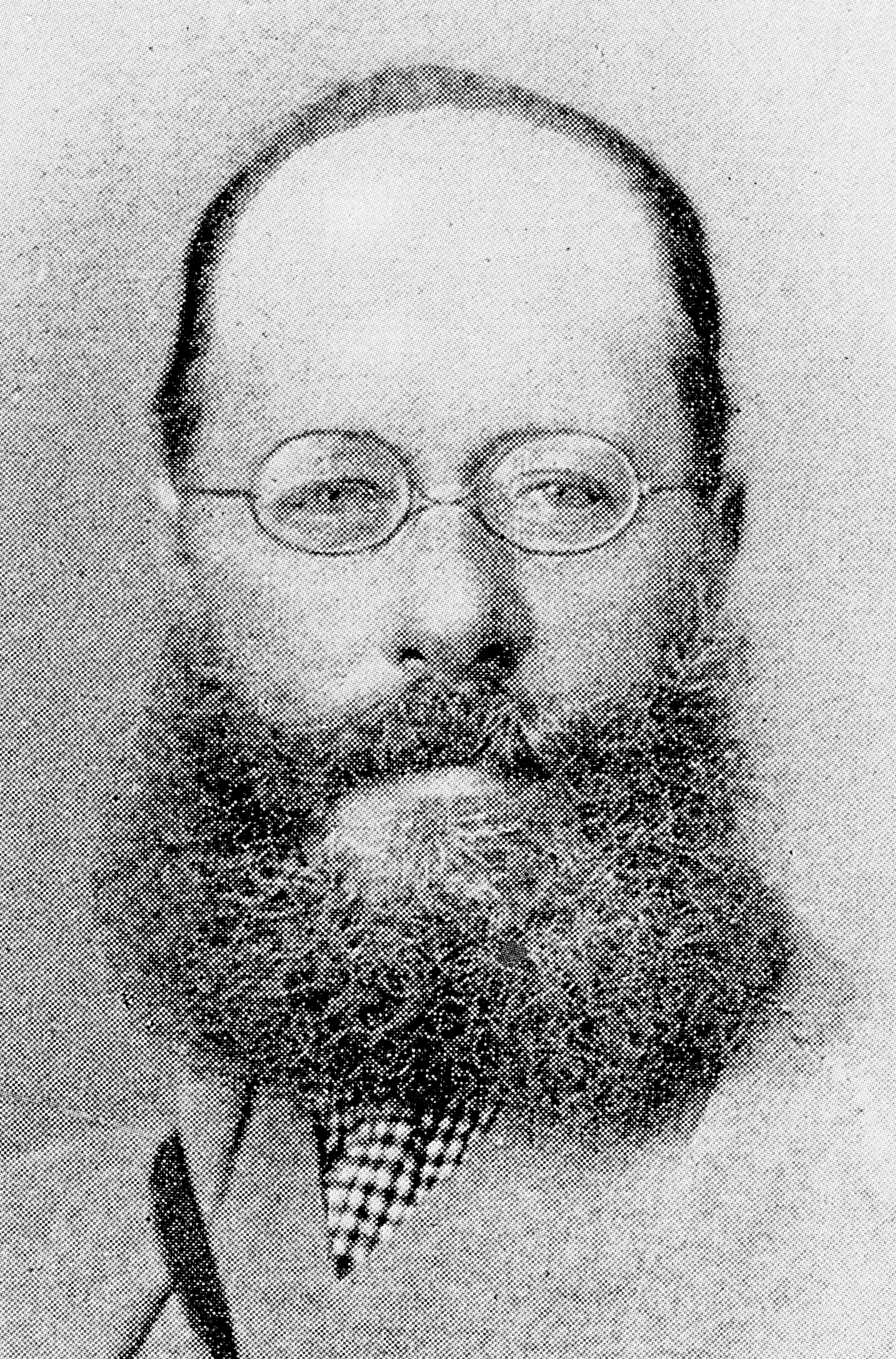
Why Edward Lear matters
Edward Lear occupies an unusual place among artists Masterworks tracks: he is best known to the public as the author of "The Owl and the Pussycat" and "A Book of Nonsense," yet museums and specialists regard him as a serious Victorian landscape painter and one of the finest natural history illustrators of his century. That dual identity, literary celebrity paired with a slowly rediscovered visual art career, gives his work a durable institutional presence, anchored by holdings at the Yale Center for British Art, the National Gallery of Art, and Harvard's Houghton Library, even though his auction market remains comparatively thin and unevenly documented.
- Born
- 1812-05-12, Holloway, near London, England
- Nationality
- British
- Media
- Watercolor, Illustration, Landscape painting, Drawing
- Movement
- "Victorian era", "Topographical and travel illustration", "Natural history illustration"
- Education
- Largely home-taught by his sisters, with little formal schooling. Attended Sass's School of Art from late 1849, then the Royal Academy Schools, London, as a probationer from January 1850 and a full student from April 1850. No degree is recorded.
- Signature motifs
- "Mediterranean and Near Eastern travel landscapes", "Ornithological and natural history illustration", "Nonsense-verse illustration and limericks"
- Representation
- "No current gallery or estate representation; works are sold through auction houses"
By the numbers
- 1812 to 1888LifespanDied in San Remo, Italy, at age 75
- Thinly documentedAuction marketHeritage Auctions' own house record is USD 4,500 (Dec 2024); aggregator data suggests higher prices for major paintings, but no single top sale could be traced to a specific work, date, and house; see Market
- A Book of Nonsense (1846); The Owl and the Pussycat (1871)Best known for
- No current gallery or estate; sold through auction housesRepresented by
Selected works
Click any work to view it full screen.
Biography
Edward Lear was born on 12 May 1812 in Holloway, near London, England, one of twenty-one children. He received little formal schooling; his early education, including reading, classical tales, drawing, and music, was handled at home by his sisters Ann and Sarah rather than at a school.
Lear began his working life as a natural history illustrator, drawing birds from life at the Zoological Society's gardens in London while still a teenager. His illustrated monograph on parrots, along with later work for scientific patrons, established him as one of the leading ornithological artists of his generation before he moved toward landscape and travel subjects. In late 1849 he attended Sass's School of Art to prepare drawings for admission to the Royal Academy, and he was accepted as a probationer in January 1850 and became a full student that April.
From the 1840s onward Lear traveled extensively through Italy, Greece, Albania, Egypt, and the eastern Mediterranean, producing large numbers of topographical watercolors and sketches that he later worked up into finished paintings. In 1846 he published "A Book of Nonsense," and in 1871 "The Owl and the Pussycat" appeared, cementing his reputation as a writer of nonsense verse and limericks alongside his visual art. He spent much of his later life in San Remo, on the Ligurian coast of Italy, where he died of heart disease on 29 January 1888, at the age of 75. He is buried in the Foce Cemetery in Sanremo.
Critical reception
For most of the twentieth century Lear's reputation rested almost entirely on his nonsense verse. Art UK notes that his standing as a landscape painter was not really established until the 1920s, when several thousand watercolors surfaced from the estates of friends and were sold at auction, prompting a reassessment of his visual work.
That reassessment has accelerated in recent decades. The Yale Center for British Art's 2009 exhibition "Edward Lear and the Art of Travel," drawing on the Donald C. Gallup and Paul Mellon collections, argued for Lear as a serious topographical draughtsman and painter rather than simply a nonsense writer who also drew. Harvard's Houghton Library made a parallel case for his scientific standing with its 2012 bicentennial exhibition "The Natural History of Edward Lear," curated by Robert McCracken Peck of the Academy of Natural Sciences, who argued in Harvard Magazine that year that Lear's standing among naturalists as a painter of birds and animals rivals his popular fame as a nonsense poet. Ikon Gallery's 2022 survey, "Edward Lear: Moment to Moment," extended this line of reappraisal by examining his landscape drawings and paintings in detail as evidence of a disciplined working method behind the popular image of a whimsical amateur.
Market
Lear's auction market is broad in volume but thin at the top and inconsistently documented across databases. Artprice records more than 2,200 public auction lots attributed to him, reflecting decades of sales of drawings, book illustrations, and travel sketches rather than a small, tightly tracked body of major paintings, and ranked him 2,247th among the world's top 5,000 best-selling auction artists by 2025 turnover.
The most concretely sourced individual sale identified in current research is Heritage Auctions' own artist record of USD 4,500, achieved on 6 December 2024; the specific work is not named in the accessible source. Market aggregator MutualArt separately reports realized prices as high as USD 1,876,426 for a Lear painting and USD 422,500 for a work on paper, but neither of those higher figures could be traced in current research to a named work, sale date, or auction house. Collectors should treat any single published "record price" for Lear with caution until it can be traced to a named work, date, and auction house.
Top auction results
| Work | Price | Sale |
|---|---|---|
| Not specified in available source (Heritage Auctions house record for the artist) (2024) | USD 4,500 (USD 4,500) | Heritage Auctions, Not specified in source, 2024-12-06 |
Selected exhibitions
| Years | Exhibition | Venues |
|---|---|---|
| 2022 | Edward Lear: Moment to Moment | Ikon Gallery, Birmingham |
| 2012 | The Natural History of Edward Lear | Houghton Library, Harvard University |
| 2012 | The Remarkable Nature of Edward Lear | Smithsonian Libraries, Washington, D.C. |
| 2009 | Edward Lear and the Art of Travel | Yale Center for British Art, New Haven |
Museum collections
- Yale Center for British Art, New Haven
- National Gallery of Art, Washington, D.C.
- Houghton Library, Harvard University
- Rhode Island School of Design Museum of Art, Providence
- Fitzwilliam Museum, Cambridge
Authentication and provenance
No catalogue raisonne.
No published catalogue raisonne has been identified for Lear. Attribution and authentication rely on museum provenance records and on auction house cataloguing, such as Christie's and Bonhams, rather than on a foundation or authentication board.
Primary reference: https://www.britannica.com/biography/Edward-Lear
What collectors should know
Lear's market is not a clean, single-line story. There is no catalogue raisonne, and no gallery or estate currently represents the body of work, so attribution and pricing rest on museum provenance and on the cataloguing standards of individual auction houses rather than on a unified authentication authority. The high volume of lots at auction, over 2,200 by one count, includes a great deal of minor material such as book illustrations and quick travel sketches alongside rarer finished watercolors and oils, and the gap in value between the two categories is significant. Because a clean, well-documented "record price" could not be confirmed in current research, collectors should ask any seller or specialist to trace a specific comparable sale, work, date, and house before relying on headline market figures for this artist.
Further reading and resources
Data current as of 2026-07-10.

