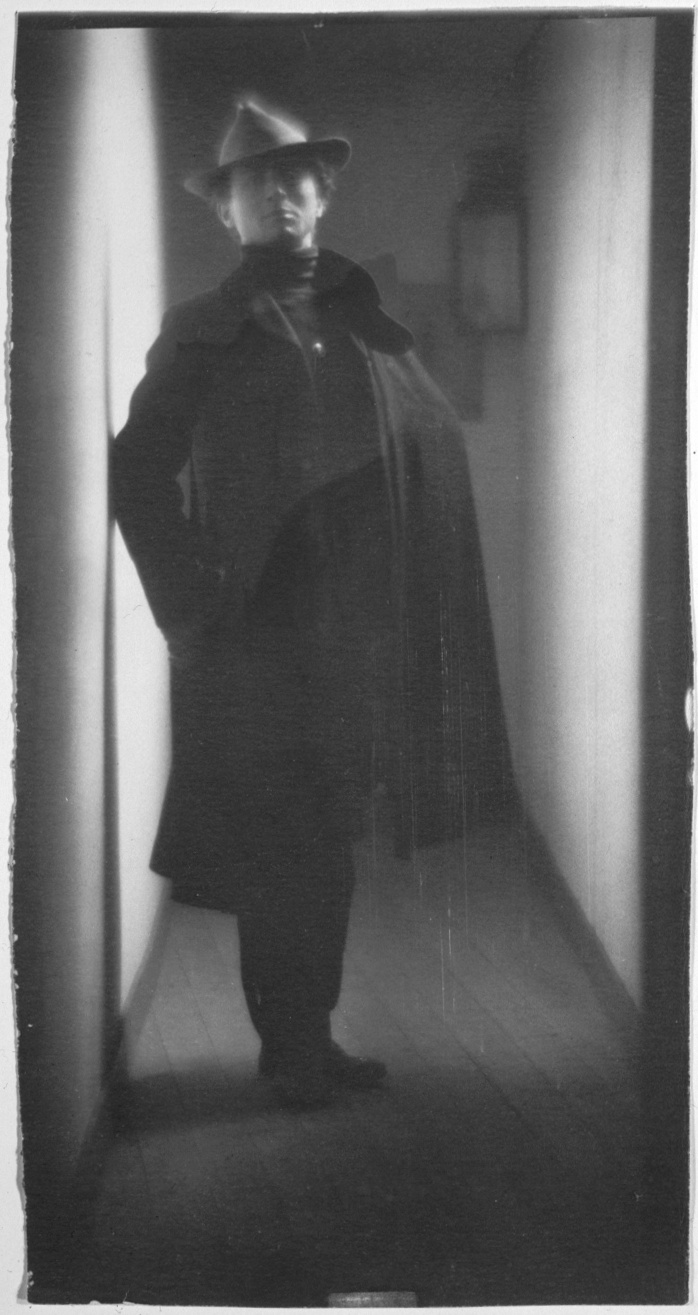
Why Edward Steichen matters
Edward Steichen is one of the artists most responsible for photography's acceptance as a fine art, and later for its power as a curatorial and popular medium. He moved from soft-focus Pictorialism through the Photo-Secession to a sharp modern style, worked at the top of commercial fashion and portrait photography, and then spent more than a decade as director of the Department of Photography at the Museum of Modern Art, where he organized The Family of Man, often cited as the most attended photography exhibition on record. For collectors, he represents a rare case in which a single artist's career spans fine-art printmaking, magazine photography, wartime documentary filmmaking, and museum curating, with a market defined by a handful of extraordinary, thinly traded top prints.
- Born
- 1879-03-27, Bivange, Luxembourg
- Nationality
- American (Luxembourg-born)
- Media
- Photography, Painting
- Movement
- Photo-Secession, Pictorialism
- Education
- Pio Nono College, Milwaukee, attended 1894, no degree completed; Academie Julian, Paris, enrolled c. 1900, no degree completed
- Signature motifs
- Pictorialist to modernist photography, Celebrity and fashion portraiture
- Representation
- "Estate of Edward Steichen, rights represented by Artists Rights Society (ARS)", "Authorized reproduction prints sold through the Conde Nast Store"
By the numbers
- USD 11.8MAuction highThe Flatiron (1904), Christie's New York, November 9, 2022
- 1947 to 1962MoMA tenureDirector, Department of Photography
- 1955The Family of ManToured 37 countries over about eight years; roughly 9 million visitors
- 1963Presidential Medal of FreedomFor lifetime achievement in photography
Selected works
Click any work to view it full screen.
Biography
Edward Steichen was born Eduard Jean Steichen on March 27, 1879, in Bivange, Luxembourg, and moved to the United States as a child. He attended Pio Nono College in Milwaukee starting in 1894 but left before completing his studies to begin an apprenticeship in lithography, his first formal training in image-making. In 1900 he traveled to Paris, where he studied painting and enrolled at the Academie Julian, though he did not complete a degree there either.
In New York, Steichen became a central figure in the Photo-Secession, the movement led by Alfred Stieglitz to establish photography as a fine art, and the two co-founded the journal Camera Work. His practice moved over the following decades from atmospheric, painterly Pictorialism toward a cleaner, more direct modernist style. He became one of the most successful commercial photographers of his era, working as chief photographer for Conde Nast's Vogue and Vanity Fair and producing what are described as among the first modern published fashion photographs, from a 1911 feature in Art et Decoration.
During the Second World War, Steichen led U.S. Navy combat photography operations and received the Distinguished Service Medal for his wartime photographic work. He also directed The Fighting Lady, a 1944 wartime documentary. From 1947 to 1962 he served as director of the Department of Photography at the Museum of Modern Art, where he curated more than fifty exhibitions. The best known, The Family of Man, opened at MoMA in January 1955, assembled more than 500 photographs from dozens of countries, and toured for roughly eight years across 37 countries to an estimated nine million visitors; in 2003 it was added to UNESCO's Memory of the World Register. In 1963 President Lyndon B. Johnson awarded him the Presidential Medal of Freedom for a lifetime of achievement.
Steichen died on March 25, 1973, at his home in West Redding, Connecticut, two days before his ninety-fourth birthday. His death was reported the following day by The New York Times under the headline "Edward Steichen Is Dead at 93."
Critical reception
Steichen's reputation rests on two distinct achievements that critics have treated somewhat separately. As a photographer, he is credited with helping move the medium from Pictorialist imitation of painting toward a modern, direct visual language, and with elevating commercial fashion and portrait photography to an art form during his years at Conde Nast. As a curator, his tenure at the Museum of Modern Art, and especially The Family of Man, made him one of the most publicly influential figures in the history of photography exhibitions, credited with using the medium to argue for a shared human experience across cultures and nations. That same populist, exhibition-scale approach also drew criticism from photographers who favored a more rigorously formalist, straight approach to the medium, and who saw Steichen's emphasis on message, scale, and popular reach as a departure from photography's standing as a purely visual art. The tension between Steichen as popularizer and Steichen as artist remains the central thread of critical discussion of his career.
Market
Steichen's market is a photography market, and it is dominated by an extremely small number of exceptional prints rather than a broad, continuous trading history. His auction record is The Flatiron, a 1904 photograph that sold for approximately USD 11.8 million (reported by some outlets as close to USD 12 million) at Christie's New York on November 9, 2022, making it, at the time, the second most expensive photograph ever sold at auction. That result replaced his previous high, The Pond, Moonlight, which had sold for USD 2.9 million in 2006, itself a record for a photograph at the time. Beyond these landmark sales, most Steichen material at auction consists of later gelatin silver prints and reproduction-era prints at far lower price points, so the headline record should not be read as representative of typical market activity for his work.
Top auction results
| Work | Price | Sale |
|---|---|---|
| The Flatiron (1904) (2022) | USD 11,800,000 | Christie's, New York, 2022-11-09 |
Selected exhibitions
| Years | Exhibition | Venues |
|---|---|---|
| 1942 to 1943 | Road to Victory | Museum of Modern Art, New York |
| 1947 to 1962 | Department of Photography exhibition program (50-plus shows) | Museum of Modern Art, New York |
| 1955 | The Family of Man | Museum of Modern Art, New York, with a world tour through 37 countries |
| 2017 | Gift and presentation of 44 Steichen photographs | Mary and Leigh Block Museum of Art, Northwestern University |
| 2026 | Edward Steichen and the Garden | George Eastman Museum, Rochester |
Museum collections
- George Eastman Museum, Rochester
- Museum of Modern Art, New York
- Metropolitan Museum of Art, New York
- Art Institute of Chicago
- Los Angeles County Museum of Art
- Whitney Museum of American Art, New York
- National Museum of History and Art, Luxembourg
- Musee d'Orsay, Paris
Awards and honors
- Legion of Honor (French government)
- U.S. Distinguished Service Medal
- Art Directors Club of New York Award
- Honorary Fellowship, Royal Photographic Society
- U.S. Camera Achievement Award (1949)
- Presidential Medal of Freedom (1963)
Authentication and provenance
No catalogue raisonne.
No published catalogue raisonne has been identified and there is no certificate-of-authenticity program. The Estate of Edward Steichen is represented for copyright and licensing by Artists Rights Society (ARS); authorized reproduction prints are sold through the Conde Nast Store. George Eastman Museum curates the bulk of Steichen's original negatives, glass plates, and an extensive print collection, and functions as the principal archival reference point for questions of print vintage and provenance.
Primary reference: https://www.edwardsteichen.com
What collectors should know
There is no published catalogue raisonne for Edward Steichen, and authentication rests on the Estate of Edward Steichen, which is represented for copyright and licensing by Artists Rights Society, and on George Eastman Museum, which holds the bulk of his negatives, glass plates, and an extensive body of prints. Because his highest-value works are extremely rare vintage prints, print vintage and provenance matter enormously to value, and collectors should expect a wide gap between a handful of landmark platinum or gum prints and the far more common later gelatin silver or reproduction prints that make up most of the market. Given how few ultra-high-value sales exist, any single record price should be treated as a data point about an exceptional object rather than a signal about the broader market for his work.
Further reading and resources
Data current as of 2026-07-09.

