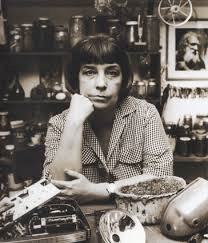
Why Elsa Gramcko matters
Elsa Gramcko is one of the central figures of postwar Venezuelan abstraction, an artist who moved from geometric painting into an idiosyncratic body of assemblage built from rusted metal, battery casings, and other industrial detritus salvaged from Caracas. She represented Venezuela at the 1959 Sao Paulo Biennial and the 1964 Venice Biennale, and in 1966 became the first woman to win first prize at the Salon D'Empaire in Maracaibo. For collectors, she is a case study in a market still catching up to a historical reputation: institutionally well documented, held by major museums, and only recently the subject of renewed international gallery attention after decades of comparatively limited visibility outside Venezuela.
- Born
- 1925-04-09, Puerto Cabello, Carabobo, Venezuela
- Nationality
- Venezuelan
- Media
- Painting, Sculpture, Assemblage
- Movement
- Abstraction, Informalism
- Education
- Largely self-taught. Audited humanities courses at the Universidad Central de Venezuela, Caracas, around 1946, and studio painting classes with Alejandro Otero at the Escuela de Artes Plasticas Cristobal Rojas, Caracas, around 1955. No formal degree is documented in any source.
- Signature motifs
- Industrial detritus and found materials, Totemic assemblage, Textured dark "black phase" surfaces
- Representation
- Sicardi | Ayers | Bacino, Galeria RGR
By the numbers
- Represented Venezuela, 1964Venice BiennaleXXXII Bienal de Venecia
- Represented Venezuela, 1959Sao Paulo BiennialV Bienal de Sao Paulo
- Venezuela, 1968National Sculpture PrizeSalon Oficial de Arte Venezolano, national sculpture prize
- Sicardi | Ayers | Bacino; Galeria RGRRepresented by
Biography
Elsa Gramcko was born on 9 April 1925 in Puerto Cabello, Carabobo, Venezuela, to Enrique Jose Gramcko Brandt and Elsa Cortina. Her early education was informal, conducted at home under her polyglot parents, and she is consistently described in the literature as a largely self-taught artist. In the mid-1940s she audited courses at the Facultad de Humanidades of the Universidad Central de Venezuela in Caracas, and around 1955 she took studio painting classes with the abstract artist Alejandro Otero at the Escuela de Artes Plasticas Cristobal Rojas in Caracas. No formal degree is documented.
Gramcko's early work in the 1950s was geometric and painterly, aligned with the circle of Venezuelan artists working through European-influenced abstraction. Over the following decade her practice shifted toward dense, dark, heavily textured surfaces that critics described in terms of a lunar or "telluric" landscape, and by the mid to late 1960s she was incorporating found industrial materials, including automobile and battery parts, into totemic assemblages and sculptures. She was the sister of the poet and playwright Ida Gramcko, and was married to the photographer Carlos Puche.
She exhibited internationally during her lifetime, including at the Brussels World's Fair in 1958, a solo exhibition at the Pan American Union (now the Art Museum of the Americas) in Washington, D.C. in 1959, and, after further Venezuelan national salon prizes through the 1960s, the 1968 National Sculpture Prize at the Official Salon of Venezuelan Art. Elsa Gramcko died on 3 March 1994 in Caracas, Venezuela, at the age of 69.
Critical reception
Venezuelan critics writing during Gramcko's lifetime, including Roberto Guevara and Juan Calzadilla, tracked her shift from geometric painting into the dark, heavily worked surfaces of what is sometimes called her "black phase," reading the textured, sooty grounds as a kind of interior or telluric landscape. Later scholarship, including writing in academic journals on Venezuelan modernity, has framed her assemblages of automobile and battery parts as a distinct engagement with industrialization and urban Caracas, set apart from the more purely geometric kinetic abstraction associated with contemporaries such as Otero and Jesus Soto. Recent exhibition texts from Sicardi and James Cohan have positioned her as an under-recognized figure whose combination of informalism, surrealism, and assemblage merits reappraisal alongside better-known Latin American abstractionists.
Market
Elsa Gramcko's market is thin and not well documented in public auction records. Her work has appeared in Latin American art sales at major international houses, but the available research does not confirm a specific all-time auction high, including work title, price, and exact sale date, and no such figure is published here. Her presence in the market is currently driven more by gallery and institutional activity than by auction volume: Sicardi | Ayers | Bacino and Galeria RGR represent her, and a 2022 to 2023 exhibition, "The Invisible Plot of Things," traveled from Sicardi's Houston space to James Cohan in New York, marking one of the more visible recent moments of international commercial attention to her work.
Selected exhibitions
| Years | Exhibition | Venues |
|---|---|---|
| 1958 | Brussels World's Fair (Exposicion Universal de Bruselas) | Belgian pavilion exhibitions, Brussels (Venezuela representation) |
| 1959 | Solo exhibition | Pan American Union / Art Museum of the Americas, Washington, D.C., curated by Jose Gomez-Sicre |
| 1959 | V Bienal de Sao Paulo | Sao Paulo, Brazil (Venezuela representation) |
| 1964 | XXXII Bienal de Venecia | Venice, Italy (Venezuela representation) |
| 1968 | Salon Oficial de Arte Venezolano | Caracas, Venezuela (Premio Nacional de Escultura, national sculpture prize) |
| 2022 | The Invisible Plot of Things | Sicardi | Ayers | Bacino, Houston |
| 2023 | The Invisible Plot of Things | James Cohan, New York (48 Walker St), presented in partnership with Sicardi | Ayers | Bacino |
Museum collections
- Museum of Modern Art, New York
- Museum of Fine Arts, Houston
- Art Museum of the Americas, Washington, D.C.
- RISD Museum, Providence
- Denver Art Museum
- Spencer Museum of Art, University of Kansas
- Minneapolis Institute of Art
- Galeria de Arte Nacional, Caracas
- Museo de Bellas Artes, Caracas
- Museo de Arte Moderno de Bogota
Awards and honors
- Premio John Boulton, XXV Salon Oficial (for El portal) (1964)
- First Prize, Salon D'Empaire, Maracaibo (first woman to win the prize) (1966)
- Premio Nacional de Escultura, Salon Oficial de Arte Venezolano (national sculpture prize) (1968)
Authentication and provenance
No catalogue raisonne.
No catalogue raisonne has been published for Elsa Gramcko. There is no formal certificate-of-authenticity program. Provenance and attribution research relies on Venezuelan institutional archives, including Fundacion Empresas Polar's biographical dictionary, and on gallery-held exhibition and sale records, principally through Sicardi | Ayers | Bacino and Galeria RGR.
Primary reference: https://www.sicardi.com/artists/elsa-gramcko/
What collectors should know
There is no catalogue raisonne for Elsa Gramcko, and no certificate-of-authenticity program; provenance research depends on Venezuelan institutional archives and on records held by her representing galleries. Her auction market is not well documented in the available research, and collectors should treat any claimed record price with caution until it can be verified against a primary sale source. Her strongest signal of durability is institutional: she is held by the Museum of Modern Art, the Museum of Fine Arts Houston, the Art Museum of the Americas, and several Venezuelan and U.S. university and civic museums, and she represented Venezuela at both the Sao Paulo and Venice Biennales.
Further reading and resources
Data current as of 2026-07-16.

