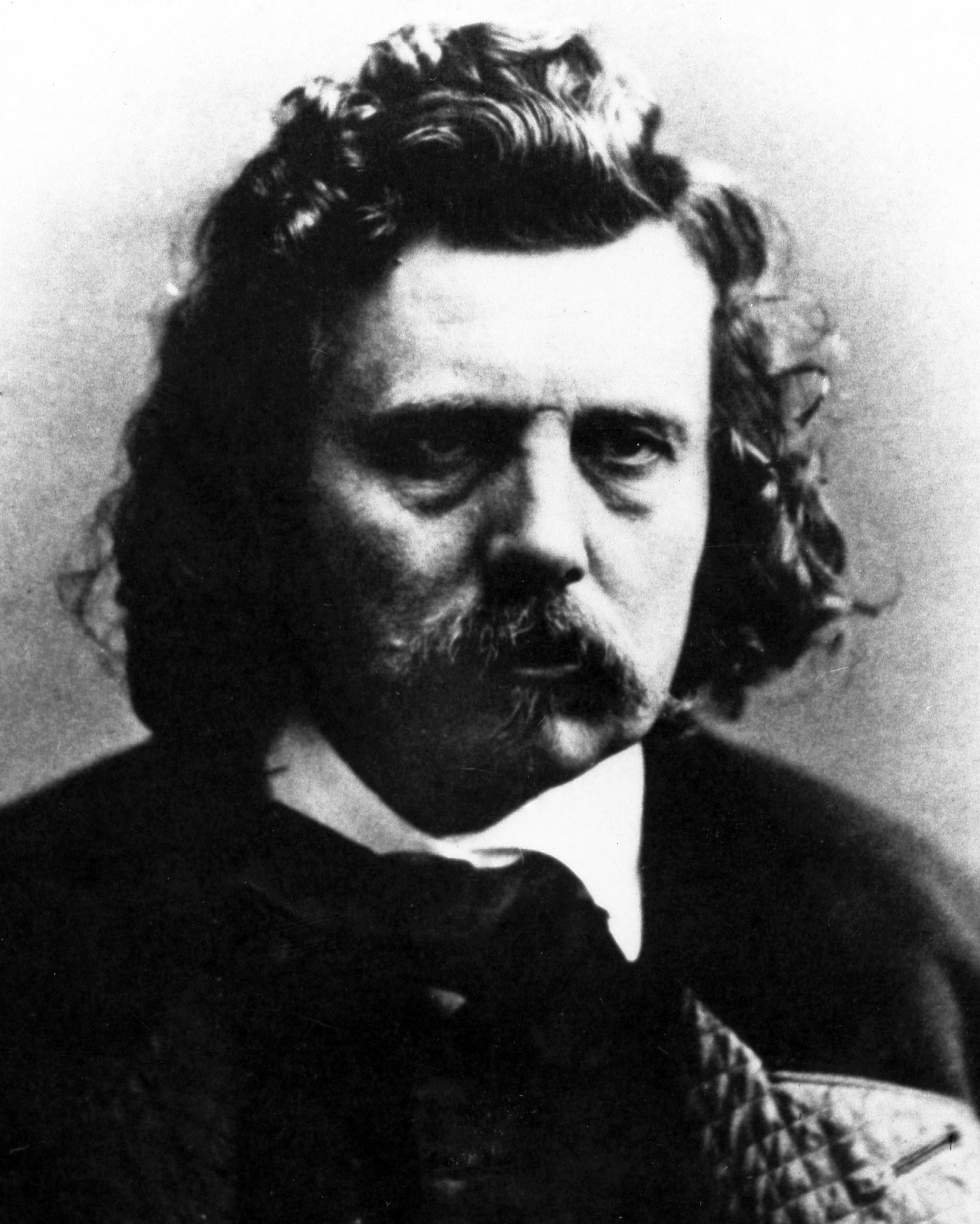
Why Emanuel Leutze matters
Emanuel Leutze painted Washington Crossing the Delaware, one of the most reproduced images in American history painting, and is one of the few German-trained painters of his era to receive a direct commission from the United States Congress. For collectors, he is a case study in a market with no living infrastructure: no gallery, no estate, and no catalogue raisonne, where value rests almost entirely on museum standing, documented provenance, and the historical importance of the specific composition in question.
- Born
- 1816-05-24, Schwabisch Gmund, Kingdom of Wurttemberg (present-day Germany)
- Nationality
- German-born American
- Media
- Painting, History painting, Mural
- Movement
- Dusseldorf school of painting, American history painting, Romanticism
- Education
- Studied under John Rubens Smith in Philadelphia from 1834; Royal Art Academy, Dusseldorf, under Wilhelm Schadow and Karl Lessing, 1841 to 1843
- Signature motifs
- Revolutionary War and westward-expansion history scenes, Monumental multi-figure composition
By the numbers
- Washington Crossing the Delaware (1851)Best-known workThe Metropolitan Museum of Art, New York, Gallery 760
- Westward the Course of Empire Takes Its WayU.S. Capitol muralCommissioned 1860, completed 1862
- USD 565,000Reported high saleReturn of Columbus in Chains to Cadiz; auction house and exact date not confirmed in available sources
- No current gallery or estate representationRepresented by
Selected works
Click any work to view it full screen.
Biography
Emanuel Gottlieb Leutze was born on May 24, 1816, in Schwabisch Gmund, in the Kingdom of Wurttemberg. His family emigrated to the United States in 1825 and settled in Philadelphia, where he began studying under the painter John Rubens Smith starting in 1834. In 1841 he returned to Germany to train formally at the Royal Art Academy in Dusseldorf under Wilhelm Schadow and Karl Lessing, remaining through 1843, and he became closely associated with the Dusseldorf school of painting.
Leutze painted the first version of Washington Crossing the Delaware in Dusseldorf between 1849 and 1850, in the aftermath of the failed 1848 European revolutions. That canvas was later displayed in Bremen, Germany, and was destroyed in an Allied bombing raid during the Second World War. Leutze began a second version in 1850, which was shipped to New York and exhibited in a gallery there in October 1851 to large crowds. In 1853 the New York businessman Marshall O. Roberts purchased the painting for USD 10,000, a very high price for the period. Roberts's painting was eventually donated to The Metropolitan Museum of Art in 1897; it was found rolled up in the museum's basement in 1931 and reinstalled the following year, and it has remained on view since.
In 1860 the United States Congress commissioned Leutze to paint a large mural for the U.S. Capitol, Westward the Course of Empire Takes Its Way, which he completed in 1862. He died in Washington, D.C., on July 18, 1868, at age 52. Secondary biographical sources attribute his death to heat stroke, though the major encyclopedic references, including Wikipedia, Britannica, and the Smithsonian American Art Museum, do not specify a cause. He was buried at Glenwood Cemetery in Washington, D.C.
Critical reception
Leutze was recognized in his own time chiefly through major commissions and celebrated public exhibitions rather than a long list of prizes. Wikipedia records that a companion picture, Columbus in Chains, earned him the gold medal of the Brussels Art Exhibition, though the exact year of that award is not established in available sources. His reputation rests most heavily on Washington Crossing the Delaware, which drew enthusiastic contemporary press coverage at its 1851 New York exhibition, including notices in The Literary World and the New York Evening Mirror, though the exact wording of those period reviews is not confirmed in the sources reviewed here. The 1860 congressional commission for the U.S. Capitol mural Westward the Course of Empire Takes Its Way further cemented his standing as a painter entrusted with the nation's own historical self-image.
Market
Leutze's market is thin and largely historical rather than active in the way a living artist's market would be. The clearest documented price point in current research is a reported USD 565,000 result for Return of Columbus in Chains to Cadiz, cited by Artnet's market summary for the artist, though the auction house, sale location, and exact sale date are not confirmed in the sources available. A widely cited USD 45 million sale in 2022 involved a smaller work described as "after Emanuel Gottlieb Leutze," meaning it is not established as an autograph work by the artist himself, and it should not be treated as his auction record. Because Leutze has no gallery or estate and no catalogue raisonne, buyers should expect provenance research and museum-standard documentation, rather than a dealer network, to carry most of the weight in establishing a work's status and value.
Top auction results
| Work | Price | Sale |
|---|---|---|
| Return of Columbus in Chains to Cadiz | USD 565,000 |
Selected exhibitions
| Years | Exhibition | Venues |
|---|---|---|
| 1849 to 1850 | Washington Crossing the Delaware, first version, painted and displayed | Dusseldorf studio; later shown in Bremen, Germany (destroyed in WWII bombing) |
| 1851 | Washington Crossing the Delaware, second version, gallery exhibition | New York gallery exhibition, October 1851 |
| 1853 | Purchased by Marshall O. Roberts for USD 10,000 | New York |
| 1860 to 1862 | Westward the Course of Empire Takes Its Way | United States Capitol, Washington, D.C. |
| 1897 to present | Washington Crossing the Delaware, permanent collection | The Metropolitan Museum of Art, New York |
| 1931 to 1932 | Rediscovered in Met basement and reinstalled | The Metropolitan Museum of Art, New York |
Museum collections
- The Metropolitan Museum of Art, New York
- United States Capitol, Washington, D.C.
- Anschutz Collection (private)
Authentication and provenance
No catalogue raisonne.
No catalogue raisonne has been identified for Leutze. Works are chiefly verified through museum provenance records, exhibition history, and auction-house scholarship. There is no gallery or estate authentication program, since the artist has been deceased since 1868.
Primary reference: https://www.metmuseum.org/art/collection/search/11417
What collectors should know
Leutze has been dead since 1868, so there is no gallery, dealer, or estate managing his market, and no catalogue raisonne to anchor authentication. Buyers should be especially careful to distinguish autograph paintings from copies, studio versions, and works catalogued "after Emanuel Leutze," since these categories carry very different values and the 2022 sale often cited in casual market discussion of his name falls into the "after" category rather than an original. The clearest, best-documented benchmark of quality and importance remains the Met's Washington Crossing the Delaware and the Capitol mural, both anchored by strong institutional provenance; any other attributed work should be evaluated against museum-grade documentation rather than auction-listing shorthand alone.
Further reading and resources
Data current as of 2026-07-08.

