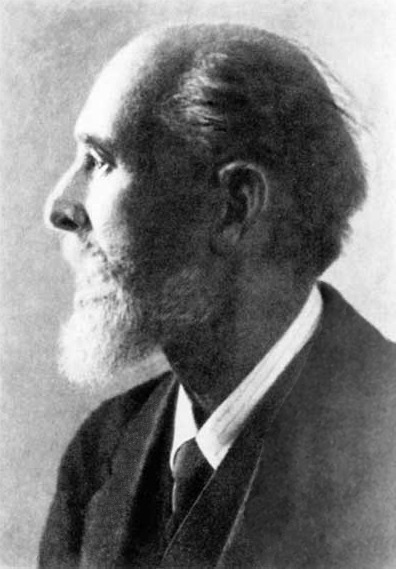
Why Peter Carl Fabergé matters
Peter Carl Fabergé is the name behind the most celebrated body of Imperial Russian goldsmith's work ever produced, a firm whose translucent guilloché enamel and jeweled Easter eggs remain, more than a century after the last Imperial commission, the benchmark for value in Russian decorative arts. This profile covers Fabergé's enamel work of the mature, late Imperial period; no separate artist or maker is documented under the name "Fabergé Late Enamel." For a collector, Fabergé is a study in extreme scarcity: almost the entire top tier of his output already sits in national museums, so the handful of Imperial-caliber pieces that do reach auction can set records that reshape the whole category.
- Born
- 1846-05-30, St Petersburg, Russia
- Nationality
- Russian
- Media
- Goldsmithing, Enamel, Jeweled objets d'art
- Movement
- Imperial Russian decorative arts, Historicist revival design
- Education
- No formal art-academy degree confirmed. Educated at the Gymnasium of St Anne's, St Petersburg, and at the Dresden Handelsschule, followed by apprenticeships and tuition with goldsmiths in Frankfurt, Paris, and London from 1864, a course at Schloss's Commercial College in Paris, mentorship under workmaster Hiskias Pendin, and study of the collection at the Hermitage Museum, St Petersburg, from 1867.
- Signature motifs
- Translucent guilloché enamel, Imperial Easter eggs, Historicist revival design
- Representation
- No current gallery or estate representation confirmed. The House of Fabergé's Imperial-era production ended in the early twentieth century; surviving works are traded through major auction houses, principally Christie's and Sotheby's.
By the numbers
- GBP 22,895,000Auction highAbout USD 30.2M. Imperial Winter Egg, Christie's London, 2 December 2025
- Legion d'Honneur1900 Exposition UniverselleParis World's Fair
- Gold medal1882 Pan-Russian ExhibitionMoscow
- No current gallery or estateRepresented bySold via major auction houses
Selected works
Click any work to view it full screen.
Biography
Peter Carl Fabergé was born in St Petersburg on 30 May 1846, the son of jeweler Gustav Fabergé, who had founded the family firm. He was educated at the Gymnasium of St Anne's in St Petersburg and, after the family moved to Dresden, at the Dresden Handelsschule, a commercial school for the sons of merchants. From about 1864 he undertook a period of travel and training across Europe, receiving tuition from goldsmiths in Frankfurt, Paris, and London, attending a course at Schloss's Commercial College in Paris, and studying the collections of Europe's leading museums.
On returning to St Petersburg, Fabergé continued his training under the mentorship of workmaster Hiskias Pendin and, from 1867, began unpaid study of the collection at the Hermitage Museum, an experience that shaped his lifelong use of Renaissance, Baroque, and Rococo design sources. He took over the family firm around 1870. His breakthrough came at the 1882 Pan-Russian Exhibition of Industry and the Arts in Moscow, where his archaeological jewel replicas won a gold medal and drew the attention of the Imperial family. In 1900 the firm's enameled Easter eggs and objects won the Légion d'Honneur at the Exposition Universelle in Paris, cementing Fabergé's international reputation. He died in Lausanne, Switzerland, on 24 September 1920.
Critical reception
Fabergé is consistently treated by museums and the trade as the preeminent figure in Russian Imperial applied art, framed above all through his command of enamel. The Royal Collection Trust profiles him under the title "Fabergé, the artist jeweller," and the auction trade markets his work on similar terms: Dreweatts titled a 2025 sale "The Art of Enamelling, the Mastery of Fabergé, Jewellery and Objects of Vertu." A technical study of his guilloché enamel process, in which translucent color is fired over engine-turned metal, describes the technique as so complex that it "cannot be duplicated, even today." Museums including the Hermitage, the Moscow Kremlin Museums, and the State Historical Museum continue to present his work specifically through the lens of enamel technique as the firm's defining artistic achievement.
Market
Fabergé's auction market is defined by extreme scarcity at the top, with the record held by a small number of Imperial-caliber objects. The all-time high is the Imperial Winter Egg, made in 1913 for Tsar Nicholas II, which sold for GBP 22,895,000 (about USD 30.2 million) at Christie's London on 2 December 2025, a new world auction record for a work by Fabergé. Below that Imperial tier, individual enamel objects have set their own category records: a diamond-set enameled bowenite egg-shaped frame and a Feodor Ruckert cloisonné enamel punch set each sold for USD 750,000 at Heritage Auctions, Dallas, on 13 May 2025, reported as record prices for a Fabergé picture frame and a Fabergé punch set respectively.
Top auction results
| Work | Price | Sale |
|---|---|---|
| Imperial Winter Egg | USD 30,200,000 (GBP 22,895,000) | Christie's, London, 2025-12-02 |
Selected exhibitions
| Years | Exhibition | Venues |
|---|---|---|
| 2024 | Fabergé: Eggs and Timeless Treasures | Houston Museum of Natural Science (McFerrin Collection, on loan) |
| 2020 to 2021 | Carl Fabergé and Feodor Ruckert: Masterpieces of Russian Enamel | Moscow Kremlin Museums |
| ongoing | Great Fabergé in the Hermitage | State Hermitage Museum, St Petersburg |
| ongoing | The Empire's Master Jeweler: The Immortal Genius of Carl Fabergé | State Historical Museum, Moscow |
| n.d. | Fabergé and the Russian Crafts Tradition | Walters Art Museum, Baltimore |
| n.d. | Fabergé: Imperial Jeweler to the Tsars | Bowers Museum, Santa Ana, California |
| 1900 | Exposition Universelle | Paris |
| 1882 | Pan-Russian Exhibition of Industry and the Arts | Moscow |
Museum collections
- State Hermitage Museum, St Petersburg
- Moscow Kremlin Museums, Kremlin Armoury
- Fabergé Museum, St Petersburg
- State Historical Museum, Moscow
- Victoria and Albert Museum, London
- Royal Collection Trust, United Kingdom
- Virginia Museum of Fine Arts, Richmond
- Metropolitan Museum of Art, New York (Matilda Geddings Gray Collection)
Awards and honors
- Legion d'Honneur, Exposition Universelle, Paris (1900)
- Gold medal, Pan-Russian Exhibition of Industry and the Arts, Moscow (1882)
Authentication and provenance
No catalogue raisonne.
No catalogue raisonne exists for Fabergé. Authentication relies on the hallmarks of named workmasters such as Michael Perkhin, Henrik Wigstrom, and Feodor Ruckert, on Imperial inventory records, and on expert review by institutions including the Fabergé Museum and the State Hermitage Museum.
Primary reference: https://www.christies.com/en/artists/faberge
What collectors should know
There is no catalogue raisonne for Fabergé, and no single artist name should be assumed to cover the firm's output: pieces were executed by named workmasters such as Michael Perkhin, Henrik Wigstrom, and Feodor Ruckert under Fabergé's direction, and authentication depends on their hallmarks, on Imperial inventory records, and on review by specialist institutions. Supply at the highest level is exceptionally thin because most Imperial commissions are already held by museums such as the Hermitage, the Kremlin Armoury, and the Fabergé Museum, so auction results for top-tier objects can move sharply on a single sale. Forgery and misattribution are well-documented risks in this category, which makes expert verification, rather than any market-wide index, the essential step before a purchase.
Further reading and resources
Data current as of 2026-07-16.

