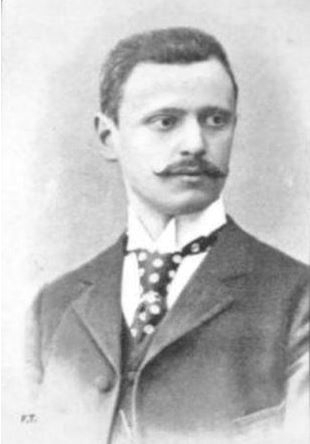
Why Fabio Fabbi matters
Fabio Fabbi was one of the more prolific Italian painters working in the Orientalist tradition around the turn of the twentieth century, producing a large body of harem, bazaar, and desert genre scenes that fed a strong contemporary market for exotic subject matter and that continue to circulate widely at auction today. For a collector, he represents a well documented academic painter whose market is active but modest, more useful as an entry point into Orientalist collecting than as a blue chip holding.
- Born
- 1861-07-18, Bologna, Italy
- Nationality
- Italian
- Media
- Painting, Illustration
- Movement
- Orientalism
- Education
- Accademia di Belle Arti, Florence, under Augusto Rivalta, early 1880s; appointed professor there in 1893
- Signature motifs
- Harem and odalisque interiors, Orientalist bazaar and street scenes
By the numbers
- USD 32,500Auction highThe Jewel Merchant, Heritage Auctions, Dallas, 2015 (best documented single lot; aggregator data cites higher, unverified figures up to USD 471,412)
- 1861 to 1946Active dates
- Professor, Accademia di Belle Arti, Florence, from 1893Academic post
- Knight, Order of the Crown of ItalyHonorSources differ: Wikipedia cites 1892, a Christie's catalogue note cites 1898
Biography
Born in Bologna on 18 July 1861, Fabbi trained in painting and sculpture at the Accademia di Belle Arti in Florence in the early 1880s, studying in the studio of the sculptor and painter Augusto Rivalta and winning several student prizes. He built his career around Orientalist subject matter, harem interiors, dancers, bazaars, and North African and Middle Eastern street scenes, drawing on the imagery and travel accounts common to European Orientalist painters of the period. He exhibited regularly at the Societa promotrice di belle arti in Turin from 1884, winning a prize there in 1899, and also showed at exhibitions in Milan, at the 1888 Exhibition of the Artists' Club in Florence, and at an international exhibition in Monaco around 1889. In 1893 he was appointed professor at the Accademia di Belle Arti in Florence; some sources also describe him as a member of the Accademia di Belle Arti in Bologna by 1894, though that claim could not be independently corroborated. He was later decorated as a Knight of the Order of the Crown of Italy, a national honor whose exact year is given as either 1892 or 1898 depending on the source. Beyond painting, some sources credit him with medal design work, including pieces linked to the 1904 sixth centenary of Petrarch's birth and medal models shown at the 1936 Simplon International Exhibition in Milan, though these claims could not be independently corroborated in the available record. He died on 24 September 1946 in Casalecchio di Reno, near Florence, though a small number of secondary databases record his death as 1945 or, in at least one case, 1910, dates that are not supported by museum or encyclopedic sources.
Critical reception
Some secondary sources reference Fabbi's 1888 showing at the Exhibition of the Artists' Club in Florence, including works titled Arab Woman and A Terrace in Alexandria, but no contemporary review, named critic, or exact quotation from that period could be independently verified. His broader reputation rests on his standing as one of the more commercially successful Italian Orientalist painters of his generation, a status reflected in his academic appointments and market presence rather than in a large body of surviving critical writing about individual works.
Market
Fabbi's auction market is active but modest in scale. The best documented single lot sale, with full auction house detail, is USD 32,500 for The Jewel Merchant, sold at Heritage Auctions in Dallas on 19 June 2015, which that house's own artist index designates as its record price for the artist. Separately, the aggregator MutualArt reports that the artist's auction results for paintings have reached USD 471,412, a figure repeated across market databases but not tied by any accessible source to a specific work, sale house, or date, so it cannot be treated here as a documented record. Market databases record several hundred Fabbi lots at auction historically, most of them smaller oils and works on paper trading well under six figures. A separate, single-source claim of a USD 475,000 result for a work titled Danza Nell Harem at a 2009 London Orientalist sale could not be corroborated in any second database either and is not treated here as confirmed. Fabbi has no confirmed current gallery representation or actively managed estate; his work is handled on the secondary market by auction houses and by specialist dealers.
Top auction results
| Work | Price | Sale |
|---|---|---|
| The Jewel Merchant (2015) | USD 32,500 (USD 32,500) | Heritage Auctions, Dallas, Texas, 2015-06-19 |
Selected exhibitions
| Years | Exhibition | Venues |
|---|---|---|
| 1884 to 1899 | Annual exhibitions, prize in 1899 | Societa promotrice di belle arti, Turin |
| 1888 | Exhibition of the Artists' Club | Florence |
| 1889 | International Exhibition | Monaco |
| Late 19th century | Mostre di belle arti | Milan |
| 1936 | Simplon International Exhibition | Milan |
Awards and honors
- Knight, Order of the Crown of Italy (a Christie's catalogue note instead gives 1898) (1892)
- Professor, Accademia di Belle Arti, Florence (1893)
- Member, Accademia di Belle Arti, Bologna (1894)
- Prize, Societa promotrice di belle arti, Turin (1899)
Authentication and provenance
No catalogue raisonne.
No catalogue raisonne exists for Fabio Fabbi. Attribution generally rests on the artist's signature, most often reading F. Fabbi or Fabio Fabbi at lower left, and on auction house provenance and condition research. No certificate of authenticity program is documented.
Primary reference: https://www.artnet.com/artists/fabio-fabbi/
What collectors should know
There is no catalogue raisonne for Fabio Fabbi, so attribution depends on the artist's signature, usually reading F. Fabbi or Fabio Fabbi at lower left, together with provenance and condition research handled case by case by auction houses. Secondary sources disagree on basic biographical facts, including his death year, which appears as 1945, 1946, or, in one outlier record, 1910, so collectors should cross-check any single database entry against museum or encyclopedic sources before relying on it. Given the fragmented, secondary-market nature of his sales history, individual results vary widely by subject, size, and condition. The widely cited auction high of USD 32,500 is the best documented single-lot figure in accessible public records, not a definitive all-time ceiling, since aggregator data separately points to higher, unverified figures.
Further reading and resources
Data current as of 2026-07-11.

