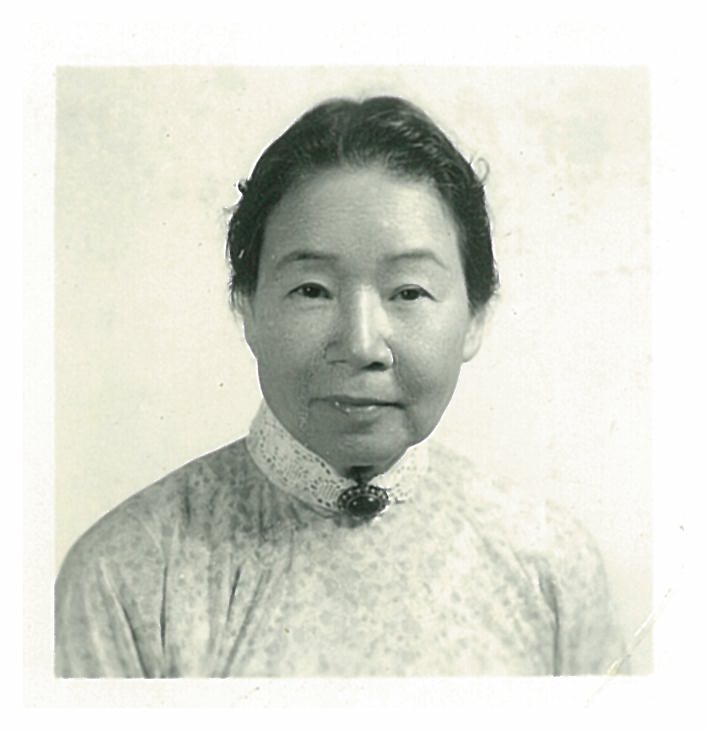
Why Fan Tchunpi matters
Fan Tchunpi, also known as Fang Junbi, was among the first Chinese women to complete a full academic art education in France, and she spent six decades building a body of work that moved between French academic painting and Chinese ink tradition. For collectors, she matters as a documented pioneer whose historical significance, confirmed by three institutional retrospectives on three continents, is considerably better established than her auction market, which remains thin and only partially documented in public records.
- Born
- 1898-03-03, Fuzhou, Fujian Province, China
- Nationality
- Chinese
- Media
- "Painting (oil)", "Guohua ink and color on paper"
- Movement
- "Modern Chinese art", "Sino-French synthesis"
- Education
- Academie Julian, Paris, c.1916 to 1917; Ecole des Beaux-Arts, Bordeaux, graduated 1920; Ecole nationale superieure des Beaux-Arts, Paris, graduated 1924 (first Chinese woman to complete the full course)
- Signature motifs
- "Sino-French stylistic synthesis", "Guohua landscapes and figures"
By the numbers
- 1898 to 1986Life datesBorn Fuzhou, China; died Geneva, Switzerland
- Ecole nationale superieure des Beaux-Arts, ParisFirst Chinese womanAdmitted 1920, graduated 1924
- 3Major retrospectivesFung Ping Shan Museum (1978), Musee Cernuschi (1984), Hood Museum of Art (2013)
- Christie'sAuction presenceWorks sold via family descent; no confirmed all-time price record
Biography
Fan Tchunpi was born on March 3, 1898, in Fuzhou, Fujian Province, China, to a prominent local family. Sent to France as a teenager, she entered the Academie Julian in Paris around 1916 to 1917, then around 1917 was accepted into the Ecole des Beaux-Arts in Bordeaux, where she trained in drawing from live models and sculpture and graduated in 1920. She then passed the entrance examination for the Ecole nationale superieure des Beaux-Arts in Paris, graduating in 1924 as, by some accounts, the first Chinese woman to complete the school's full course. In 1924 a painting of hers, The Flute Player, was selected for the Paris Salon, and later Chinese-language accounts described her as an outstanding Eastern woman painter.
She also worked in traditional Chinese ink painting, developing a practice that fused Western academic technique with guohua brushwork. She exhibited widely over the following decades, including shows in Tokyo, Kyoto, Taipei, and Hong Kong in 1966, in Buenos Aires and Rio de Janeiro in 1969, and in Beijing and Hong Kong in 1978, the same year the Fung Ping Shan Museum at the University of Hong Kong mounted a retrospective of her work. In 1980 she exhibited in her birthplace, Fuzhou, and was made an honorary member of the Fuzhou Academy of Arts. A major retrospective, Fan Tchunpi, Contemporary Chinese Artist: 60 Paintings or 60 Years in Painting, opened at the Musee Cernuschi in Paris in 1984. She moved to Geneva in 1983 and lived there until her death on September 16, 1986.
Critical reception
Institutional writing about Fan Tchunpi consistently frames her as a pioneer: the Hood Museum of Art has called her one of the most important and prolific Chinese artists of the modern era, and museum materials repeatedly emphasize her status as the first Chinese woman to be admitted to, and to complete, the full course at the Ecole nationale superieure des Beaux-Arts in Paris. Her inclusion in the 1924 Paris Salon and her later turn to Chinese ink painting are treated as the twin poles of a career built on moving fluently between French academic painting and Chinese ink tradition. That reading has been reinforced by three retrospectives spanning nearly forty years, at the Fung Ping Shan Museum in Hong Kong in 1978, the Musee Cernuschi in Paris in 1984, and the Hood Museum of Art at Dartmouth College in 2013, the last billed as her first solo exhibition since 1984.
Market
Fan Tchunpi's works appear periodically at auction, most visibly through Christie's, typically consigned from the artist's family and described in provenance notes as coming by descent from the artist's own collection. Available public sources did not yield a verifiable all-time auction record, including a specific title, price, currency, house, and sale date, so no figure is published here. Collectors interested in a current price benchmark should consult Christie's, Sotheby's, or a market database such as Artnet or Artprice directly, since her lot history on the open market is comparatively sparse and not fully reflected in general reference sources. No current gallery or estate representative could be documented as of this writing.
Selected exhibitions
| Years | Exhibition | Venues |
|---|---|---|
| 1924 | Paris Salon selection (The Flute Player) | Salon des Independants, Paris |
| 1966 | Exhibitions across East Asia | Tokyo; Kyoto; Taipei; Hong Kong |
| 1969 | Exhibitions in South America | Buenos Aires; Rio de Janeiro |
| 1978 | A Retrospective Exhibition of Works of Fan Tchun-pi | Fung Ping Shan Museum, University of Hong Kong |
| 1980 | Fuzhou exhibition and honorary membership | Fuzhou, China |
| 1984 | Fan Tchunpi, Contemporary Chinese Artist: 60 Paintings or 60 Years in Painting | Musee Cernuschi, Paris |
| 2013 | Between Tradition and Modernity: The Art of Fan Tchunpi | Hood Museum of Art, Dartmouth College, Hanover, New Hampshire |
Museum collections
- Hood Museum of Art, Dartmouth College
Awards and honors
- First Chinese woman admitted to the Ecole nationale superieure des Beaux-Arts, Paris (1920)
- Work selected for the Paris Salon; later described in Chinese-language accounts as an outstanding Eastern woman painter (1924)
- Honorary membership, Fuzhou Academy of Arts (1980)
Authentication and provenance
No catalogue raisonne.
No catalogue raisonne has been identified for the artist. Provenance is generally established through family descent and auction house cataloguing, most often at Christie's. No certificate of authenticity program is documented.
Primary reference: https://en.wikipedia.org/wiki/Fan_Tchunpi
What collectors should know
There is no catalogue raisonne for Fan Tchunpi and no confirmed current gallery or estate representation, so provenance research should lean on family-descent documentation and the cataloguing practices of the auction houses that have handled her work, principally Christie's. Because no independently verified all-time auction record could be established from public sources, collectors should treat any price figure circulating for her work with caution and confirm it directly against auction house archives or a market database before relying on it. Her institutional standing, evidenced by three museum retrospectives and a confirmed museum holding at the Hood Museum of Art, is the best-documented part of her profile, and it is considerably firmer than the public auction record.
Further reading and resources
Data current as of 2026-07-13.

