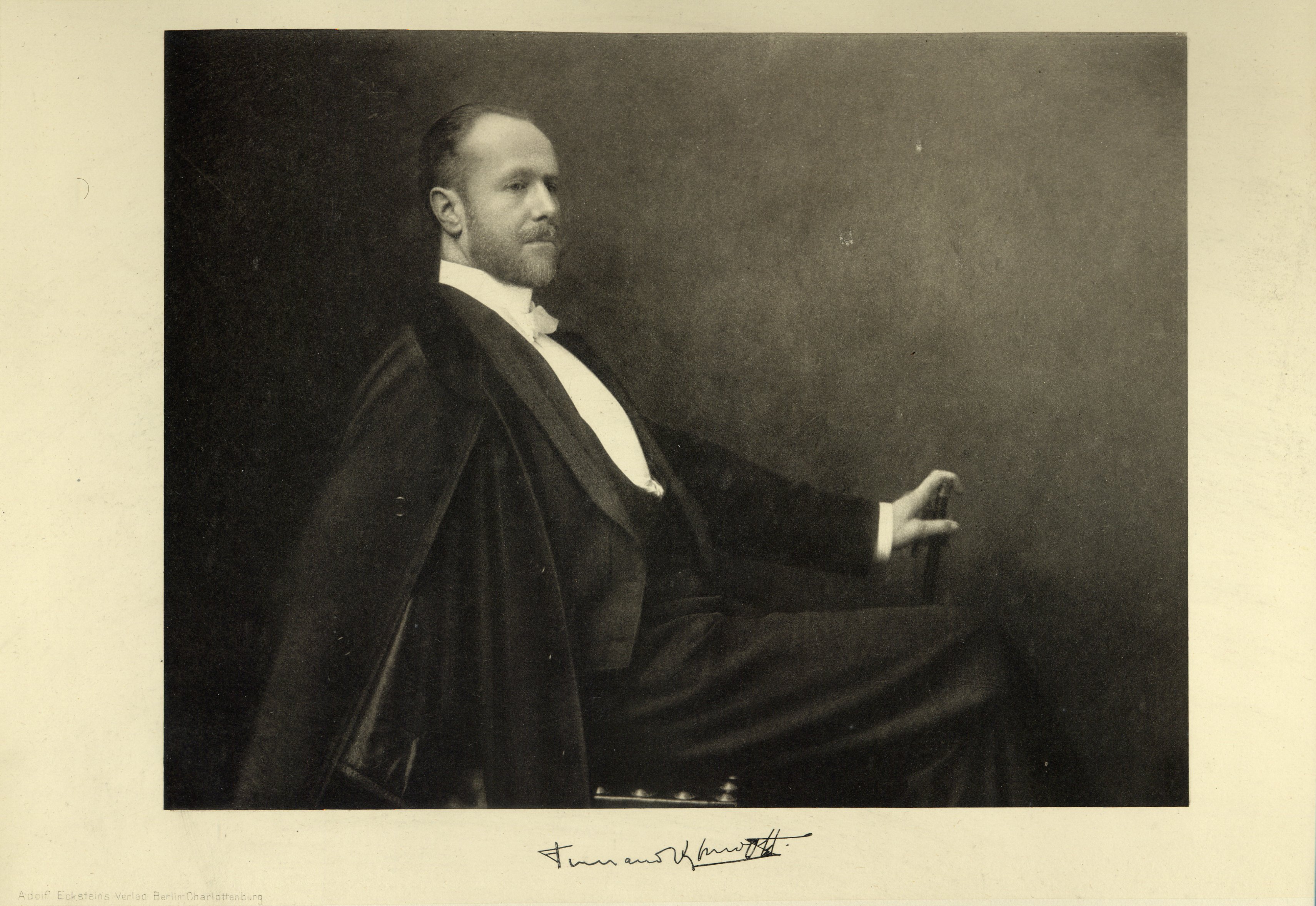
Why Fernand Khnopff matters
Fernand Khnopff is the central figure of Belgian Symbolism, a painter, draftsman, photographer, and occasional sculptor whose enigmatic portraits and dreamlike interiors helped define the movement across Europe. As a founding member of Les XX in Brussels and a featured participant in the first Vienna Secession exhibition in 1898, he sat at the crossing point of French, Belgian, and Austrian art at the turn of the century, and his work is often cited as an influence on Gustav Klimt. For a collector, Khnopff represents a historically important but thinly traded market: deep museum validation paired with a small, dispersed body of auction supply.
- Born
- 1858-09-12, Grembergen, near Termonde (Dendermonde), Belgium
- Nationality
- Belgian
- Media
- Painting, Drawing, Photography, Sculpture
- Movement
- Symbolism, Les XX
- Education
- Free University of Brussels, law, 1875, left without a degree; Academie Royale des Beaux-Arts, Brussels, 1876 to about 1879, under Xavier Mellery, alongside James Ensor; free Cours Libres of Jules Joseph Lefebvre at the Academie Julian, Paris, about 1878 to 1879
- Signature motifs
- Symbolist portraiture, Bruges imagery
- Representation
- "No confirmed exclusive gallery or estate representative"
By the numbers
- USD 576,223 (sale details unverified)Auction highMutualArt-reported price ceiling for paintings; specific work, auction house, location, and date not independently confirmed
- Les XX, 1883Founding memberBrussels avant-garde exhibiting society
- 1898Vienna Secession debut21 works shown at the first Vienna Secession exhibition; often cited as an influence on Gustav Klimt
- Petit Palais, Paris, 2018 to 2019Major retrospectiveFirst Paris retrospective in nearly four decades
Selected works
Click any work to view it full screen.
Biography
Fernand Khnopff, in full Fernand Edmond Jean Marie Khnopff, was born on 12 September 1858 in Grembergen, near Termonde (Dendermonde), Belgium. To please his parents, he enrolled at the Free University of Brussels to study law in 1875, but left within a year for lack of interest. From 1876 he studied at the Academie Royale des Beaux-Arts in Brussels under the painter Xavier Mellery, alongside a fellow student, James Ensor. Around 1878 to 1879 he also attended the free Cours Libres of Jules Joseph Lefebvre at the Academie Julian in Paris, spending summers in the city to study contemporary French painting.
In 1883 Khnopff became a founding member of Les XX, the independent Brussels exhibiting society that showcased the Belgian avant-garde until 1892, and he continued to show with its successor, La Libre Esthetique, through 1914. In March 1898 he presented 21 works at the first exhibition of the Vienna Secession, where his work was received with strong admiration and is often cited as an influence on Gustav Klimt and the Viennese Secessionists. He worked across painting, drawing, pastel, photography, and occasional sculpture, developing a signature style of enigmatic, often androgynous figures and closed, interior worlds.
Khnopff died on 12 November 1921 in Brussels, at the age of 63, and is reportedly buried in Laeken Cemetery.
Critical reception
Khnopff's reputation was made largely outside the salesroom, through exhibition history and institutional rediscovery. His 1898 showing at the first Vienna Secession exhibition placed him at the origin point of one of the most consequential Symbolist and Secessionist dialogues in European art, and his influence on Klimt is a recurring point in the literature. After decades of relative obscurity, the Royal Museums of Fine Arts of Belgium organized the first major modern retrospective of his work in 1979, followed by a larger 2004 retrospective that traveled in adapted form to the McMullen Museum of Art at Boston College and to the J. Paul Getty Museum in Los Angeles. The Petit Palais in Paris mounted a further retrospective in 2018 to 2019, its first Khnopff exhibition there in nearly forty years, framing him as a master of psychological enigma. Across these exhibitions, critics and curators consistently return to his fusion of precise, almost photographic technique with dreamlike, closed-off subject matter.
Market
Khnopff's auction market is thin relative to his historical importance. Market aggregator MutualArt cites an all-time price ceiling of USD 576,223 for a painting, but the specific work, auction house, sale location, and exact date behind that figure could not be confirmed from the sources available, so it should be treated as a headline number rather than a fully documented result. Better-documented recent activity includes Seated Girl, which sold for EUR 2,000 at Whyte's in Dublin, recorded as a March 22 sale though the year could not be confirmed. Aggregator LotSearch records 64 auctioned lots for the artist overall, with a Christie's-specific count of 54 cited elsewhere, indicating Christie's handles the largest share. There is no published catalogue raisonne, and no gallery or foundation has been identified in current sources as the artist's exclusive estate representative; a single dealer listing associates Richard Saltoun Gallery in London with sales of his works on paper at Art Brussels in 2025, though this could not be independently corroborated.
Top auction results
| Work | Price | Sale |
|---|---|---|
| Unidentified painting (title, auction house, and date not confirmed in available sources) | USD 576,223 | |
| Seated Girl | EUR 2,000 | Whyte's, Dublin |
Selected exhibitions
| Years | Exhibition | Venues |
|---|---|---|
| 1883 to 1892 | Les XX, annual salons | Brussels |
| 1893 to 1914 | La Libre Esthetique, annual salons | Brussels |
| 1898 | First Vienna Secession Exhibition | Vienna Secession, Vienna |
| 1979 | Fernand Khnopff | Royal Museums of Fine Arts of Belgium, Brussels |
| 2004 | Fernand Khnopff | Royal Museums of Fine Arts of Belgium, Brussels |
| 2004 | Fernand Khnopff: Inner Visions and Landscapes | McMullen Museum of Art, Boston College |
| 2004 | Fernand Khnopff (1858 to 1921) | J. Paul Getty Museum, Los Angeles |
| 2018 to 2019 | Fernand Khnopff (1858 to 1921), Master of Enigma | Petit Palais, Paris |
Museum collections
- Royal Museums of Fine Arts of Belgium, Brussels
- King Baudouin Foundation, Brussels (Portrait of Marguerite Khnopff, on permanent loan to the Royal Museums of Fine Arts of Belgium)
- J. Paul Getty Museum, Los Angeles
Awards and honors
- Commander of the Order of Leopold (Belgium), per one corroborating source; not confirmed elsewhere with that level of detail (1919)
Authentication and provenance
No catalogue raisonne.
No published catalogue raisonne has been confirmed. Attribution and provenance for Khnopff's works are established through major retrospective catalogues, the Royal Museums of Fine Arts of Belgium in 1979 and 2004 and the Petit Palais in 2018 to 2019, together with auction-house provenance research. No gallery or foundation has been identified as an exclusive estate representative.
Primary reference: https://en.wikipedia.org/wiki/Fernand_Khnopff
What collectors should know
Khnopff is a historically significant but market-thin name: strong museum credentials in Belgium, France, and the United States sit alongside a small number of public sales and no confirmed catalogue raisonne. The best-cited auction figure, USD 576,223, comes with real gaps, no confirmed sale house, location, or date, so it should not be treated as a settled benchmark without further verification against a specific lot record. There is also no clearly identified gallery or estate representative managing his market today; the works that do surface at auction are handled by a range of international houses, most often Christie's. For collectors, that combination argues for leaning on museum exhibition history and documented provenance, rather than any single reported record price, when assessing a given work.
Further reading and resources
Data current as of 2026-07-11.

